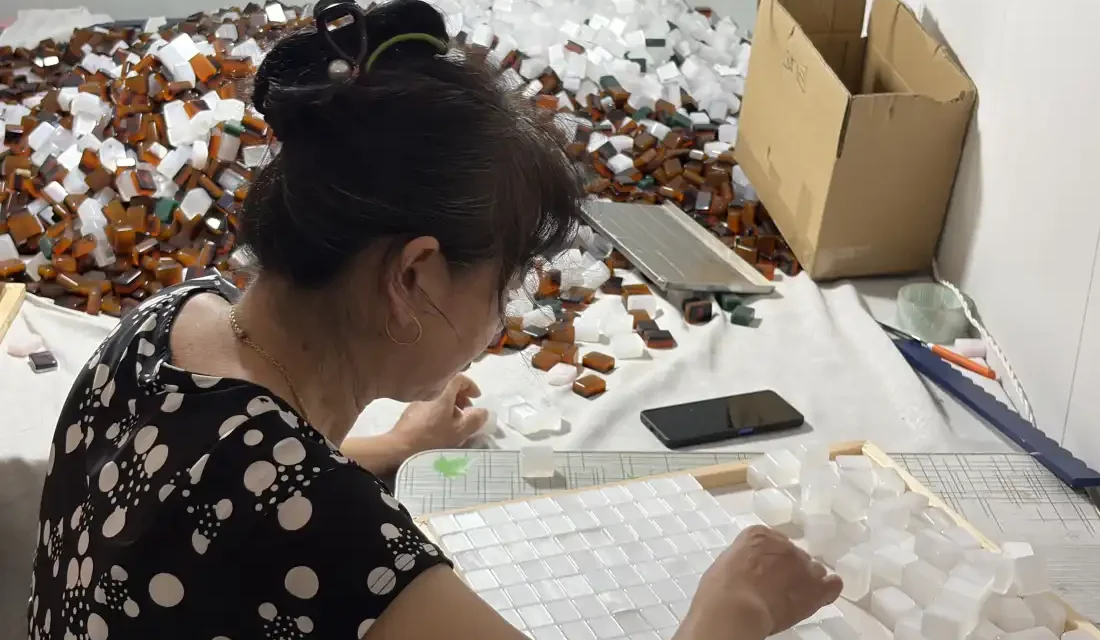
In Taixing, a city in eastern China, a small workshop meticulously produces mahjong tiles for export to the United States. This traditional Chinese game has gained popularity in the U.S. recently, creating new opportunities for local manufacturers.
At Taixing Senju Cultural Entertainment Supplies, workers inspect each tile closely, ensuring perfection before shipment. Imperfect tiles are discarded. The high-quality tiles are destined for the U.S. market, where they are sold for $300 to $400 per set. Workshop co-owner Wang Hao explains they produce the sets for around 200 yuan, equivalent to about $30. Despite high profit margins, U.S. clients, mostly Amazon vendors, are unfazed by tariffs and increased shipping costs due to conflicts in the Middle East and Europe.
Mahjong originated in China in the late 1800s and reached the U.S. in the 1920s, experiencing a resurgence due to social media. Wang Hao noticed a significant rise in search volume for mahjong while working at Alibaba.com and subsequently shifted his focus to the U.S. market. Unlike traditional mahjong sets in China, U.S. sets are smaller and more vibrant, made from acrylic, requiring different production methods and machinery.
Geopolitical tensions and supply chain issues have impacted many of China’s exports, but U.S. demand for mahjong has benefited Taixing’s manufacturers. The high demand prompted Wang to expand into direct manufacturing as local producers struggled to meet orders. He mentioned that even prepayments didn’t guarantee timely shipments before establishing his facility.
Traditional Chinese mahjong sets, crafted from melamine, have a heavy and smooth feel. In contrast, American buyers prefer lighter, acrylic tiles. Zhu Xingyao, a second-generation producer, was among the first to pivot his production to meet U.S. preferences. His family business, Taixing City Jiale Melamine Products, once focused on the domestic market but now primarily serves overseas with colorful, themed acrylic tiles.
Despite dwindling Chinese demand, which surged during COVID-19 lockdowns, more manufacturers have entered the market. Intense competition has led to a phenomenon called ‘neijuan’ or ‘involution.’ Zhu has faced rivalry from former employees who have set up competing factories elsewhere in China, benefiting from lower labor costs.
However, U.S. clients prioritize quality and reliability over cost. Prospective clients like Ju Jiaojuan are sourcing unique designs under Wang’s Senjoy brand to export to the U.S. She noted that the next two to three years would be crucial, as competition will increase, potentially reducing profits.
Focusing on premium packaging is essential for social media promotion. Wang emphasizes the importance of presentation, ensuring the tiles are packaged tightly and securely to enhance the unboxing experience for consumers on platforms like TikTok and Instagram.
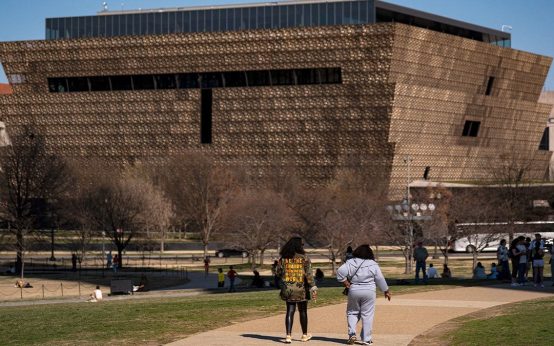 Black Conservative Filmmaker Presses Smithsonian Over Documentary Screening Denial
 Rethinking Accountability for Survivors of Sexual Assault
 Creating an Ancestral Altar
 Screencaps: Sports, Pop Culture, and Engaging Stories
 Royce White Contemplates Legal Action Against WNBA Eligibility Standards
 Ana Navarro Declines Meeting with Trump on ‘The View’