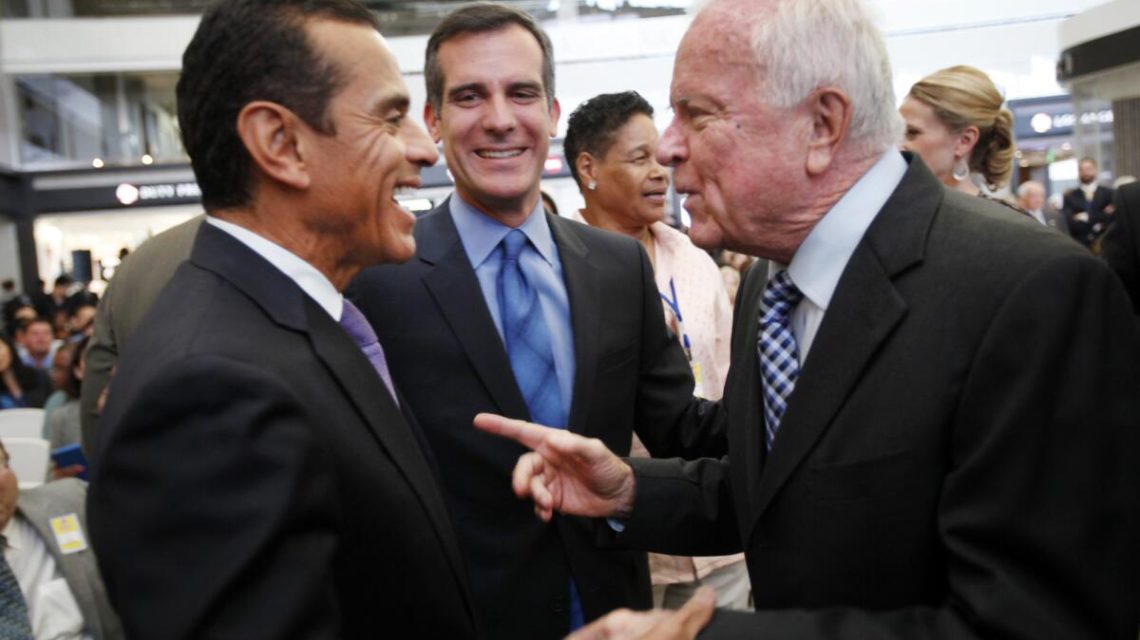
In 1973, Tom Bradley made history by becoming Los Angeles’ first Black mayor. By building a coalition of Black, Jewish, white, and Latino liberals, he ended a long period of conservative, white-dominated governance at City Hall. Bradley’s victory marked a significant political shift for Los Angeles, ushering in decades of moderate Democratic leadership. While the electoral map has evolved over time, these centrists have often remained influential.
Currently, Mayor Karen Bass is facing challenges as she seeks reelection. Her effort to consolidate her traditional base meets challenges from both the left, led by Democratic Socialists of America (DSA) Councilwoman Nithya Raman, and the right, represented by Republican reality TV star Spencer Pratt. Political experts in LA observe that mainstream Democrats are struggling to maintain their coalitions in a city where polls consistently reflect public dissatisfaction with the status quo.
“Overwhelmingly, Angelenos feel Los Angeles doesn’t work,” said Fernando Guerra, founding director of the Center for the Study of Los Angeles at Loyola Marymount University.
The evolving political scene is driven by a changing voter dynamic, highlighted by rising housing costs that impact LA’s 3.9 million residents. Recent wildfires, alongside existing issues such as homelessness and deteriorating infrastructure, have increased public discontent.
Despite the challenges, Bass may still manage to overcome her hurdles in the mayoral race. However, Fernando Guerra notes that her potential run-off scenario reflects the weakening status of LA’s mainstream Democratic institutions.
Republicans, meanwhile, hope that Pratt’s critique of local leaders’ emergency responses and high expenditures on homeless programs will mobilize a new, conservative voter base. Nevertheless, most political analysts are skeptical of a conservative future for LA.
The DSA, advocating for rental protections, police defunding, and a Green New Deal, has gained traction. Over recent years, they have secured four City Council seats and positioned a city controller.
Washingtonois, a prominent voice, indicated a substantial tilt leftwards in LA politics.
“L.A. is steadily moving to the left,” stated Jim Newton, UCLA Blueprint magazine’s executive director.
Sweeping generational shifts complicate future predictions, according to Raphael Sonenshein, director of the Haynes Foundation. He anticipates more competition for Latino, Asian, young, and even older Democrats’ votes.
Historically, LA was a Republican enclave. Post-1885 Santa Fe railroad developments attracted many white Midwesterners, establishing LA as a GOP stronghold. The Bradley coalition aimed to dismantle the city’s exclusive power structure unresponsive to its diverse population. Bradley’s background as a police officer and community figure enabled him to bridge racial divides, leveraging relationships with Jewish business owners and supporters.
During Bradley’s tenure and beyond, persistent issues like crime, pollution, and poverty dissatisfied Angelenos. His popularity waned following the 1991 Rodney King incident and subsequent riots.
As Bradley exited politics, Democrats struggled to maintain cohesive support across racial and ethnic lines.
Richard Riordan, though a Republican, secured the mayoral seat thanks to his appeal among Republican and some Democratic voters. Following Riordan, the Democratic coalition in LA faced fragmentation challenges, with various alliances forming based on racial and regional interests.
The city’s political dynamics have further shifted with increased Latino and Asian participation, alongside evolving threats and challenges from conservative interests. Despite political shifts, real estate mogul Rick Caruso’s mayoral run against Bass, albeit unsuccessful, showcased the complex voter landscape.
While LA remains a Democratic bastion, internal challenges and rising housing costs destabilize traditional Democratic coalitions. Fernando Guerra points to an over-inclusive coalition lacking direction and prioritization, reflecting broader political paralysis.
This paralysis is notably evident in housing policy, where competing local interests thwart effective action. Renters, a growing constituency, signal a shift from the homeowner-dominated Bradley era.
However, this does not equate to strengthened working-class influence, as evidenced by generational splits in the middle class, with young graduates burdened by debt unable to purchase homes. Current political issues differ from past eras, with contemporary focus on homelessness and policing diverging from previous racial justice and immigration reform priorities.
Republican resurgence remains difficult due to LA’s Democratic predominance and Trump’s tarnished association. Despite increased presidential support for Trump, evident in rising local vote percentages, the structural Democratic edge in LA remains.
Nithya Raman’s unexpected jump into the 2026 mayoral race shows DSA’s influence, though internal divisions hinder maximal impact. Bass capitalizes on this weakness to question Raman’s coalition prowess. The broader electoral outcome hinges on Bass’s ability to inspire her traditional base and the potential emergence of a new political generation offering fresh visions.
 Trump’s Use of Taxpayer Dollars for Political Advertising Sparks Controversy
  Reforming the Jones Act: Evidence for Change
  J. Dennis Hastert’s Legacy and Controversies
  Growing Support for White Nationalism Among Young White Men in the U.S.
  Erratic Policy Shifts Before Midterms Reflect Tensions in Trump Administration
  Spanish Prime Minister Calls for Snap Elections Amid Rising Protests