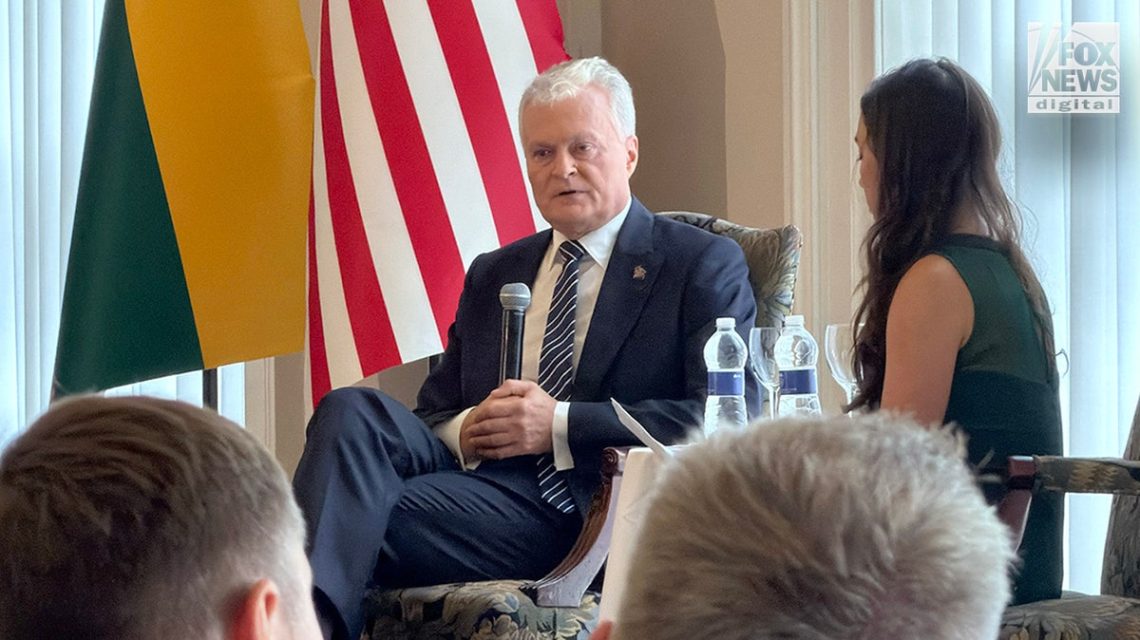
Lithuanian President Gitanas Nausėda has appealed to former President Donald Trump to keep U.S. forces stationed on NATO’s eastern flank. This request comes as the U.S. re-evaluates its military presence in Europe, while Russia continues its prolonged conflict in Ukraine, raising concerns over Moscow’s potential moves in the region.
Speaking during a discussion at the Presidential Business Forum on Resilience alongside the United Nations General Assembly in New York, Nausėda expressed Lithuania’s willingness to offer substantial support to U.S. forces to ensure their continued presence. “I personally sent two letters to the president,” Nausėda confirmed, emphasizing his efforts to maintain American military involvement.
The Pentagon has initiated a reduction of military capabilities in Europe, considering options that could further decrease troop numbers. This is part of a larger strategy aiming to assign Europe’s conventional defense primarily to European allies, with the U.S. adopting a smaller role. Despite this, Trump announced progress on establishing a permanent Army base in Poland, a key NATO member actively investing in defense, leaving frontline allies to assess their position within the new strategy.
Russia’s ongoing conflict with Ukraine is increasingly impacting NATO territories, evidenced by a recent incident in Lithuania where NATO fighters intercepted a drone from Belarus suspected of being Russian, originally intended for Ukraine.
Lithuania’s intelligence services have warned of Russia’s military rebuilding near NATO’s eastern borders despite its war losses in Ukraine. The 2026 National Threat Assessment indicates that a temporary ceasefire or frozen conflict in Ukraine might accelerate the build-up, enabling Moscow to redirect resources towards bases close to the Baltic States and replenish depleting stockpiles, potentially leading to future Baltic aggression before NATO can respond effectively.
Nausėda, when questioned about NATO’s reaction time should a ceasefire occur, refrained from providing a specific timeline, instead cautioning that a ceasefire might prompt Russia to continue seeking new targets. He stressed NATO’s need to bolster deterrence and readiness to protect its eastern flank.
Nausėda voiced skepticism about imminent peace talks with Russia, attributing Moscow’s strategy to leveraging winter conditions as pressure on Ukraine. Russia plans to target Ukraine’s energy infrastructure, aiming to deteriorate living conditions as a tactic for concessions.
The Lithuanian President spoke out on Lithuania’s efforts towards energy independence during his U.S. visit, marking progress with a new long-term natural gas deal with U.S. producer EQT Corp. Lithuania initiated U.S. LNG imports in 2017 and now relies on the U.S. for approximately 70% of its LNG supply. Lithuanian energy company Ignitis recently secured another long-term LNG deal with EQT Corp.
Over the years, Lithuania’s dependency on Russian energy has been exploited politically by Moscow, influencing Nausėda’s emphasis on diversifying energy sources. “Our history shows that, all the time, Russians misused our dependencies for their own benefit,” Nausėda stated.
Lithuania is also augmenting its defense capabilities, currently allocating 5.4% of GDP to defense, establishing a national division, and preparing to host a full German brigade by 2027. The nation remains vigilant of potential Russian threats to critical infrastructure, focusing on securing energy assets against malicious activities.
 Italian PM Giorgia Meloni Skips UN General Assembly Amid U.S. Tensions
  Ireland Faces Calls to Boycott Matches Against Israel
  Social Media Influencer Faces Serious Charges
  U.S. Military Expansion in Greenland
  The Autocratic Age: A Closer Look
  Venezuelan Migrant Arrest in Texas Sparks Outrage