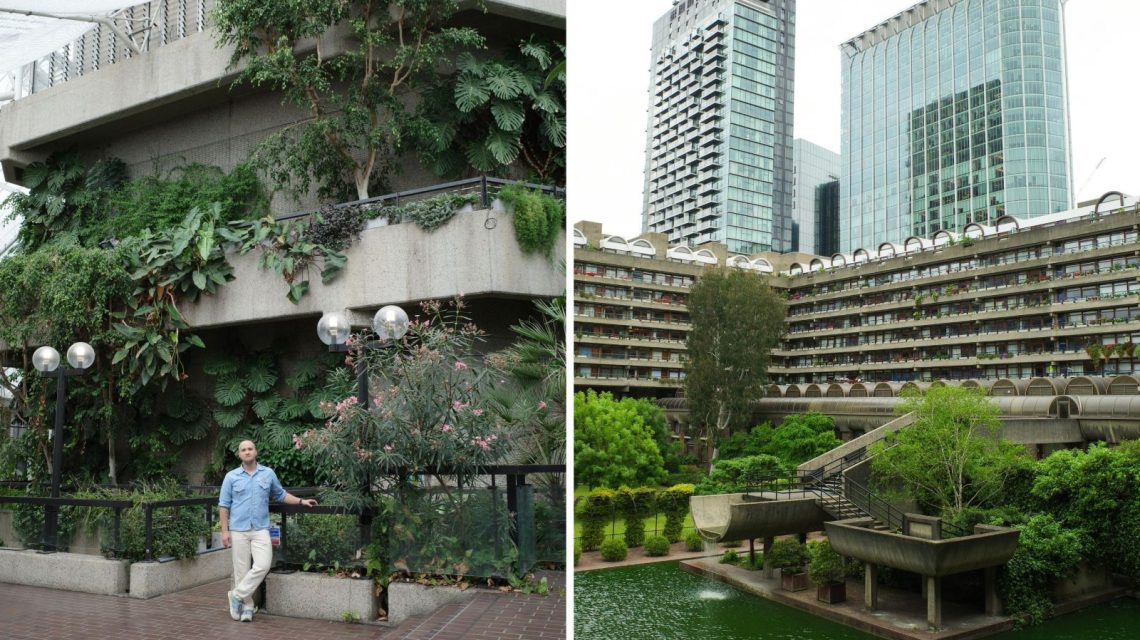
The Barbican in London is a renowned example of brutalist architecture. It consists of concrete towers, cultural venues, and landscaped public spaces. For Luke Kaluzny, who moved there with his husband in mid-2025, it is more than just a landmark—it is home. The complex offers both architectural inspiration and a personal connection.
Brutalism’s Resurgence
Brutalism, marked by its raw concrete and geometric forms, is being revitalized. Once criticized buildings are now preserved and celebrated. This shift comes from cultural interest, sustainability goals, and a reevaluation of postwar design. Younger generations play a key role, with social media reframing brutalism as expressive and relevant. Hannah Simonson, a cultural resources planner, credits image-sharing platforms with offering a fresh perspective on the style.
Kaluzny shares his life at the Barbican through Instagram (@interluke). His interest began with research on Le Corbusier’s Unité d’Habitation in Marseille, leading him to visit the Barbican. The complex’s scale and residential nature surprised him, and he met his husband on the same trip. When choosing a home, architectural significance drew them to the Barbican after viewing several properties.
Living at an Architectural Icon
Kaluzny describes life at the Barbican as “very convenient.” The estate offers theaters, galleries, shops, cafés, and a library. Its car-free layout features underground parking, fostering pedestrian areas. This design reduces noise and pollution, allowing residents to enjoy long walks without traffic.
Residents access private green areas with the “magic key.” Kaluzny enjoys the “igloos,” circular brick pods connected by walkways. These spots offer peaceful places for reading or socializing in summer.
The Community at the Barbican
Community is central to life at the Barbican. Residents vary in age and occupation, from artists to retirees. Many choose to live there for its unique character. This shared appreciation creates a distinct atmosphere.
A City-Serenity Balance
Kaluzny’s love for the Barbican partly comes from his upbringing in Washington state. He grew up isolated, dreaming of city life. The Barbican offers a balance he longed for—expanse and connection.
Built on land damaged in World War II, the Barbican represents optimistic rebuilding. Its historical layers add continuity and character. Roman walls run through the estate, and the St Giles-without-Cripplegate church has stood for nearly 1,000 years.
 Halloween Weather Forecast Predicts Chilly Conditions and Possible Snow
  Memphis City Council Votes on Data Center Development Moratorium
  U.S. Greenhouse Gas Emissions Surge Amid Global Climate Concerns
  Royce White Contemplates Legal Action Against WNBA Eligibility Standards
  Ana Navarro Declines Meeting with Trump on ‘The View’
  Severe Weather Threat in Arizona and Southern California Explained