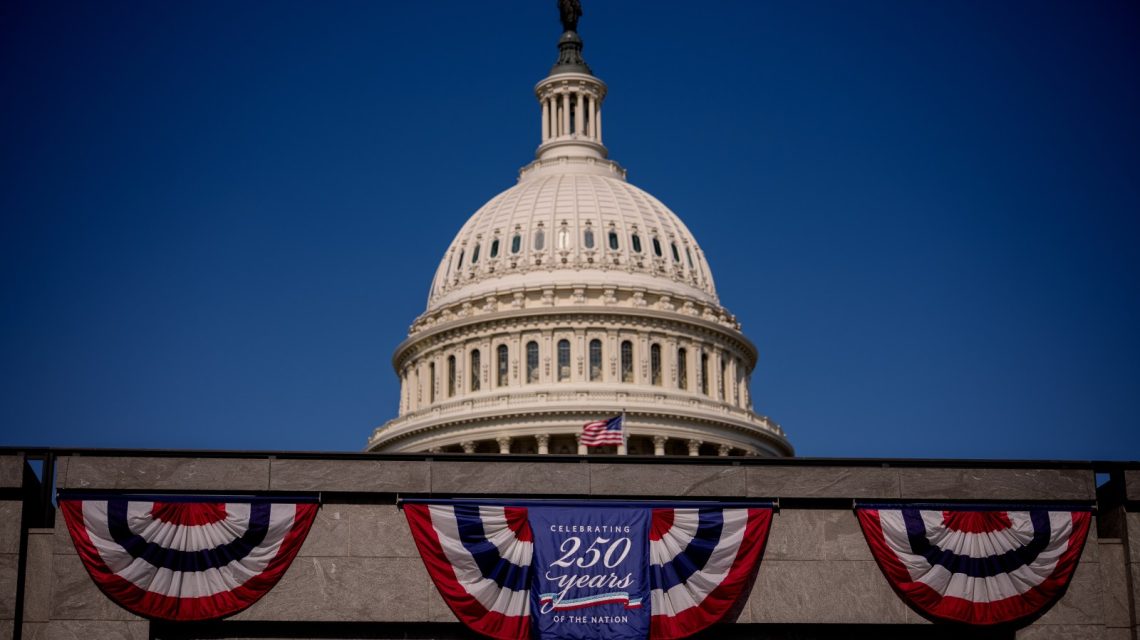
Senate Control Hinges on Less-Known Races
The upcoming Senate control after November is crucially dependent on several pivotal races. Democrats aim to flip four Republican-held seats while maintaining their current positions to regain dominance in the Senate. This task involves defending states such as Georgia and Michigan, which Trump secured in 2024, and focusing efforts on flipping Maine, where Trump lost. Another target for the Democrats is North Carolina, which narrowly went to Trump.
To accomplish this, Democrats must target states with a strong Republican presence, like Alaska, Iowa, Ohio, and Texas, which Trump carried significantly in 2024. Current polls indicate Democratic candidates slightly trailing or nearing 50 percent, with Republicans closely matched. Even minimal votes diverted to Libertarian or Green Party candidates could significantly impact the results.
Strategies and Historical Context
History suggests Democrats could achieve victory under such circumstances. Two decades ago, they managed to win closely-contested races in Missouri, Montana, and Virginia, where third-party candidates garnered notable vote shares. The current cycle might echo this pattern, with third-party candidates drawing protest votes from Republicans perceived as declining in popularity and Democrats at times opting for strategic non-participation to empower independent candidates.
Spotlight on Key States
Alaska
Alaska showcases a clear instance of Democrats leveraging an independent strategy. In the top-four primary system, Republican Senator Dan Sullivan faces Democrat Mary Peltola and possibly a second candidate named Dan Sullivan, a registered Republican who achieved ballot qualification. Accusations have arisen about Democrats silently endorsing this second Sullivan to confuse Republican voters, although denied by all involved parties and the Alaska Democratic Party. Meanwhile, experts view the Alaska race as highly competitive.
Texas
In Texas, Libertarian Ted Brown’s polling between 2 to 4 percent places considerable pressure on a tight race where Democrat James Talarico holds a narrow lead against Republican Ken Paxton. Talarico’s potential win hinges on the combination of a favorable environment for Democrats, his appeal to crossover voters, and Paxton’s challenges, including legal issues.
Ohio
Bill Redpath, a seasoned Libertarian, appears on Ohio’s ballot alongside former Senator Sherrod Brown and incumbent Republican Jon Husted. Brown maintains a slight lead, with Libertarian candidates historically influencing results. Ohio’s race is presently rated as a toss-up by leading analysts.
Challenges in Other States
In Iowa, Libertarian Thomas Laehn attracts Republican dissidents disapproving the incumbent’s eminent domain stance. In North Carolina, third-party candidates have minimal impact, with Democrat Roy Cooper holding a comfortable lead. Michigan features several minor-party candidates, but Democrat Abdul El-Sayed and Republican Mike Rogers are closely matched. Maine’s race remains a direct contest without strong third-party contenders.
Broader Trends and Dropout Strategy
Democrats employ a dropout strategy in deeply Republican states, clearing paths for independents, as seen in Nebraska, Idaho, and South Dakota. Despite historical losses in such strategies, the potential for disrupting Republican strongholds remains apparent. Past instances of independent campaigns affecting major-party outcomes fuel these efforts.
Independent voters increasingly shape elections, with a record 45 percent identifying as independents, surpassing major party affiliations. This trend, rooted prior to recent political shifts, underscores a growing bloc capable of influencing electoral outcomes.
 Media Outlets Sue After White House Ban
  American Public Opinion on Press Freedom
  Media Lawsuit Against Trump Administration for White House Ban
  The Cost of Challenging Beijing
  Analyzing Midterm Elections and Party Dynamics
  Allan Lichtman’s Framework for Assessing Presidential Greatness