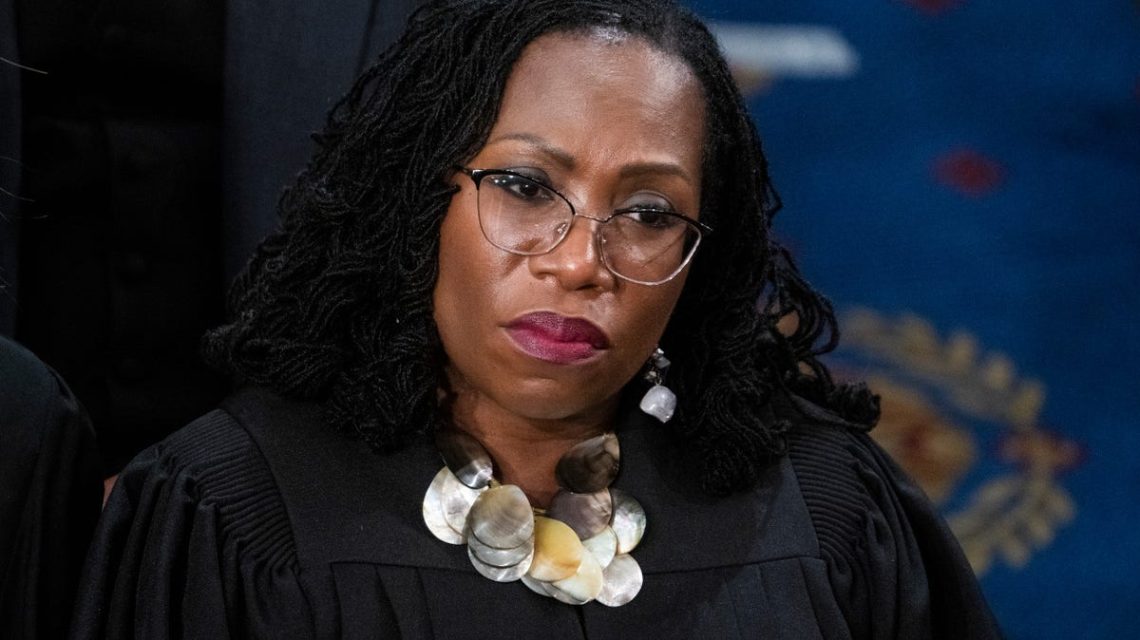
Justice Ketanji Brown Jackson has expressed opposition to the Supreme Court’s recent actions regarding voting rights. The Court used its decision in the Louisiana gerrymandering case to guide lower courts in interpreting the Voting Rights Act, potentially undermining past successes of voting rights advocates.
On Monday, the Supreme Court instructed a U.S. District Court in Mississippi to review a case again, referencing the judgment from Louisiana v. Callais. This case repudiated race-based gerrymandering. Jackson, dissenting, pointed out that Louisiana v. Callais did not address the private enforceability of Section 2 of the Voting Rights Act, questioning the decision to overturn the lower court’s judgment.
Last month, the Supreme Court narrowed the interpretation of Section 2 of the Voting Rights Act. This section regulates district drawing impacting minority voters. The Court’s decision in Louisiana v. Callais revolved around whether Louisiana’s new congressional map, which introduced a second majority-Black district, constituted unconstitutional gerrymandering.
Justice Ketanji Brown Jackson, pictured in a lecture series, has been vocal about the implications of these rulings. The Supreme Court acknowledged that states might regard the Voting Rights Act compliance as a significant interest in redistricting. However, they ruled that Louisiana was not obligated to create a second majority-Black district, supporting a previous lower court’s decision that had blocked the map’s use.
The Court’s ruling may lead to additional legal disputes over congressional mappings and could complicate matters for plaintiffs contesting these maps. Plaintiffs must now demonstrate a racial discrimination motive behind the drawing of boundaries.
 Court Rules Against Third-Country Deportation Policy
  Trump Administration Bars News Networks from White House
  Lawsuit Filed Over Preeclampsia Death in Texas Amid Abortion Ban Controversy
  Cook County’s Loan Program Assists Suburban Agencies Amid Property Tax Delays
  Freddy Cazares: Navigating the Limbo of Immigration Detainment and Uncertain Release
  Controversy Over Immigration Policy Protest in South Carolina