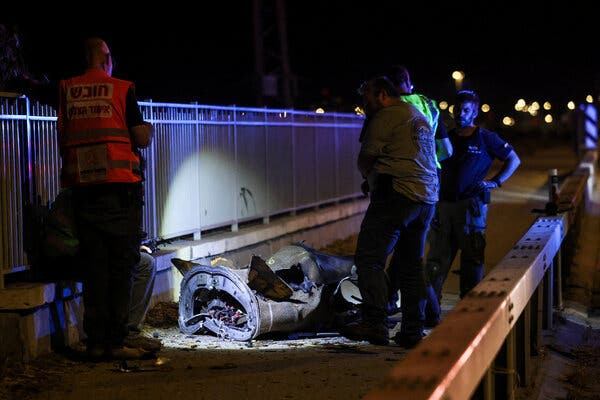
Tehran’s decision to retaliate for Israeli strikes against Hezbollah in Lebanon underscores its commitment to its regional allies and its determination to prevent shifts in regional power. This move reflects Iran’s readiness to take significant risks to defend its interests.
Iran’s actions come amidst ongoing negotiations with Washington aimed at resolving the conflict. “Failure to respond would signal weakness,” explained Ali Vaez, a senior Iran analyst at the International Crisis Group.
For several weeks, Iranian authorities voiced criticism but refrained from reaction to Israeli attacks on Hezbollah. They emphasized the necessity of including the Shiite Muslim group in the regional cease-fire agreed with Washington in April.
Previously, Iran tolerated the Israeli strikes as long as they remained confined to southern Lebanon. However, Iran had warned that its stance would shift if the attacks extended to the southern outskirts of Beirut, where Hezbollah’s presence is strong.
“Iran’s attack in defense of Lebanon wasn’t just a military maneuver; it was a formal declaration of a strategic doctrine,” stated Sadegh Larijani, chairman of Iran’s Expediency Council, which advises the supreme leader.
 The Autocratic Age: A Closer Look
  Venezuelan Migrant Arrest in Texas Sparks Outrage
  Senator Calls for Halt in Diesel Exports Amid Rising Fuel Costs
  Investigation into Far-Left Groups Organizing Protests
  Deadly Dispute Over Beach Chairs in Greece
  Couple’s Fortunate Detour Saves Them from Himalayan Disaster