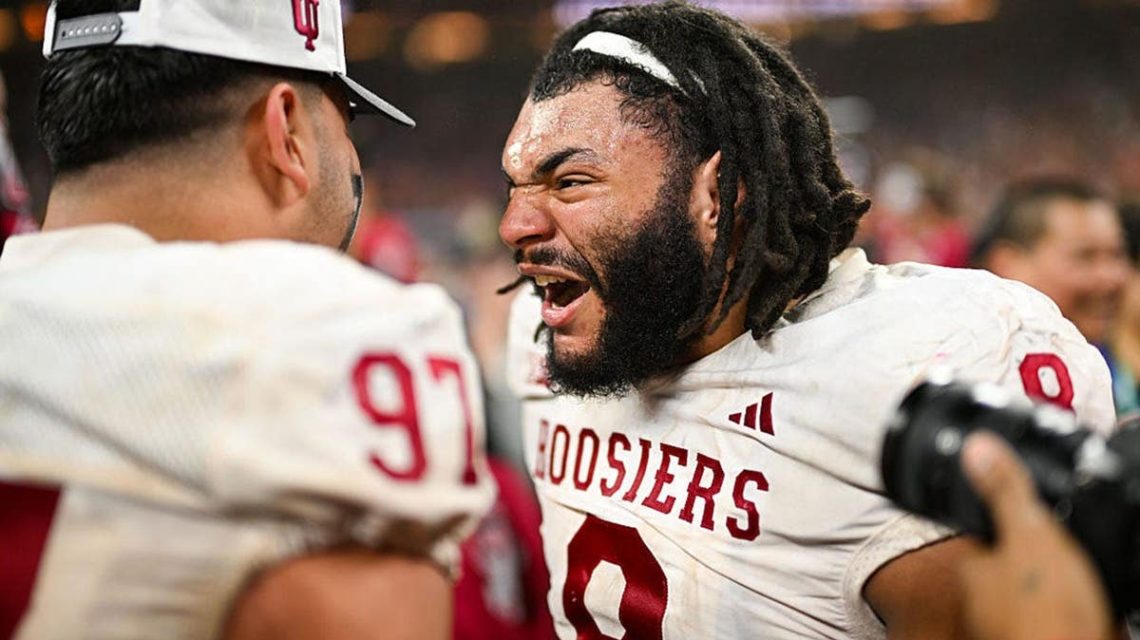
The Indiana Hoosiers, defending national champions, are strategically navigating the current legal turmoil involving the NCAA. This development arises from a court case with significant implications for the upcoming college season. Athletes starting college in 2022 face uncertainty about their future due to a preliminary injunction granted by a Colorado District Court judge. This ruling allows an extra season of eligibility for these athletes.
On Tuesday, the Hoosiers took advantage of this situation by reinstating star defensive lineman Stephen Daley. His return exemplifies the moves colleges are making amid this eligibility confusion. Daley celebrates a memorable victory against Ohio State Buckeyes in the Big Ten Championship football game, held on December 6, 2025, in Indianapolis, Indiana.
Meanwhile, the NCAA is appealing Judge Sweeney’s ruling on the case. Schools like Indiana are strategizing about adding or retaining athletes under this uncertain legal framework. Daley’s injury in the previous season’s championship, where he excelled with 19 tackles for loss and 5.5 sacks, had initially sidelined his NFL draft prospects. His medical clearance and the court’s decision have now paved the way for his return.
The NCAA’s Legal Dilemma
The NCAA’s current appeal has Chief Legal Officer Scott Bearby providing ongoing guidance to member schools. The organization is trying to clarify what is presently allowed and what might change if they secure a “stay” on appeal. This stay could temporarily restore previous eligibility rules.
If the court rules against the NCAA, athletes added during this period may become ineligible.
This legal battle arises from players suing over the “Five and Five” rule, which allows five years to play five seasons. The NCAA’s rules have been challenged, arguing for eligibility continuity under the new regulations. The case has significant implications across college athletics, involving athletes’ eligibility and schools’ compliance strategies.
Wider Impact Across College Sports
Judge Charlotte Sweeney’s ruling ordered the NCAA to grant a class-wide waiver, allowing athletes an extra year of eligibility if part of the 2022 class. This decision has opened opportunities for schools to consider including eligible athletes.
Tennessee’s head coach, Josh Heupel, revealed ongoing discussions about potentially adding players affected by the court ruling. Schools are evaluating the risks of player re-enlistment amid this legal uncertainty.
Although football staffs are actively exploring options, concerns about roster management and compliance persist. The chaos has notably impacted basketball, with numerous state-level lawsuits adding to the challenge. Many players have gained eligibility, and legal proceedings are expected to continue.
With hopes that the “Protect College Sports Act” progresses through the legislative process, turmoil around college athletics eligibility persists. The situation underscores the complexities faced by schools nationwide.
 Travis Kelce Sparks Excitement at Arrowhead Stadium
 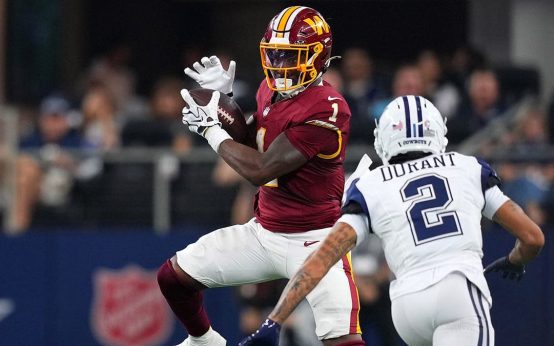 Dallas Cowboys Defeat Washington Commanders Amid Player Injury
  Chicago Cubs’ Alex Bregman Suffers Facial Injury from Foul Ball
 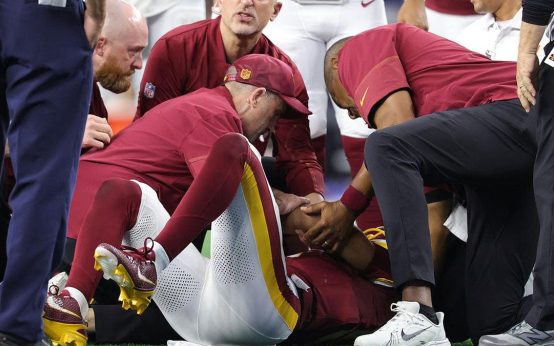 Washington Commanders Face Major Setback as QB Jayden Daniels Suffers Elbow Injury
 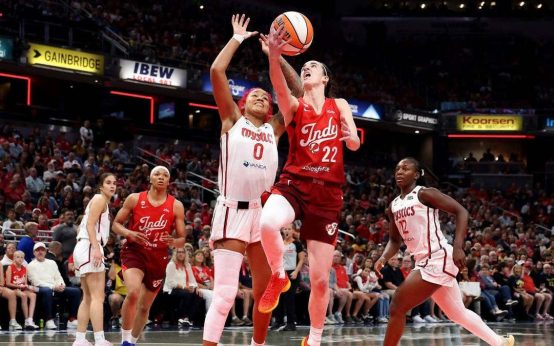 Indiana Fever’s Struggles Against Washington Mystics
  New York Jets Fall to Green Bay Packers After Fourth-Quarter Collapse