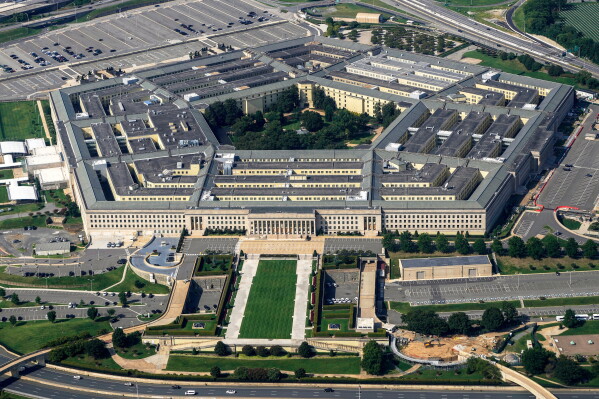
The U.S. House of Representatives approved a resolution on war powers, aiming to halt military actions against Iran. This represents a rare bipartisan challenge to President Donald Trump. The decision follows increased opposition due to the ongoing conflict that has shifted both national and international politics. The resolution saw support from a few Republicans who joined Democrats in this effort.
House Speaker Mike Johnson sought to prevent a clear display of growing discontent over the war by abruptly closing a session two weeks prior, just as the resolution was about to pass. The vote on Wednesday resulted in a 215-208 count. Trump is expected to oppose any Congressional effort to limit his authority as commander in chief. Despite this, the fact that four Republicans sided with the Democrats highlights disapproval of Trump’s military strategy.
“This reckless, costly war should end today,” Democratic leader Hakeem Jeffries stated. “We require just a few Republicans to join us and put an end to this unnecessary conflict,” he continued, pointing out the financial burden on American taxpayers.
This marks the fourth time the House has attempted to curtail the military conflict with Iran. Last month, the Senate introduced its own resolution on war powers, with some Republican senators dissenting against Trump. With each Democratic-backed war powers resolution, support has grown as political unease surrounding the conflict increases. Trump pledged to end U.S. involvement in overseas wars during his presidential campaign, yet tensions in the Middle East continue.
Johnson affirmed Trump’s focus on domestic issues, especially considering the upcoming midterm elections. He mentioned spending three hours at the White House discussing the reopening of the Strait of Hormuz, crucial for global oil trade. Since the U.S. and Israel attacked Iran on February 28, U.S. gasoline prices have surged, intensifying inflationary pressures. Iran’s efforts to disrupt maritime transport through the Strait of Hormuz have made matters worse.
Although a ceasefire was declared in April, its stability remains in question. Talks for a lasting peace continue amid Israel’s expanded conflict against Hezbollah in Lebanon, backed by Tehran. Sporadic military exchanges between the U.S. and Iran persist.
Congressional Authority on War Powers
The House’s war powers resolution represents a symbolic gesture rather than a legal mandate against military actions. The Senate will next consider it, after four Republican senators previously aligned with Democrats on a similar initiative. A final vote in the Senate is still pending.
Secretary of State Marco Rubio, testifying before the House Foreign Affairs Committee, cautioned that Iran might believe U.S. hands are tied if Congress passes war powers legislation, potentially disrupting negotiations. The Democrats, in their minority role, also seek Republican support for other national security measures beyond the Iran conflict.
Another Democratic-led proposal, also to be voted on, would authorize U.S. military aid to Ukraine against Russia and support Ukraine’s reconstruction. Additionally, the House will examine a war powers resolution to block U.S. action in Lebanon as well.
The Constitution grants Congress the authority to declare war, but as commander in chief, the President holds significant military action power, leading to legal disputes over who ultimately governs war and peace decisions. Under the War Powers Act, the White House must seek Congressional approval within 60 days for military actions. Nonetheless, the administration argues that the current ceasefire with Iran marks a cessation of hostilities, potentially impacting this requirement.
 Trump’s Remarks on Ukraine-Russia War Casualties and Peace Efforts
  Tony Blair Warns Europe to Maintain U.S. Alliance
  Trump Claims New Fuel Economy Standards Will Reduce Car Prices
  Trump TV Trademark Could Impact Government Use
  Trump Faces Record Low Approval As Midterms Approach
  New Legislation Ensures Faster Care for Abused Animals in Shelters