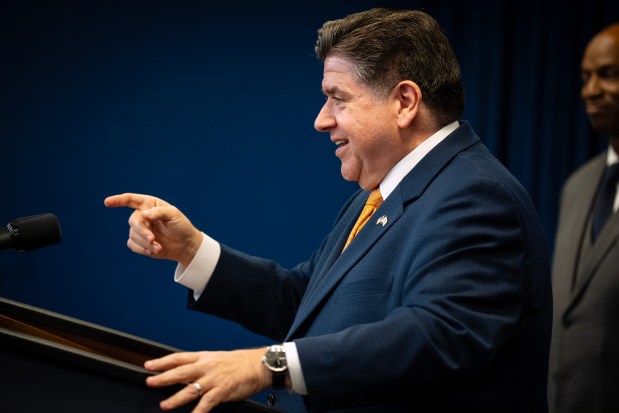
Governor JB Pritzker has signed a nearly $56 billion budget for Illinois, highlighting the challenges posed by federal policies and promising a forward direction for the state. The budget, effective July 1, includes a windfall from the state’s gas sales tax and election-year tax breaks. It will cover the last six months of Pritzker’s current term as he seeks reelection and faces questions about a future presidential run.
Despite expedited efforts by Democrats to push the budget through the General Assembly, a typographical error led Pritzker to veto over $500 billion in approved spending. This error suggested a grant of that hefty sum to the Chicago Westside Branch NAACP. Legislative sponsors identified the mistake, and Pritzker concurred in his veto message, allowing spending reductions unless overridden by lawmakers.
While Pritzker was surrounded by several Democratic lawmakers during the signing, Illinois Attorney General Kwame Raoul expressed concern over a $10 million funding cut to his office. The budget reduces overall funds from $195 million to $185 million, which Raoul criticized amidst efforts to counter actions by President Trump’s administration affecting Illinois. Despite legal victories, such as blocking Trump’s Illinois National Guard deployment during immigration enforcement missions, Raoul emphasized the need for adequate funding.
Pritzker acknowledged Raoul’s work but downplayed the budget adjustment, attributing it to funds from legal settlements. Raoul hasn’t commented further. His office filed numerous lawsuits since January 2025 against Trump’s administration on issues affecting immigrant rights and funding for Democratic-led states.
Crafting this year’s budget proved difficult due to federal pressures, including funding cuts and the war in Iran, which drove gas prices up. Democratic leaders face an affordability crisis, while Republicans blame state spending and suggest Pritzker may use the budget as a stepping stone for a presidential campaign.
Approving the budget, Pritzker criticized failed policies from Washington and contrasted them with Illinois’ balanced approach, aiming to lower costs for residents. He also revisited the budget impasse under former Governor Bruce Rauner, stating responsible budgeting is now the norm in Illinois.
The $55.9 billion budget does not increase sales or income tax rates, but introduces new taxes and election-year tax breaks similar to those used in 2022. These include a six-month pause on an inflation-based gasoline tax increase and a 10-day sales tax holiday in August.
High gas prices created unexpected surplus revenue from gasoline sales tax, with $150 million diverted from mass transit to the operating budget. Other revenue sources include taxes on corporate deductions, social media companies, cryptocurrency brokers, candy, soft drinks, and grooming products.
Progressive Democrats advocated additional taxes on digital advertising and online prediction markets, separating Illinois law from federal tax changes. Revenue projections for these proposals remain uncertain, impacting immediate incorporation into the budget.
Educational funding sees a $350 million boost, totaling $10.8 billion from the general fund. Safety-net hospitals receive an additional $118 million, while the budget establishes a $70 million program for food assistance to those affected by federal work requirement changes.
Illinois legislature is yet to agree on a plan to aid the Chicago Bears’ potential move to a new stadium in Hammond, Indiana. While Indiana has authorized financing measures, Speaker Emanuel “Chris” Welch and Governor Pritzker await agreement among lawmakers, the governor’s office, and the Bears before considering a special legislative session.
Welch expressed optimism about keeping the Bears within Illinois, urging continued dialogue with the team. Pritzker emphasized protecting taxpayers while striving to retain the Bears in Illinois without burdening working families.
 U.S. Strikes Security Agreement for Greenland
  Court Ruling Against Trump Administration’s Deportation Policy
  FAA Approves Trump’s Proposed Arch in Arlington
  Defense Secretary Backs Trump’s Ban on Media Outlets
  Political Tactics Threaten Free Press and Market
  Congressional Actions to Curb Presidential Powers