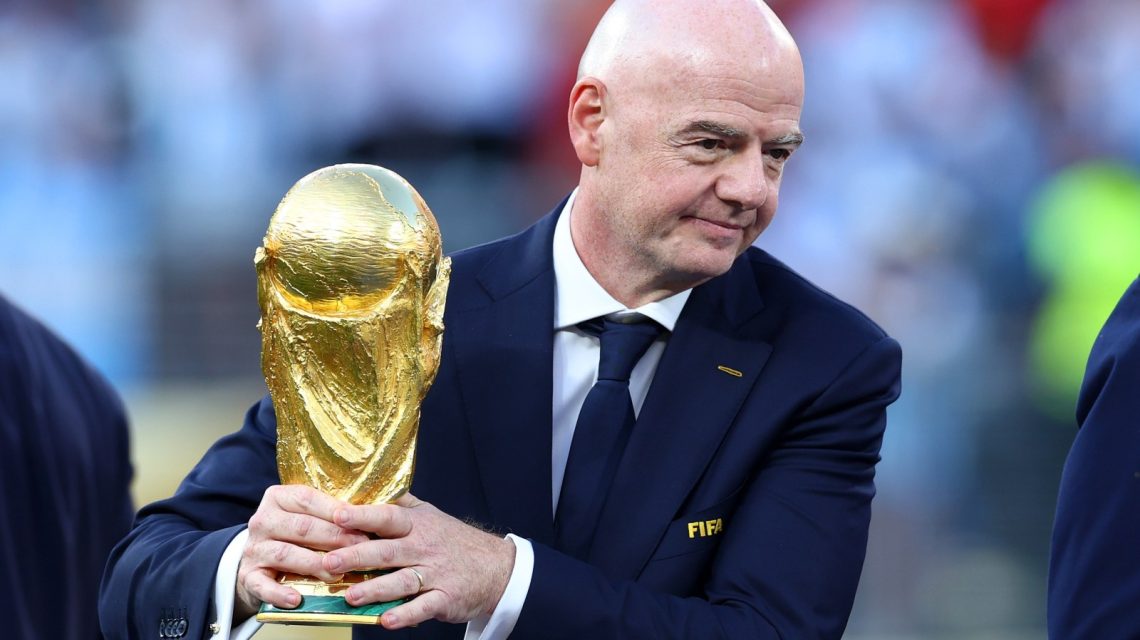
FIFA President Gianni Infantino’s proposal to sell a stake in the World Cup to private investors has sparked significant opposition within world soccer. The proposal, first leaked before being formally announced on July 28 and then withdrawn three days later, aimed to create a subsidiary called FIFA Forward Enterprise. This new entity, developed with JPMorgan and valued at around $20 billion, would have managed FIFA’s commercial operations, including rights to the men’s and women’s World Cups and the Club World Cup.
The plan involved selling a minority stake worth up to $4.2 billion to external investors like Thrive Eternal, with FIFA maintaining majority control. Infantino portrayed the plan as a strategy to boost global soccer investment, offering FIFA’s 211 member associations payments that could have increased to $24 million per association during the 2035-39 cycle. However, critics argued the incentives masked a strategy to expand the tournament calendar, potentially leading to a more frequent World Cup than every four years.
This proposal has triggered the most significant opposition Infantino has faced since assuming FIFA’s presidency in 2016. UEFA’s 55 member associations voted to boycott all FIFA competitions while the plan was active, and CONCACAF also rejected the proposal. Even the Asian Football Confederation, previously seen as supportive of Infantino, called for an urgent review of FIFA’s governance and decision-making.
The proposal’s secrecy has caused uproar, with UEFA accusing FIFA of advancing the plan through a secret process coordinated by anonymous individuals and questioning Infantino’s leadership. UEFA has pressed for a full governance reform within FIFA.
The backlash has permeated FIFA itself. Carlos Cordeiro, an advisor to Infantino and FIFA’s representative on the White House Task Force for the World Cup, resigned, calling the plan detrimental to soccer. FIFA’s Chief Operating Officer Kevin Lamour criticized the project as deceptive.
Responding to media queries, both FIFA and UEFA have issued statements. FIFA has blamed media inaccuracies for disrupting its consultation process. This controversy unfolds at a delicate political time for Infantino, who seemed set to secure a fourth term unopposed next March. He claims over 200 member associations support his 2027 reelection bid, although recent events have increased pressure on him.
UEFA’s Firm Opposition
UEFA intensified its stance against FIFA on Saturday, hours after the investment plan was canceled. UEFA accused FIFA of advancing the proposal for the benefit of a select few and emphasized that no option should be ruled out as European soccer considers its next steps.
This is a step beyond UEFA’s previous decision to boycott all FIFA competitions while the plan was in place. UEFA also stated that no national team would participate in FIFA tournaments under such conditions.
Mark Pieth, a former FIFA Independent Governance Committee leader, remarked that this situation marks a significant moment, with substantial associations drawing a clear line. He suggested that Europe could consider leaving FIFA and organizing its own tournaments with other continents, similar to boxing arrangements.
The possibility of a UEFA-led tournament, featuring countries like Brazil, Argentina, and Japan, could create an independent global competition outside FIFA’s authority.
The Role of Elite Clubs
Club influence also plays a crucial role. Premier League giants, along with elite clubs like Real Madrid, Barcelona, and Bayern Munich, could decide not to release players for tournaments considered excessive.
This week, European Leagues and FIFPRO Europe criticized the FIFA Forward Enterprise plan, arguing it could worsen the already busy calendar and turn FIFA events into investment assets for private capital.
Nasser al-Khelaifi, European Club Association chair and a former ally of Infantino, has complicated dynamics with FIFA, despite helping defeat the European Super League.
Infantino’s networks and relationships form a significant layer of influence—what Professor Simon Chadwick refers to as ‘meso power.’ These connections, built on shared interests and trust, have enabled Infantino to maintain alliances within FIFA.
The situation’s resolution before the federation vote in September could determine whether FIFA Forward Enterprise progresses or becomes another stalled initiative amid soccer’s competing power forces.
Infantino’s Political Maneuvering
Infantino’s strategy has focused on building new FIFA revenue streams, often in areas where UEFA historically prevails. His earlier attempt to host the World Cup every two years was blocked by UEFA and the European Club Association due to concerns about soccer’s congested schedule.
Recent reports indicate Joshua Kushner’s involvement in discussions about the new investment plan. Despite accusations of nepotism, Infantino continues to seek backing from Africa, a key region of support. The appeal of increased funding through FIFA Forward has proven a persuasive incentive for federations relying on FIFA financial aid.
As FIFA faces internal disagreements and external pressures, the outcome will shape the future of international soccer governance and competition structure, with Infantino working to preserve his leadership in a rapidly evolving landscape.
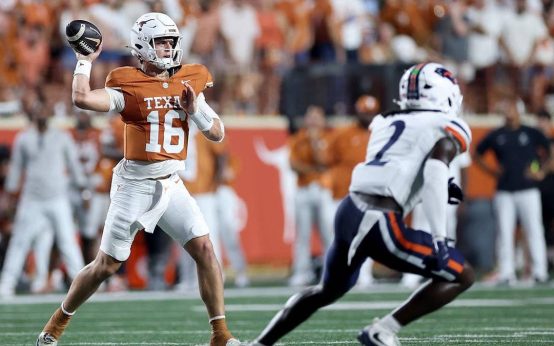 Texas Longhorns Triumph Over UTSA with Defensive Strength and Key Plays
  Travis Kelce Sparks Excitement at Arrowhead Stadium
  Dallas Cowboys Defeat Washington Commanders Amid Player Injury
 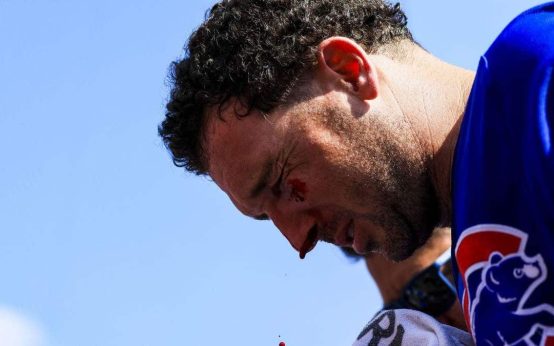 Chicago Cubs’ Alex Bregman Suffers Facial Injury from Foul Ball
 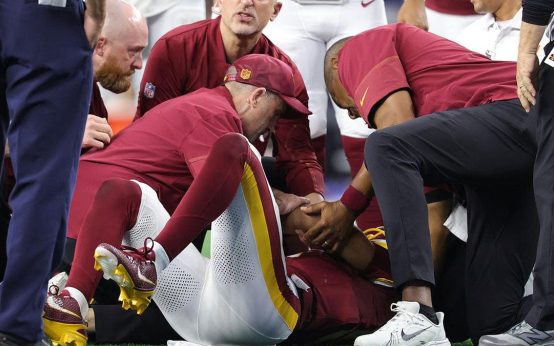 Washington Commanders Face Major Setback as QB Jayden Daniels Suffers Elbow Injury
 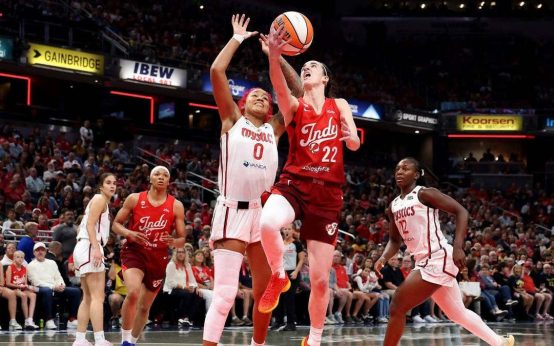 Indiana Fever’s Struggles Against Washington Mystics