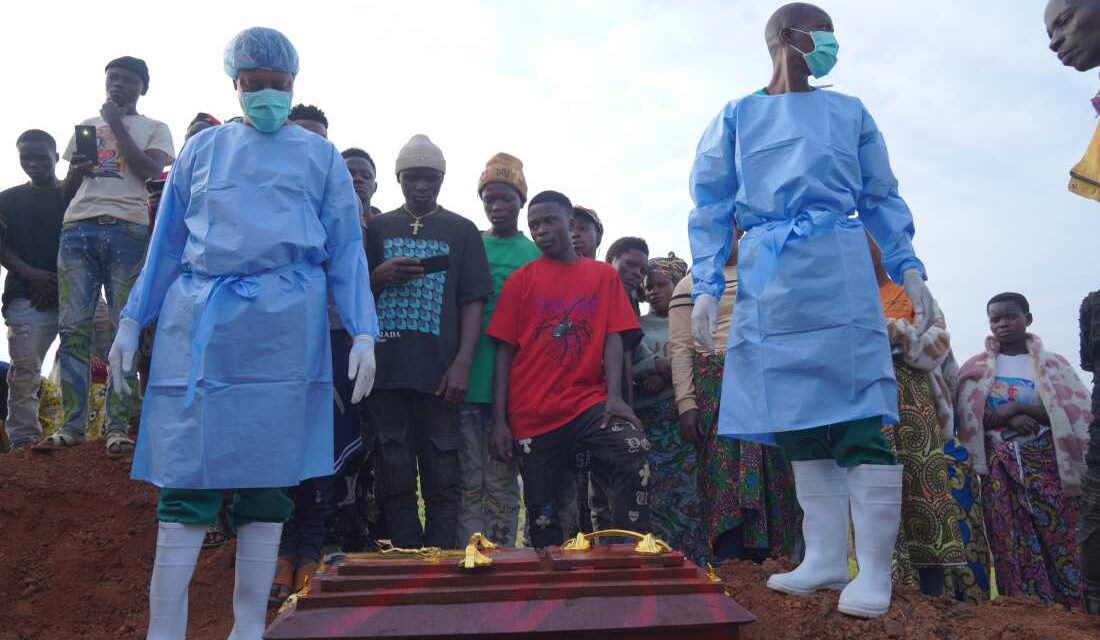
The Ebola outbreak in Congo has escalated to alarming levels, with official reports confirming over 5,000 cases, according to recent government data. This surge has been characterized by its unprecedented speed, spreading faster than previous outbreaks in the country’s remote regions.
As of Sunday, Congo’s Ministry of Health documented 5,021 cases, resulting in 2,378 fatalities. The outbreak persists under daunting conditions fueled by insecurity, population displacement, and continuous movements.
This Ebola outbreak is surpassing historical records, both in speed and impact. Comparatively, the outbreak is advancing nearly three times faster than the notorious 2014-2016 West Africa epidemic, which was the deadliest on record.
The outbreak “has spread rapidly and the risk of further national and international spread remains high,”stated WHO Director-General Tedros Adhanom Ghebreyesus during a recent meeting.
In Bunia, Ituri’s capital, medical staff are overwhelmed by the increasing workload and poor conditions. Some workers have resorted to strikes over unpaid wages. Nurse Thérèse Anyiya expressed concern about the management of the epidemic, highlighting exhausting work conditions.
Adding to the crisis is the absence of approved vaccines or treatments for the Bundibugyo virus implicated in this outbreak. Many new cases arise outside monitored individuals, revealing rapid spread and challenging the surveillance efforts.
Violence Hinders Health Efforts
The outbreak’s epicenter, Ituri province, is a hotspot of violence, restricting health interventions as attacks on health workers occur. On Monday, local residents assaulted a health team in Aru territory following a suspected case report. An angry mob set an ambulance ablaze and vandalized other vehicles, as noted by Michael Wani, leader of the Union of Cultural Associations for the Development of Ituri.
Dr. Martin Cwinyay, actively engaged in the response efforts, emphasizes the importance of taking the response to rural, mining, and displaced populations.
MSF emergency coordinator Trish Newport stresses community involvement as crucial for effective response. Communities need to be informed about Ebola’s signs, symptoms, and how to react if affected.
The Need for Prompt Care
The virus likely began circulating in Mongbwalu, a mining town, as early as February, preceding the outbreak’s official recognition on May 15. In response, authorities face numerous challenges, including threats from rebel factions and resentment from traumatized communities.
This outbreak has seen a higher fatality ratio compared to past instances, largely due to delayed medical care and inadequate support reaching patients. The fatality rate across affected provinces varies, with North Kivu experiencing up to a 70% fatality rate, highlighting the uneven response.
 Tofu Tops Protein Source Rankings: A Comprehensive Analysis
  Southern California Faces Santa Ana Winds and Increased Fire Risk
  Ensuring Lasting Smiles Act: A Necessary Step for Healthcare Reform
  Americans’ Confidence in Federal Food Safety Drops to Record Low
  Flu Season Hits Early: Importance of Timely Vaccination
  Exploring the Potential of GLP-1 Drugs Beyond Weight Loss