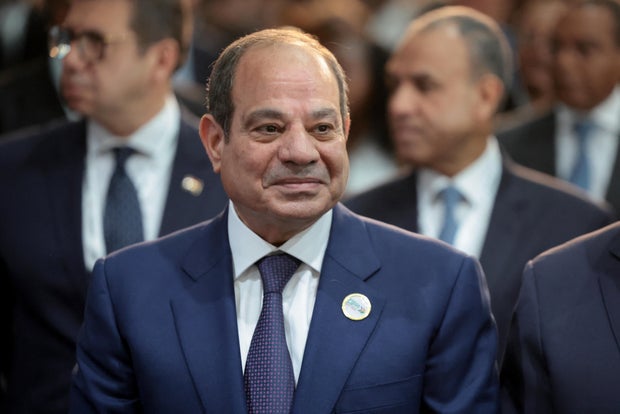
Egyptian President Abdel Fattah al-Sisi has appealed to the country’s Parliament for military authorization to assist Saudi Arabia. This request follows intensified attacks from Yemen’s Iran-backed Houthi rebels targeting Saudi infrastructure.
Al-Sisi emphasized the mission would remain defensive and contingent on Saudi Arabia’s formal request for assistance. During a military graduation ceremony, he stated, Egypt will take any measures requested by Saudi Arabia to protect and defend it.
According to Egypt’s Constitution, deploying armed forces abroad requires consultation with the National Defense Council and a two-thirds parliamentary approval. On Sunday, al-Sisi led a council meeting. They addressed the region’s escalating tensions and committed to supporting Saudi Arabia through all feasible means to bolster its security and integrity.
Historically, Egypt has avoided regional conflicts, seeking political solutions instead. This diplomatic stance is viewed by some as one of al-Sisi’s major accomplishments. Samir Ragheb, a retired army brigadier and strategic analyst, argues that Egypt must now act on its promises to safeguard Gulf states’ security.
Ragheb remarked, Egypt has repeatedly pledged to support the security of the Gulf states and has issued numerous statements reaffirming this commitment. This is a time of war, not politics and statements. If Egypt fails to deliver on these promises, they will amount to nothing more than empty threats.
He pointed out the substantial financial investments from Gulf states into Egypt, suggesting a moral obligation on Egypt’s part to reciprocate.
Parliament held an emergency session to discuss the resolution, initially set for voting on Tuesday but postponed to the following Monday. The Egyptian Social Democratic Party instructed its members to abstain from voting, citing insufficient clarity on the mission’s scope, costs, and risks.
Ragheb believes the regional threat extends beyond the Houthis, including Iran, Iraqi militias, and domestic sleeper cells in Saudi Arabia. He cautions that failing to intervene could diminish Egypt’s regional influence. If you want to be a regional player, you must play a role,
Ragheb stated, noting the vacuum left by the U.S.’s decision not to engage the Houthis.
Regional dynamics evolved in August with Saudi Arabia’s Mecca Accords agreement with Turkey and Pakistan. Ragheb sees this as a shift away from reliance on American defense against regional threats. This agreement signals a broader shift in defense strategies across the region.
 France Implements Curfews to Tackle Riots
 Kremlin Optimistic About Western Support for Ukraine Wavering
 Kim Jong Un Appears Amid Health Rumors
 U.S. Lawmaker Warns of Lessons from French Riots
 Iranian Opposition Groups Intensify Armed Attacks in Southeastern Provinces
 Details Emerge About Man Arrested in Connection with Attack on MP Helen Haines