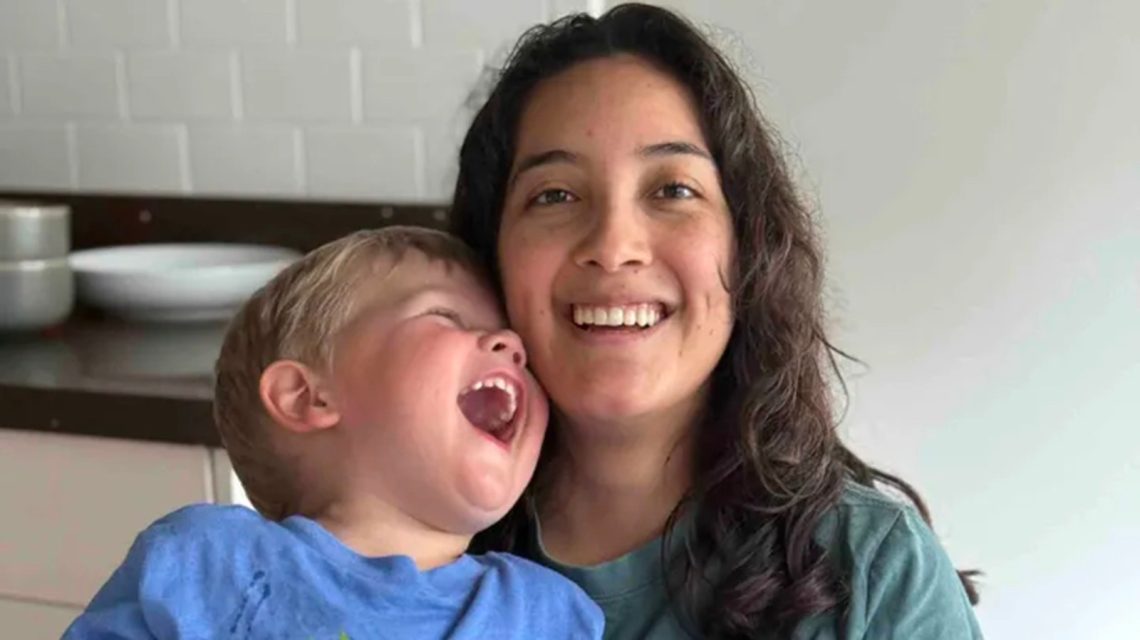
An Ecuadorian woman, whose arrest by Immigration and Customs Enforcement (ICE) at Denver International Airport gained national attention, is now contesting the agency’s decision to mandate her wearing an ankle monitor after being released on bond, as revealed in a federal court filing.
Chantal Alejandra Morales Rojas, aged 27, filed an amended petition for a writ of habeas corpus in U.S. District Court in Colorado. Her argument claims that ICE imposed unlawfully an ankle monitor and other supervision mandates after an immigration judge ordered her release from detention without additional conditions.
The legal action represents the latest development in a case that received nationwide attention following Morales Rojas’ arrest by ICE on July 20 while she was preparing to board a flight from Denver to Oakland with Southwest Airlines. Her detention occurred amid efforts by the Trump administration to identify and detain suspected visa overstayers, including airport enforcement operations, which reportedly introduced a new phase in the deportation campaign.
While electronic monitoring is routine in some immigration cases, Morales Rojas’ lawyers argue that ICE lacked the authority to enforce an ankle monitor post her immigration judge-ordered release without further conditions.
The dispute may serve as an initial legal test of the extent of supervision requirements immigration authorities can impose following release. The case attracted significant public interest, with a fundraiser launched post her arrest raising $137,344 on GoFundMe.
Newsweek has reached out to the Department of Homeland Security and Morales Rojas’s legal team via email for comments. Morales Rojas, a native and citizen of Ecuador, entered the U.S. in early 2023 under a J-1 exchange visitor visa to engage in an au pair program. Court records indicate she complied with federal immigration laws and was lawfully present at the time of her arrest.
Her petition highlights her travel from Oakland to Denver on July 16 to offer childcare for a former employer. Four days later, after clearing Transportation Security Administration screening and arriving at her departure gate, an ICE officer issued a Form I-200 administrative warrant for her arrest following her boarding pass scan for her return flight. Subsequently, Morales Rojas was handed a Notice to Appear, accusing her of being removable under the Immigration and Nationality Act for overstaying authorized duration in the U.S.
Morales Rojas disputes these allegations, asserting the government erroneously concluded her overstay and arguing her J-1 status didn’t have a fixed expiry.
Following the arrest, she was held at the Denver Contract Detention Facility in Aurora. On July 28, an immigration judge granted her release on bond. The petition clarifies that the judge’s bond order didn’t impose additional release conditions or authorize ICE to do so.
Despite the immigration judge’s order, Morales Rojas claims ICE insisted she wear an ankle monitor upon release, reporting to an ICE office in San Francisco, and enrolling her in the agency’s Intensive Supervision Appearance Program (ISAP).
Her attorneys argue these conditions are ongoing restraints on her freedom, subjecting her to what is called “constructive custody” following the judge-authorized release. The amended petition contests the arrest’s legality and ICE’s authority to enforce monitoring conditions absent in the bond order.
ICE’s actions, according to the filing, violated Morales Rojas’ procedural and substantive due process rights by maintaining restrictions post detention discharge. Neither ICE nor the Department of Homeland Security has responded formally to the court allegations. Previously, an ICE spokesperson mentioned Morales Rojas entered the country on October 20, 2024, with a visa valid until January 4, 2025, but breached laws by overstaying her visa.
The court has not ruled on the claims’ merits yet. On September 3, U.S. Magistrate Judge Timothy P. O’Hara issued an order demanding federal officials to demonstrate by September 10 why the amended petition should not be granted, allowing Morales Rojas a reply submission by September 15.
For more information, contact Newsweek editors Matthew Cannon and James Debens.
 Juror’s Stand Leads to Mistrial in Lindsay Clancy Case
  Maryland Parents Arrested After Infant’s Death with Severe Injuries
  Jury Deliberations in Lindsay Clancy’s Murder Trial Stir Controversy
  Surrogate Resists Abortion, Appeals to Supreme Court in Legal Dispute
  Inmates File Lawsuit Over Fires and Smoke in D.C. Jail
  Former CIA Chief Subpoenaed in Justice Department Investigation