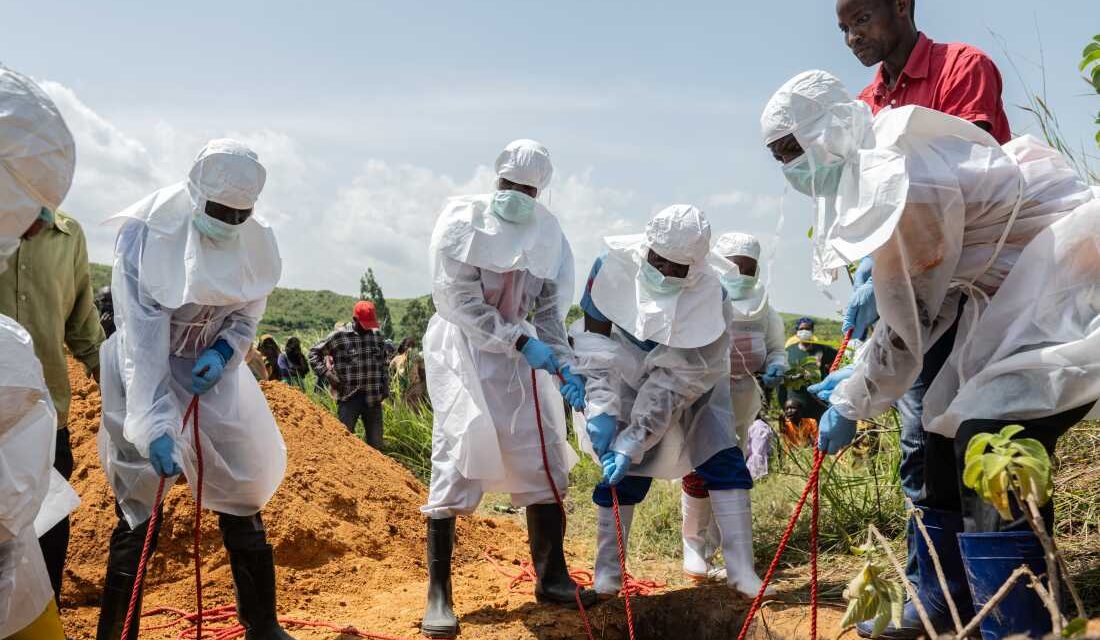
Health workers in the Democratic Republic of Congo are facing a critical situation as they work to contain an Ebola outbreak. More than 200 deaths are suspected from the virus, with fears of its spread beyond the country’s borders. Recent data from the Congolese government reveals 867 suspected cases and 204 fatalities.
The outbreak was declared on May 15, and both confirmed and suspected cases extend over an area larger than the state of Florida. Neighboring Uganda has reported five confirmed cases. In response, the World Health Organization has raised its national risk level to ‘very high.’
Ebola is a viral disease that leads to symptoms like vomiting, fever, and possible bleeding. It can take weeks for symptoms to appear, often resulting in fatal outcomes. After the outbreak was announced, Congolese health workers, UN staff, and aid groups swiftly initiated a large-scale response. However, the virus likely spread weeks prior to detection, complicating efforts to track and manage infection rates effectively. The first confirmed case appeared in a nurse showing symptoms on April 24 in Bunia, Ituri province, eastern Congo. As per an internal report by the health ministry, she was buried in Mongbwalu, a location that experienced numerous unexplained deaths, including four health workers, in April. Rumors of supernatural causes have led to widespread panic.
“The virus knows no borders, it knows no race, it knows no tribe,” said Congo’s Health Minister Roger Kamba.
The Bundibugyo species of the virus, less studied than the more common Zaire species for which a vaccine exists, aggravates the outbreak. This species delay in identification worsens efforts against the outbreak. Congo’s National Institute for Biomedical Research confirms the species responsible for the outbreak.
Since the outbreak declaration, aid workers have established Ebola treatment centers in eastern Congo, but U.S. aid cuts hamper progress. Roger Kamba has called for more funding, pointing out that Congo ranks among the world’s five poorest countries per the World Bank, with over 80% living on $3 or less daily. Addressing the disease is an enormous challenge. Violence from armed groups and poor infrastructure plague much of eastern Congo, with regions like Ituri, Rwampara, and Mongbwalu experiencing security issues. These locations are also difficult to navigate due to their rough terrain and status as mining towns reliant on subsistence gold digging.
Trust issues further complicate health interventions. “Community reactions remain mixed,” stated Gabriela Arenas of the IFRC Africa Region. While some people actively seek information, others mistrust health responders, even accusing them of fabricating Ebola. In response, frustrated residents have attacked health facilities, setting some ablaze.
Confirmed cases have emerged in North Kivu and South Kivu, areas controlled by M23 rebels linked to Rwanda. Such developments could obstruct the response. The economic integration of eastern Congo with neighboring countries like Uganda, Rwanda, and Burundi raises fears of the virus spreading across borders.
Uganda, sharing a border with Ituri, is dealing with its smaller outbreak. The virus traveled as infected Congolese entered Uganda. In response, Uganda reported three more Ebola cases over the weekend, including infections related to these travelers. The Ugandan government has temporarily halted flights and limited border crossings to prevent further transmission.
 Arrests Over Kempton Park Killings in South Africa
  Artist Speaks Out on Rare Condition Impacting Her Career
  Don McCullin’s Final Book: A Pioneering War Photographer’s Legacy
  Rep. Alexandria Ocasio-Cortez Defends Macklemore Amid Tour Controversy
  Mindfulness: Manage Stress by Embracing the Present
  Missouri’s Abortion Policy: Conflicting Amendments and Voter Decisions