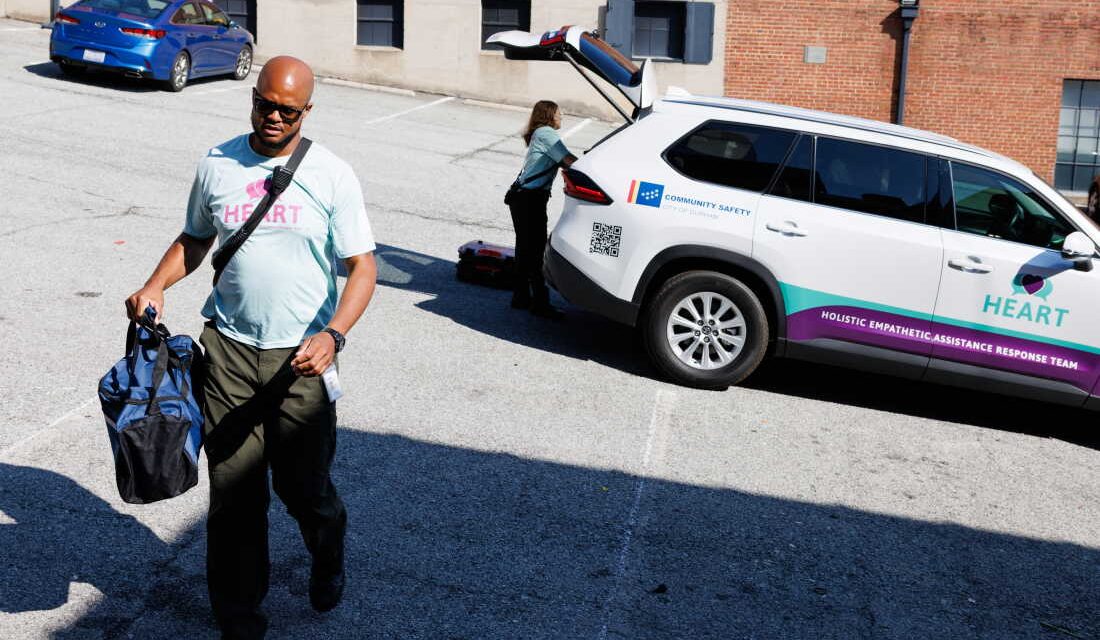
In Durham, North Carolina, Rob Crisp responded to a call on September 14 as part of the Holistic Empathetic Assistance Response Team (HEART). Crisp and Allie Craft, equipped with snacks, bottled water, and hygiene kits, sought out a man reported for trespassing.
Upon arrival, they found him in a parking lot with belongings, including garbage bags and a sofa, and a cautious demeanor, wearing a McDonald’s T-shirt. Crisp approached calmly, acknowledging his own past struggles and offering supplies, aiming to build rapport. The man accepted their help, ultimately deciding to move his belongings to a nearby vacant lot, resolving the immediate conflict.
“We’re not trying to bother you, but hey, we do have some supplies while we are here,” Crisp recalled saying. “Is it all right if we get you a bag together?”
Since George Floyd’s death in 2020, numerous U.S. cities have reconsidered traditional police responses to 911 calls. Initially, only six programs sent unarmed responders to certain calls, but now, nearly 100 such programs exist nationwide.
Durham’s HEART program, launched in 2022, has handled over 25,000 calls and operates citywide. HEART also includes mental health clinicians paired with police and embedded in the 911 call center. Ryan Smith of Durham Community Safety Department advocates for sending trained social workers to appropriate calls.
Research indicates success: Duke University found increased 911 calls, suggesting growing public trust, while Research Triangle Institute associated the program with fewer arrests and limited need for police backup.
Similar programs studied elsewhere report positive outcomes. A Stanford University study showed Denver’s program reduced certain crime reports by over one-third. A Eugene, Oregon study noted decreased arrest chances and greater medical care access.
Despite progress, challenges remain. Patrice Andrews, Durham’s former police chief, recalls initial police concerns about unarmed responder safety and political resistance. However, collaboration via shared dispatch channels eventually fostered acceptance.
Alternative response programs face limitations, especially in cities where fatal police shootings revealed shortcomings. Funding constraints and narrow response scopes hinder effective mental health crisis management.
Durham proactively analyzed 911 data and collaborated with stakeholders to identify call types rarely ending in violence: trespassing, panhandling, intoxication, indecency, and welfare checks. Leigh Mazur emphasizes non-subjective decision-making in call responses.
Addressing deeper societal issues remains a challenge. Ruiz-Angel underscores these programs are not equipped to solve hardships like homelessness. Craft encounters housing-related calls frequently and relates the frustration of limited options.
Anise Vance leads Durham’s new initiative, Stabilization Services, aiming to connect people with vital resources post-crisis. Key services include housing, medical care, behavioral health, and food. The ultimate goal is reducing the need for crisis responses like HEART.
 Missouri’s Abortion Policy: Conflicting Amendments and Voter Decisions
  Philanthropic Shift Towards Supporting Women in Midlife
  Remote Work Benefits Students and Societies Alike
  Challenges and Changes in the 911 Call Taking System
  Measles Exposure in Philadelphia Raises Health Concerns
  Lawsuits Claim Vision Loss Risk from GLP-1 Medications