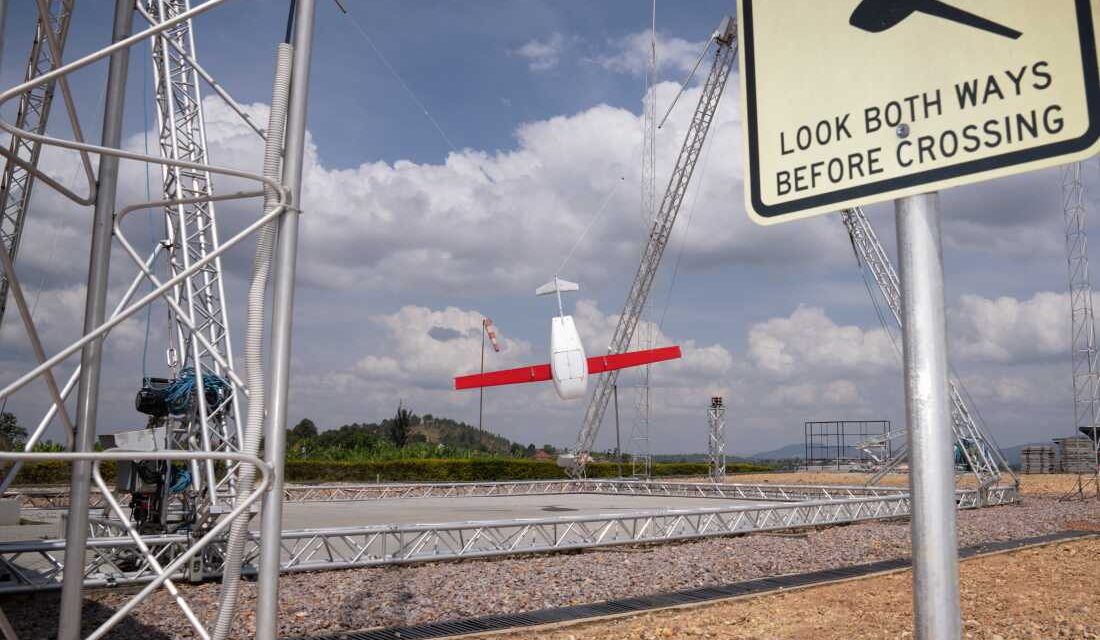
A drone, fresh from a delivery, lands in Muhanga, Rwanda. The Rwandan government partnered with American robotics firm Zipline in 2016 to use drones for emergency blood deliveries. Claire Harbage/NPR
Noella Mukanoheli’s story illustrates the importance of drones. Nine months pregnant and losing blood, she endured a three-hour journey to reach medical care. Her trip included a 50-minute motorcycle ride to her village’s clinic and a two-hour ambulance ride to a hospital ten miles away. Upon arrival, doctors requested blood. Minutes later, drones delivered the necessary blood, saving her life and her baby.
Noella Mukanoheli, who lost 5 liters of blood, describes her ordeal and the drone’s role in saving her life. Claire Harbage/NPR
This example highlights the impact of drones in Rwanda, a country challenged by difficult terrain and road conditions. Known as the land of a thousand hills, its transport routes are often hindered by slow-moving traffic. Zipline’s collaboration with Rwanda introduced drones as an immediate solution for blood deliveries. Today, drones are essential in delivering various medical supplies.
Since the 1994 genocide, Rwanda has made efforts to reduce poverty, improve healthcare, and promote high-tech solutions. Despite progress, challenges remain, such as expanding electricity and maintaining roads. A narrow dirt path leads to Mukanoheli’s village, illustrating accessibility issues.
In 2025, the Trump administration announced a $150 million grant to expand Zipline’s services in Rwanda and other African countries. Zimbabwe showed interest in Rwanda’s drone program. Despite this, the administration also cut $200 million in funding for rural aid programs in Rwanda. This decision underscores a shift in strategy towards American companies for health initiatives.
NPR sought comment from the State Department about these funding changes but received no response.
Zipline’s impactful service is apparent in the skies over Rwanda. Drones routinely carry medicines, blood, vaccines, and diagnostic tests. Zipline, led by country director Pierre Kayitana, handles pharmaceutical logistics and deliveries. The drones launch from two distribution centers, with a third opening soon, ensuring full national coverage.
Andrew Sekuye, a specialist, manages outgoing orders, which are prepared in accordance with FDA standards. Claire Harbage/NPR
The Muhanga facility operates at a high pace, fulfilling requests from various medical locations. Packages must meet a minimum weight requirement to ensure stability during flight. On launch, drones use AI to navigate, avoiding wind and reaching their destinations quickly.
Dr. Evariste Ufitihirwe at Kabgayi Hospital appreciates the fast blood delivery, a stark contrast to past delays. Before drones, emergency cases faced long waits, sometimes hours, for critical supplies.
A drone drops a package filled with medicines at Kabgayi Hospital. Claire Harbage/NPR
The drone initiative is part of a broader strategy to improve maternal health and healthcare overall. Rwanda’s maternal mortality rate dropped significantly in recent years. Drones contribute to disease management, delivering diagnostic tests and medications for various conditions.
Dr. Sabin Nsanzimana, Rwanda’s health minister, praises drone technology for transforming healthcare. Claire Harbage/NPR
However, the recent U.S. aid cuts jeopardize the progress. The government now faces challenges in funding lifesaving programs. Aid organizations, including Save the Children, express concerns over potential facility closures affecting maternal and child health.
Juliette Ishimwe, a pharmacist, receives packages from Zipline at Kabgayi Hospital. Claire Harbage/NPR
Despite technological advances, underlying infrastructure issues persist. Enoh Ebong from the Center for Strategic and International Studies emphasizes the importance of foundational elements like roads and energy. These are necessary to fully benefit from innovations like Zipline.
A narrow dirt path exemplifies the accessibility challenges in rural Rwanda. Claire Harbage/NPR
Head nurse Rosaline Uwera in Ituzi welcomes regular vaccine shipments but lacks critical equipment like oxygen and ultrasounds, requiring referrals to distant hospitals.
Two months post childbirth, Mukanoheli continues to recover. Her baby suffers from malnutrition, and she faces challenges accessing adequate care and resources.
Noella Mukanoheli hopes for better access to healthcare directly in her village clinic. Claire Harbage/NPR
 Gorillaz and Macklemore Respond to Controversy Over Israel-Palestine Statements
  Investigation into Lion Deaths in Tanzania
  Merz Stays Resolute Amid Electoral Shifts in Germany
  Lymphatic Drainage and Ice Sculpting: Emerging Wellness Trends
  U.S.-Iran Relations and Diplomacy at Upcoming U.N. Assembly
  US-China Relations Under Scrutiny: Expert Warns of Escalating Tensions