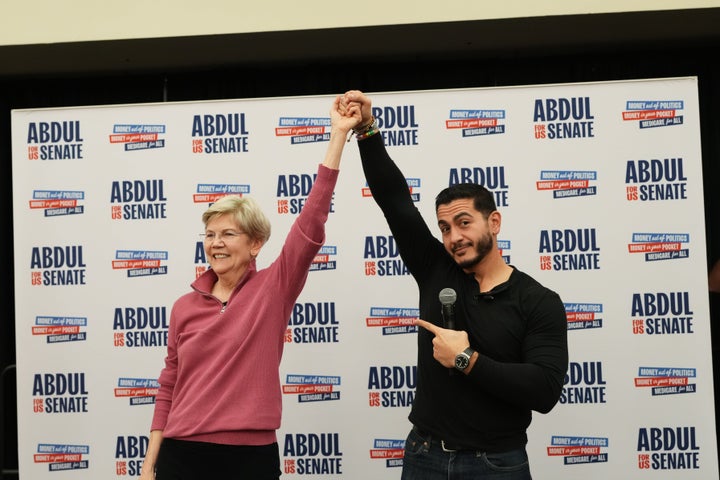
Following a major election where Democrats gained control in both the House and Senate, progressives convened in Washington to assert their influence within the Democratic Party. At the Popular Mandate conference, Sen. Elizabeth Warren (D-Mass.) highlighted how Democrats won in states like Texas, Kansas, and South Carolina by addressing economic struggles, condemning political corruption, and challenging a skewed economic system.
Democratic candidates embraced economic populism in their campaigns, focusing on issues like corporate concentration and the billionaires’ growing power. Warren emphasized that these wins indicate a unified progressive approach against corporate power and corruption, which has now become central to the party’s platform.
“Economic populism is the leading campaign strategy,” stated Lindsay Owens, president of Groundwork Collaborative. This unifying message resonates across the political spectrum as Leah Greenberg, co-executive director of Indivisible, explained. The focus is on whether power resides with the people or with the wealthy and influential.
With their largest victory since the election following Nixon’s resignation, Democrats must show they intend to act. “Every candidate, regardless of their political stance, campaigned on economic populism,” Owens remarked. The pressing question is if they will govern with the same commitment.
Speakers at the conference unanimously agreed that Democrats need to pursue aggressive reform, tackling issues like the cost of living and wealth disparity. Warren urged, “We can’t simply resist Trump for years; we must act to improve working people’s lives now.” She cited historical precedents like the Voting Rights Act and Americans with Disabilities Act, which emerged under divided government, as examples of what can be achieved.
Rep. Jamie Raskin (D-Md.) insisted that actions addressing affordability and investigations into Trump’s administration are inseparable. Owens suggested using the current session to push for crucial policies, including eliminating Trump’s tariffs and reallocating funds from immigration enforcement to Medicaid.
Democrats should break procedural barriers such as the filibuster to force Trump to veto beneficial bills, creating a contrast between Democratic goals and Trump’s obstructions, argued Brian Fallon, a Democratic strategist.
Beyond legislative matters, Democrats must focus on accountability, targeting connections between corporate power and Trump’s corruption. This effort aims to highlight the real-world costs of Trump’s abuses.
Speakers suggested that investigations extend to Trump’s interactions with influential tech CEOs and industry leaders, advocating for a strategic approach focused on public concerns and corporate accountability.
The conference also called for Democratic state governments to tackle the cost-of-living crisis, with an emphasis on acting decisively, much like Franklin Roosevelt’s transformative measures in the 1930s.
Elizabeth Wilkins, president of Roosevelt Forward, noted the importance of seizing the opportunity provided by the election wins. She warned that failing to deliver on economic promises would be the biggest mistake.
 Controversy Surrounds Governor Newsom’s Death Sentence Commutation Plan
 Jewish Activist Criticizes Event Cancellation at CUNY School
 Debate on School Choice in Texas Elections
 Amy Klobuchar Takes On Governorship with Promises for Minnesota’s Growth
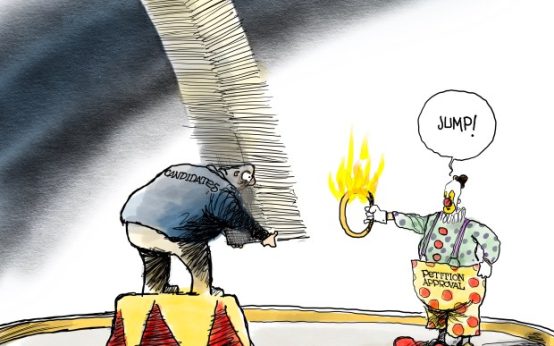 Challenges of Signature Requirements for Political Candidates in Illinois
 Debate Rekindled Over Gray Wolves and Livestock Losses