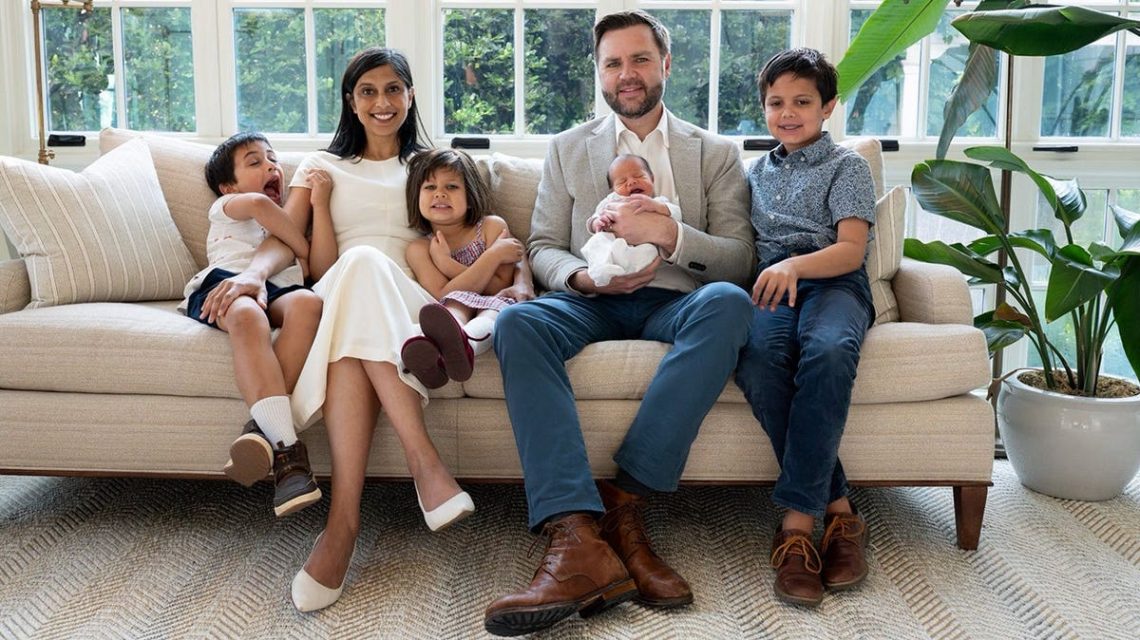
A proposal championed by Vice President JD Vance aims to provide up to $9,000 annually for each child to families with stay-at-home parents. Despite its intention to support family units, this proposal has ignited concerns amongst conservative circles who fear it may induce government interference and discourage self-reliance.
Advancing American Freedom (AAF) has expressed opposition through a concise document, arguing the plan could unravel family integrity, inhibit work, and spawn fraud. Vance proposes to expand the Child Care and Development Fund (CCDF), originally set up to assist low-income families with childcare costs. Currently, the CCDF allocates around $9,000 per child directly to childcare providers.
“Parenting is the most difficult job in the world. Vice President Vance is right to focus on the family,” said Tim Chapman, AAF president.
Under the Vance draft, families featuring a stay-at-home parent earning below state thresholds could access the subsidy, provided one spouse works at least 35 hours weekly. Single parents and unmarried couples are ineligible. AAF President Chapman contends the proposal presents risk factors like government audits and dependency.
AAF warns expanding eligibility could strain limited resources, noting that 870,000 families currently benefit from the CCDF, many being single mothers. Concerns revolve around increased competition for these resources, particularly in states with existing waitlists.
A key component of the proposal is establishing an auditable childcare service, which raises concerns about fraud monitoring. John Shelton, AAF’s vice president of policy, emphasized the challenge of balancing additional earnings with potential loss of benefits.
The proposal has attracted criticism for potentially penalizing stay-at-home spouses who engage in part-time or remote work, and cautions families could face financial consequences from career advancements.
“Welfare’s goal is to get people into work and off of welfare,” AAF stated, criticizing the proposal for not aligning with this goal.
While some advocate for equal financial support for stay-at-home parents as those utilizing subsidized childcare, critics highlight inconsistencies in current welfare structures.
Roger Severino from the Heritage Foundation argues for leveling the financial support playing field, pointing out discrepancies between commercial and home childcare funding.
Shelton praised the effort but noted issues in the proposal’s implementation, suggesting it may fail in practical application.
 Latino Men Shift Away From Trump Ahead of Midterms, Poll Reveals
  Growing Threat of AI-Driven Scams and Deepfakes
  Jonathan Turley Criticizes Protests Targeting Supreme Court Justices
  Amir Odom: Perspectives on LGBTQ Movement and Political Identity
  Exploring Orange County’s Anti-Mexican Political History
  SNL’s Cold Open Highlights GOP Struggles