Scams are evolving, becoming more dangerous with each passing day. Artificial intelligence now empowers scammers, posing a greater threat to Americans than ever before. Impostor scams cost billions of dollars annually, tripling since 2020. Even before AI became widespread, impersonation fraud was prevalent. Now, millions of scamming and theft reports emerge yearly, with AI enhancing cloning tools.
Consider the case of Jennifer DeStefano from Arizona. In 2023, she answered a call, hearing her 15-year-old daughter crying for help. A man claimed to have kidnapped her daughter, demanding a $1 million ransom, which he reduced to $50,000. Before paying, DeStefano found her daughter was safe. Later, she testified before a Senate Judiciary subcommittee, identifying her daughter’s voice in an AI deepfake kidnapping scam.
AI capabilities continue to advance, worsening the problem. Imitating trusted individuals becomes easier, making it harder to verify if phone calls or videos are genuine. Voice and image duplication methods are now highly advanced, needing only three seconds of audio for replication.
Deepfakes, AI-generated digital duplicates, raise significant concerns. They don’t require explicit permission, threatening privacy, personal security, corporate reputation, and more. Should there be rights against digital duplication without consent?
In 2024, after an AI study with over 10,000 public comments, the U.S. Copyright Office acknowledged existing AI-related protections have large gaps. It recommended enacting a federal law to protect individuals from unauthorized digital replicas. The Copyright Office highlighted that the AI threat affects citizens across all aspects of society.
Creative professionals, from musicians to voice actors, understand the problem deeply. They fear generative AI is stealing their work and identities. AI developers openly utilize copyrighted content without permission, which many see as wrong. Intellectual property protections are sensible and widely supported.
The Alliance for Secure AI, which I advise, launched “Creatives for Secure AI,” encouraging creative professionals to address the AI challenge and safeguard their likenesses. People deserve meaningful control over their digital copies.
Congress is beginning to recognize the issue as well. The bipartisan NO FAKES Act proposes protections for Americans regarding digital duplicates. It aims to establish a federal right to protect individuals against unauthorized digital replicas of their voice and visual likeness, thus safeguarding privacy and livelihoods. The basic principle is clear: your identity remains your own.
No one should worry about their face or voice being copied and manipulated for deception. With AI development outpacing policy, Americans need protections matching current technology and speed.
The AI threat is multifaceted. How many stories like DeStefano’s are unheard? How many creatives see their identities co-opted by AI without consent? How many victims of AI overreach go without justice? These are challenging questions, but leaders can address them through sensible legislation.
The NO FAKES Act is a starting point for bipartisan progress. It’s already passed the Senate Judiciary Committee and awaits a Senate floor vote. Congressional leaders must allow voting on this critical bill.
Deepfake quality improves, scams worsen. It’s time for action against theft, and for Congress to heed the call.
Nico Zviovich is an advisor for The Alliance for Secure AI. He launched Creatives for Secure AI and serves as an award-winning film producer and chief impact officer of MovieGoer, a film distribution and marketing company.
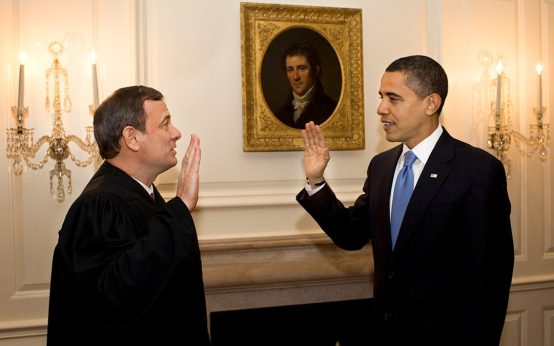 Jonathan Turley Criticizes Protests Targeting Supreme Court Justices
  Amir Odom: Perspectives on LGBTQ Movement and Political Identity
 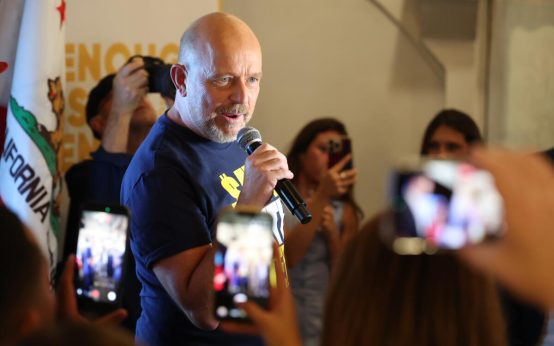 Exploring Orange County’s Anti-Mexican Political History
  SNL’s Cold Open Highlights GOP Struggles
  Jon Gruden’s Surprise Appearance at Trump Rally Sparks Interest
  Randy White Endorses Ken Paxton in Texas Senate Race