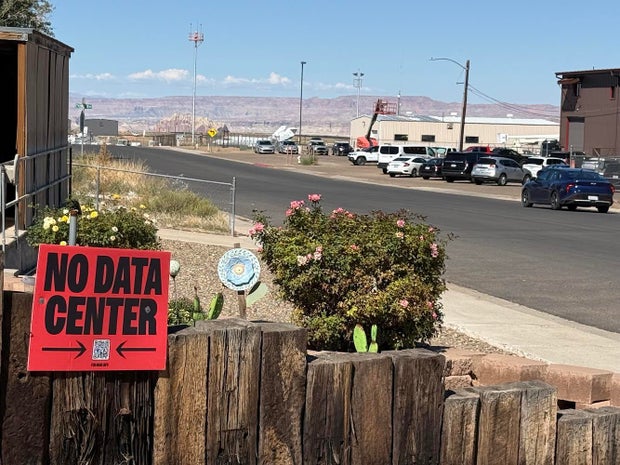
October 29, 2026 / KFF Health News – Doug Herrera lives in the house built by his father in Page, Arizona. His father passed away from cancer, possibly linked to nearby uranium mining pollutants. Herrera now fears a proposed $10 billion mega data center could threaten his health.
I’m a patriot, but I’m highly against the data center,
Herrera, 64, stated while standing near a ‘No Data Centers’ sign in his yard. He has concerns about light, sound pollution, and increasing temperatures due to the data center.
Community Opposition
Page is known for its stunning Southwestern landscapes, marked by Joshua trees and red-rock formations. Despite City Council approval for land sale, developer approvals remain pending, spurring residents to oppose construction through petitions.
The surge of data centers causes division within communities and influences the midterm elections. In Arizona’s 1st Congressional District race, candidates disagree on new data centers. The state’s attorney general has requested a pause on approvals and construction.
A developer purchased 500 acres in Page for the proposed center. Emerging research on health effects further fuels state opposition, with politicians facing risks due to previous support.
Political Challenges
Data centers, housing AI infrastructure, cover tens of thousands of square feet. Page approved 500 acres for the center, though specific location pending. The area features native grasses and blackbrush near Horseshoe Bend, a popular tourist site.
These centers consume electricity, requiring gas generators during peak demand, causing air pollution linked to health risks, as per environmental studies. Studies forecast substantial public health burdens by 2028.
Cooling components might contain forever chemicals that accumulate in human tissue. Generator noise can harm hearing. Lighting for operations produces light pollution, potentially affecting chronic disease risks.
Research and Concerns
Alison Steele, Environmental Health Project executive director, emphasizes the urgency of research on data centers’ health impacts. Decisions are being made before comprehensive research results are available.
We’re just starting to see the very early edge of the wave of the research into health impacts of data centers,
she said.
The Data Center Coalition asserts backup power source usage is minimal, with regulations reducing emissions and impacts.
Divisive Issue
Concerns over data centers create political rifts, affecting GOP candidates challenging President Trump’s facility support for economic growth. A poll shows two-thirds of Americans oppose new centers.
States winning by Trump in 2024 see most new data center proposals. Republican bastions risk disruption due to data center construction.
Opposition could impact GOP candidate Jay Feely’s face-off with Democrat Amish Shah, who seeks to pause new construction.
Photos from data center groundbreaking ceremonies have turned into campaign materials, especially in Ohio.
Political Impact
Ohio sees significant local referendum activity on data center construction. Former Sen. Sherrod Brown challenges GOP Sen. Jon Husted in Ohio’s U.S. Senate race over the issue.
Tax incentives attracted tech companies like Google, Meta, and Amazon, sparking protests due to health and environmental concerns.
Brown’s campaign targets Husted’s support for data centers. Ohio voters oppose centers due to air and noise pollution and water contamination concerns.
Husted defends data centers as local issues, aiming at infrastructure cost accountability. A survey shows 55% Ohio adults oppose data center construction.
Data centers face backlash compared to nuclear plants. Diesel generators contribute air pollution linked to cardiovascular problems and asthma.
Page residents express concern over health impacts, voting out the mayor amid Council’s data center approval. Resistance serves as election warnings for candidates supporting new centers.
Jan Boehme’s neighborhood nears the proposed site. She worries about potential noise issues if the center becomes operational.
KFF Health News produces health journalism nationally as part of KFF, offering research, polling, and reporting.
 The Growing Impact of Cannabis Use on Families
 Potential Conflict of Interest In Federal Health Agency
 Social Media Habits and Mental Health in Adolescents
 Historical Election Controversies: Kennedy’s Campaign and Alaska’s Senate Race
 Michigan Senate Candidate Emphasizes Diplomatic Approach to Cartels
 Tight Race in South Carolina Senate Election