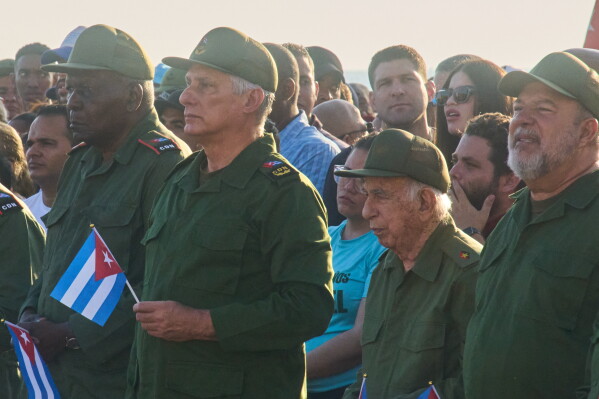
The Cuban government is expanding its hospitality sector by inviting Cuban investors, both local and overseas, to manage hotels previously operated by foreign companies. This move follows the withdrawal or limitation of operations by several international hotel chains on the island.
Spanish hotel chain Meliá announced on May 26 its decision to discontinue operations in 15 of the 34 hotels it manages in Cuba. This decision coincides with new U.S. sanctions that have intensified the ongoing economic challenges in Cuba. President Miguel Díaz-Canel attributes frequent blackouts, water shortages, supply chain issues, and healthcare deficiencies to the U.S. blockade.
Other hotel chains, including Canada’s Royalton and Spain’s Iberostar, have also reduced or stopped their operations in Cuba. This has severely impacted the tourism sector, which has struggled since its peak in 2018.
In a recent broadcasted interview with a Spanish journalist, President Díaz-Canel discussed the new management policy. He stated, “There will be hotels that we will have to operate more with Cuban management than with shared management with foreign entities. We are proposing different business models. We are open to Cubans who want to invest and manage hotels.” He also mentioned offering similar opportunities to Cubans living abroad.
Meliá’s decision to reduce its presence comes after U.S. President Donald Trump expanded sanctions against Cuba. These sanctions primarily target Grupo de Administración Empresarial S.A. (GAESA), a major business conglomerate managed by the Cuban Revolutionary Armed Forces. This order also impacts international business engagements by freezing assets, seizing accounts in the U.S., and restricting travel for stakeholders, essentially cutting off activities linked to the U.S. financial system.
GAESA, established in the 1990s, has diverse business interests, including car rentals, retail, and transportation companies. It partners with Meliá in hotel management through its subsidiary, Gaviota. Meliá has been a significant contributor to Cuba’s tourism sector, previously managing around 14,000 hotel rooms.
The tourism sector in Cuba witnessed a profound decline, with the number of tourists dropping by 48% in the first quarter of the year compared to the same timeframe in 2025. Statistics reveal only 298,000 tourists visited Cuba in the first three months, starkly contrasted with 573,300 in the prior year.
During the interview, Díaz-Canel criticized U.S. policies spearheaded by Trump and Secretary of State Marco Rubio, describing them as “cynical.” He argued these policies aim to cripple Cuba to provoke unrest that could potentially justify U.S. intervention under the guise of humanitarian aid. Furthermore, Díaz-Canel suggested the sanctions might be part of a strategy to coerce Cuba into economic negotiations or potentially set the stage for military intervention.
Despite earlier dialogues between U.S. and Cuban officials, relations have become increasingly strained. Former Cuban President Raúl Castro faces legal charges in the U.S. for his alleged involvement in the downing of two civilian aircraft operated by Miami-based exiles over Cuban waters in 1996.
 Google Fined for Breaching EU Privacy Rules
  South China Sea Tensions Rise after Collision between Chinese and Philippine Ships
 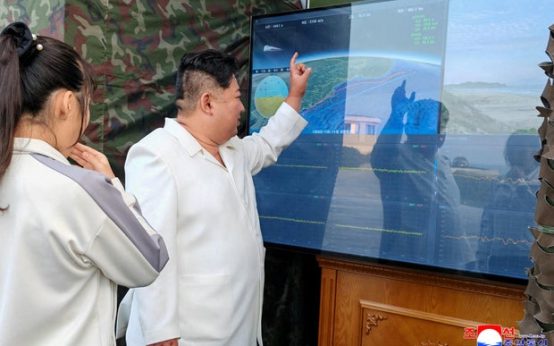 North Korea’s Hypersonic Weapon Test Amid Global Tensions
  Austin Tice: A Search for Answers
  U.S., Denmark, and Greenland Forge New Security Agreement
  Secretary Rubio Discusses Middle East Conflict and NATO Relations