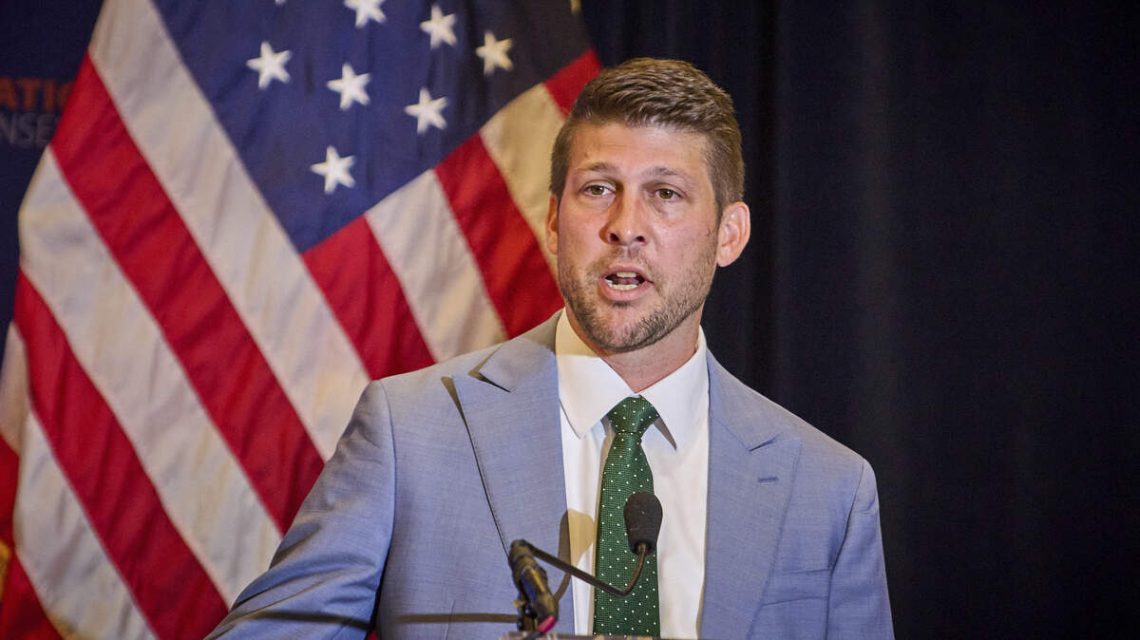
James Uthmeier addressed the National Conservatism Conference in Washington D.C. on September 3, 2025. The simple yet concerning truth about Florida’s Amendment 3 was pointed out by a judge from Tallahassee. This November proposal aims to reduce property taxes in the state.
A Leon County Circuit Judge, David Frank, identified flaws in the ballot language of the proposed amendment. He deemed the wording as biased and in need of revision for voters to make informed choices. He critiqued the title, ‘Save Our Homes From Excessive Property Taxes’, and found the summary on ballots to be political rather than explanatory.
Judge Frank emphasized that voters deserve clear, accurate ballot statements to aid them in decision-making. The current language misleads the public, potentially affecting their understanding.
Voters are entitled to a fair, clear, accurate and non-misleading ballot statement to assist them in making their critical determination. The present ballot language would deprive the voters of the opportunity to make a meaningful decision.
Governor Ron DeSantis initially promoted the amendment, which proposes increasing the homestead exemption on owner-occupied homes up to $250,000 by 2028. Another change would lower the annual assessment cap for non-homestead properties from 10% to 5%.
The Republican-controlled Legislature altered the measure to maintain funding for public schools through property tax bills. DeSantis later decided not to support the revised proposal, stating dissatisfaction.
The amendment’s legality faced challenges from a bipartisan group, ‘Save Our Voters From Misleading Ballot Language’. This group includes former lawmakers like Sen. Jeff Brandes and others.
Attorney General James Uthmeier, seeking election after being appointed by DeSantis, has a limited timeframe to revise the ballot language. A challenge to the revised language must occur soon after.
The judge noted several fairness issues with the ballot, such as misleading subheadings promising core services funding; however, the amendment could reduce local government revenue impacting services like police and fire.
The summary also claims fairness for residents yet appears to discriminate against specific groups, including renters who might face shifted costs, and new residents post-2026 who would wait years for exemptions.
A critical omission is how the amendment could alter ‘home rule’, shifting spending control from local governments to the state Legislature. This change challenges the existing power distribution over tax spending in Florida.
Floridians will decide on the revised amendment in November assuming it makes it to the ballot. With revised language, voters could better understand the proposed changes.
More about editorials:
Editorials are opinion pieces from the Miami Herald Editorial Board, which is independent from the newsroom. The board comprises opinion editor Amy Driscoll and writers Isadora Rangel and Mary Anna Mancuso.
Editorials focus on regional issues impacting South Florida, often addressing policy and social matters. The board seeks to advocate for stronger communities through fair opportunities and tackling inequality.
The board is separate from newspaper reporting staff. Those interested in contributing to Miami Herald’s opinion section can submit op-eds or letters expressing personal views on relevant local topics.
 U.S. Considers Belarus for Potash Purchases to Cut Fertilizer Costs
  Gov. JB Pritzker Reveals Type 2 Diabetes Diagnosis and Weight Loss Journey
  Trump’s Media Ban Affects Event Coverage
  A Critical Perspective on National Spending and Healthcare from Representative Eric Burlison
  House Republican Criticizes Funding for Trump’s Arch Proposal
  House Bill Proposes Dual Benefits for Combat-Injured Veterans