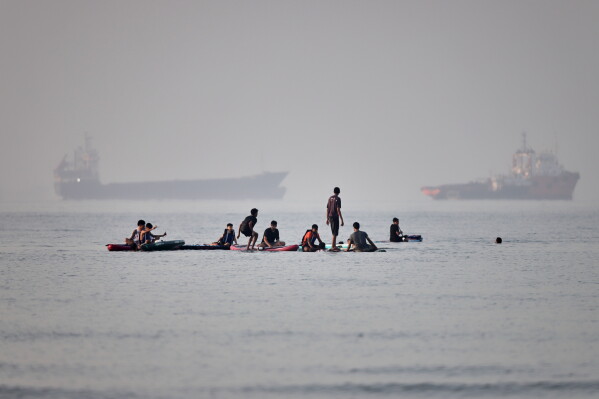
President Donald Trump faces criticism from both opponents and allies regarding his handling of the situation with Iran. Initially promoted as a short military engagement, the conflict now appears to be in a deadlock.
Recently, U.S. and Iranian negotiators agreed to a 60-day extension of the ceasefire and to restart talks on Iran’s nuclear program, pending Trump’s approval. However, Trump insists on unspecified changes, while Iran, seemingly betting on his reluctance to resume military action, shows no intention of meeting new demands.
This week, U.S. and Iranian strikes raised concerns about the ceasefire’s stability. Trump minimized these concerns by suggesting that ceasefires in that region signify more restrained fighting. Despite the shaky situation, he remains optimistic that a deal could come together soon.
Without a settlement to reopen the Strait of Hormuz, global energy prices remain high, affecting the cost of food, fuel, and other goods. Reports claim Iran is backing away from negotiations, leading Trump to express indifference regarding the stalled talks.
Trump’s Dilemma and Internal Concerns
Inside Trump’s administration, there is increasing worry about his limited options. Democrats emphasize rising oil prices, while some Republican supporters warn against a hasty exit from the conflict. Trump hears conflicting advice from Republican lawmakers, Pentagon officials, and Gulf allies, who caution against further military action due to depleted munitions and fear of Iranian retaliation.
Trump remains wary of accepting an arrangement reminiscent of the 2015 nuclear deal initiated by Obama. Trump originally withdrew from this pact, arguing it failed to curb Iran’s nuclear ambitions, ignore missile development, and permit Iranian support for militant groups. He fears tarnishing his legacy with a suboptimal deal according to internal discussions.
A White House spokeswoman dismissed the notion that Trump is constrained, insisting there are no concerns about the negotiation pace within the administration.
Pressure from Israel and Other Allies
Israel and belligerent allies urge Trump to increase economic pressure on Iran and back Israel’s actions against Hezbollah in Lebanon. However, Trump opposed this, insisting Israel stand down. Consequently, Israel and Lebanon renewed a ceasefire, though Hezbollah, absent from the talks, condemned the agreement.
Behnam Ben Taleblu from the hawkish Washington think tank Foundation for Defense of Democracies suggests Iran might exploit the current situation more effectively. Although weaker militarily, Iran might perceive the stagnation as advantageous, not yielding on battlefield or negotiation fronts to deny Trump a victory image.
Political Implications Ahead of Elections
Democrats capitalize on Trump’s management of the unpopular war as midterm elections approach. The House passed a symbolic resolution calling for military action cessation, with minor Republican crossover joining the Democratic stance.
“The Democrats are fueled by Trump Derangement Syndrome,” Trump stated via social media, disparaging the Republican dissenters as “GRANDSTANDERS.”
During hearings, Democrats criticized Trump for discounting the conflict’s economic impact on Americans and failing to anticipate Iran closing the Strait. Senator Cory Booker highlighted the unsteady ceasefire as evidence of Iran’s upper hand.
In response, Marco Rubio insisted Iran’s capabilities have diminished after U.S. strikes, dismissing any notion of American defeat or begging for diplomatic reentry.
Senator Chris Van Hollen criticized Trump’s lack of concern over voter anxieties about rising living costs. Despite this, Trump maintains his position, predicting gas prices will decrease post-conflict.
Christopher Borick from Muhlenberg College notes Democrats targeting Trump’s war rhetoric, suggesting prolonged conflict risks political blowback for Republicans, especially in swing districts.
 Google Fined for Breaching EU Privacy Rules
  Mayor Mamdani and President Trump Discuss Major Housing Project in NYC
  South China Sea Tensions Rise after Collision between Chinese and Philippine Ships
  Poll Reveals MAGA’s Increasing Popularity Over DSA as Democrats’ Future Debated
  North Korea’s Hypersonic Weapon Test Amid Global Tensions
  Debate Over ICE Action in Austin Escalates