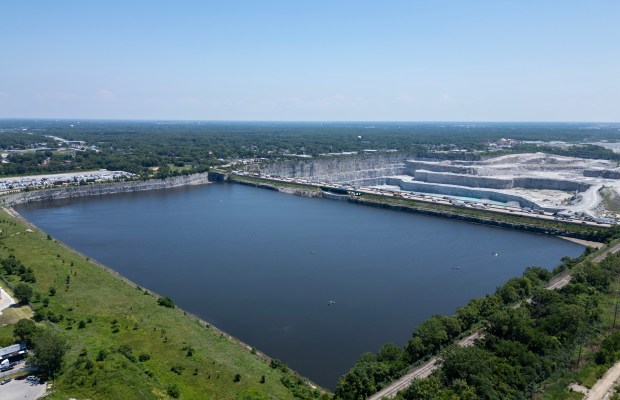
Residents in the south suburbs are worried about increased flooding and unpleasant odors as the Thornton Composite Reservoir nears capacity for the first time. The reservoir was 94% full after heavy rain over the weekend, marking the fullest it has been since it became operational in 2015, according to the Metropolitan Water Reclamation District of Greater Chicago.
By Tuesday morning, the water level had slightly decreased to 93%, which equates to 7.3 billion gallons. Previously, the highest capacity reached was 54.5% in 2019. As billions of gallons of sewer water are exposed to the air, nearby residents are experiencing strong odors.
“It smells,” noted Thornton Village Clerk Nikki Kitakis. “It’s pretty horrific.”
Odors have been a persistent issue, especially pronounced when the reservoir is this full. Kitakis emphasized the unpleasant impact, stating, “The stench is putrid, affecting all aspects of life.” Attempts by the water reclamation district to reduce the smell have had limited success.
Efforts are ongoing, with the district working tirelessly to reduce water levels in both the Thornton Composite Reservoir and the McCook Reservoir, which serves central Chicago. The Thornton reservoir, the largest of its kind, collects water from 14 communities, impacting 556,000 residents.
The district cautioned these areas could face heightened risks of flooding if capacity is reached. In Dolton, residents shared flooding experiences at a Village Board meeting. Mayor Jason House empathized with those affected.
“I promise you, I cringe with them,” House remarked, highlighting the slow relief anticipated from flood infrastructure improvements, estimated at $50 million.
Public Works Superintendent Matt Stacy urged residents to hope for dry weather and revealed ongoing communication with the district about the reservoir’s status. Although forecasts predict rain later in the week, contingency plans are in place.
A rain gauge in Flossmoor recorded 6.37 inches over the weekend, underscoring the severity of recent conditions. The district employs gravity flow to manage water levels, directing it to the Calumet Water Reclamation Plant, where it is processed and returned to the environment.
The reservoir’s storage capacity of 7.9 billion gallons still allows for 600 million additional gallons. The district has yet to respond to inquiries about the drainage timeline.
 EPA Dismantles Greenhouse Gas Rules, Causing Concern
  How Battery Innovations Transform Renewable Energy
  Data Centers Stir Controversy in Texas Amid Growth Boom
  Urgent Archaeological Efforts in Quinhagak Stay Ahead of Erosion
  Concerns Rise Over NIPSCO Permit In Jasper County
  Reader Reactions on Grizzlies and Data Centers