Residents Protest, Flee Suspected Ebola Areas
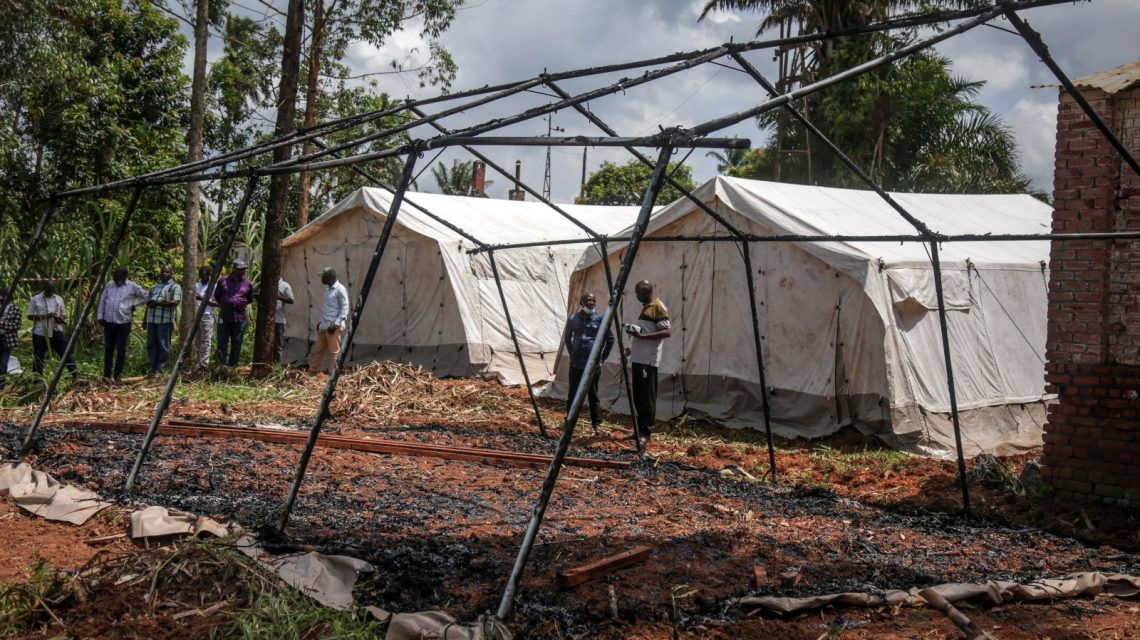
A hospital official in the Democratic Republic of the Congo reported that over a dozen people suspected of having Ebola fled amidst community tensions. The incident occurred after a treatment tent was set ablaze by local residents angered by burial policies. The aggression followed an earlier event where authorities withheld the body of an Ebola victim, further inflaming local sentiments.
“We strongly condemn this act, as it caused panic among the staff and also resulted in the escape of 18 suspected cases into the community,”
Dr. Richard Lokudi, in charge of Mongbwalu hospital, informed the Associated Press. Although the medical tent, provided by Médecins Sans Frontières (MSF), was unoccupied at the time, the broader implications for Ebola containment efforts are significant.
The World Health Organization assesses the situation in the DRC as “very high” risk. This outbreak involves the Bundibugyo virus, a rare Ebola strain lacking approved vaccines or treatments. The escape of suspected patients presents a substantial challenge to controlling the virus’s spread.
Medical Tent Destruction and Community Fallout
On Friday, in Mongbwalu—the outbreak’s center in Ituri province—the medical tent faced arson. Eighteen individuals with suspected Ebola managed to leave the facility during the chaos. MSF emphasized the need for strong community ties in response efforts, recognizing the current climate of fear and misinformation. Despite setbacks, MSF plans to establish a 60-bed treatment center to continue supporting health authorities.
Tensions Over Burial Protocols
The unrest in Mongbwalu came after a similar situation in Rwampara, where a treatment center was destroyed. Tensions escalated when family members were denied the body of a deceased Ebola suspect. Health authorities emphasize the risks posed by traditional burials where infected individuals may still transmit the virus. Officials, with protective gear, conduct safe burials to prevent additional transmission. Reuters noted that security forces resorted to tear gas to manage the Rwampara disturbance. During the protest, flames consumed medical tents and a body awaiting burial.
Expanding Outbreak
WHO Director-General Tedros Adhanom Ghebreyesus reported 82 confirmed cases and seven fatalities in the DRC, though the outbreak’s true scale might be “much larger.” According to the Associated Press, an estimated 750 cases and 177 deaths are suspected, with numbers likely to rise as monitoring improves. As of Thursday, the DRC health ministry noted 160 deaths among 670 suspected cases.
Outbreak Timeline
This outbreak began with the discovery of unexplained deaths in Ituri province last month. Investigations identified the virus in a nurse deceased on April 24. Retrospective checks suggested the virus circulated for weeks prior. The official outbreak declaration came in early May after identifying the Bundibugyo strain. The virus’s rapid spread prompted alerts in neighboring Uganda and South Sudan, alongside increased U.S. airport screenings.
Understanding Ebola’s Lethality
Ebola is among the deadliest viral pathogens, with case-fatality rates varying by strain, healthcare quality, and response speed. Historical records show mortality rates from 25% to 90%. The Bundibugyo variant typically results in 30% to 50% fatalities. The current outbreak sees increased severity, with PAHO estimating a death rate between 55% and 60%.
Ebola severely compromises the immune system and blood vessels, leading to organ failure and internal bleeding. Early supportive therapies can significantly enhance survival, though many areas struggle with timely access to care.
 Investigation into Far-Left Groups Organizing Protests
  Deadly Dispute Over Beach Chairs in Greece
  Couple’s Fortunate Detour Saves Them from Himalayan Disaster
  MAHA Activists Challenge Trump and RFK Jr. on mRNA Vaccines
  Senator Criticizes Planned White House Welcome for Xi Jinping
  Fraud Task Force Saves Billions by Targeting Obamacare Fraud