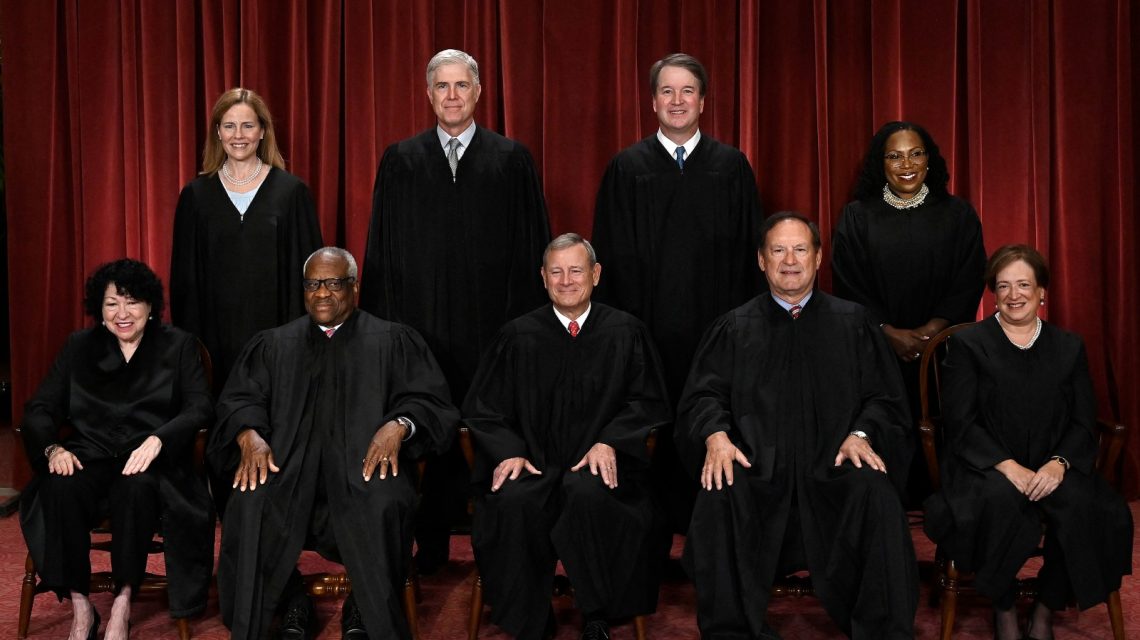
America’s Catholic bishops have appealed to the Supreme Court regarding Florida’s jury formation in criminal cases. They claim Florida’s current system violates the U.S. Constitution.
Florida’s Current Jury System
In Florida, only capital cases require a 12-member jury. Other criminal cases use six-member juries. The Supreme Court has agreed to hear a case from Hamed Kian, who was convicted by a six-member jury. Kian argues this violates his Sixth Amendment rights.
The case has attracted support from various groups, including current and former prosecutors, the American Civil Liberties Union, and Catholic bishops. The United States Conference of Catholic Bishops submitted an amicus brief challenging the legal framework backed by Florida and other Republican-led states. They argue the original meaning of the Constitution’s jury-trial right necessitates 12 jurors.
Kian v. Florida Case Background
This case focuses on the number of jurors required for serious criminal trials. Kian, a chiropractor in Florida, was convicted by a six-member jury. He argues that the Sixth and 14th Amendments demand a 12-person jury for serious crimes. The Supreme Court, in June, agreed to hear the case as it challenges the 1970 Williams v. Florida decision, which upheld smaller juries in noncapital cases.
Kian faced charges of practicing chiropractic medicine with a suspended license, a third-degree felony in Florida. Prosecutors provided testimony and records showing that Kian treated patients post-suspension. The jury convicted Kian on all counts, sentencing him to over a year in prison and five years of probation.
A Look at Historical Precedent
Historically, both in England and the U.S., criminal juries comprised 12 members. In 1970, the Supreme Court’s Williams v. Florida decision permitted states like Florida to use smaller juries in some criminal cases. Florida’s law only mandates a 12-member jury for capital cases.
Kian’s lawyers argue the Supreme Court’s decision in the 2020 Ramos v. Louisiana case, requiring unanimous jury verdicts, undermines the Williams reasoning. They assert that the original meaning of the Constitution supports restoring the 12-person requirement.
Catholic Bishops’ Perspective
The Catholic bishops argue the church’s influence on criminal justice protections and jury trials is significant. They claim the Constitution incorporated a tradition of 12-member criminal juries. The bishops seek a return to this understanding.
By citing historical sources, including dictionaries and common law from the founding era, they assert that the term “jury” inherently means 12 people. Their brief was filed by attorneys, including former U.S. Solicitor General Noel Francisco.
Florida’s Defense
Florida defends its jury system, arguing for the preservation of the precedent set by Williams. The state emphasizes that Williams remains binding and relied upon by courts and legislatures for decades. Florida notes that six states use juries with fewer than 12 members in some prosecutions. They argue overturning Williams could significantly affect many ongoing appeals and cases.
The state disputes claims about the inefficacy of smaller juries. Referencing studies and conviction data, they contend that six-person juries function comparably to larger ones. Florida argues that the Constitution’s text doesn’t stipulate a 12-member jury requirement.
Conservative Legal Debate
This case unfolds amid a growing interest in originalism among conservative legal scholars. Some Supreme Court justices have expressed doubts about the validity of Williams. Justice Neil Gorsuch, in particular, has criticized the precedent.
This divide is unusual, with Republican-led states defending existing systems and religious conservatives pushing for historical interpretations, even with practical challenges.
Implications of the Case
A ruling in Kian’s favor could alter criminal procedures in several states, possibly affecting thousands of past convictions. It would mark another significant decision revisiting a 1970s precedent.
If the Court sides with Florida, it would maintain the current system and affirm states’ flexibility in jury structures. This case highlights an uncommon scenario where Catholic bishops and Republican states are on opposing sides in a constitutional battle.
As the Supreme Court decides on the necessity of 12-member juries, the case could reveal how far the Court will go in aligning originalist principles with modern judicial practices.