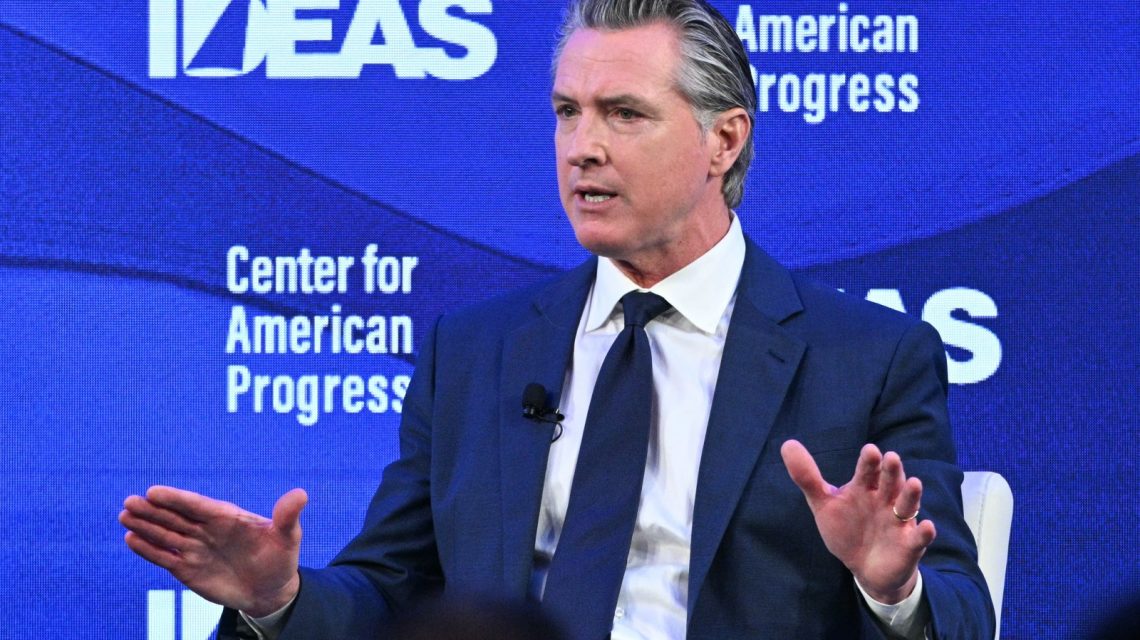
Governor Gavin Newsom of California reached an agreement on a $351.7 billion budget with Democratic lawmakers for his last term. This budget was supported by an increase in tax revenue linked to the success of artificial intelligence companies in the stock market. This occurs as voters get ready to consider a ballot measure aiming to tax the ultra-wealthy, who are responsible for this financial gain.
Newsom revealed that revenues were $16.5 billion higher than expected in January, contributing to the positive fiscal outlook by May. The increase was mainly due to income tax from stock gains in the artificial intelligence sector, according to the Los Angeles Times. This additional revenue helped the state avoid a projected $2.9 billion budget deficit without making significant cuts that were initially considered.
Voter Decision on Wealth Tax
Despite the improved fiscal condition from taxing wealth in the tech sector, voters will decide in November whether to introduce a new one-time tax on California’s billionaires. Opponents, including Newsom, worry this might cause the wealthy to leave California, taking their tax contributions with them. In California, almost half of the personal income tax revenue is generated by the top 1% of earners.
Key Features of the Budget Deal
The finalized budget deal, outlined by Newsom and legislators, incorporates measures aimed at financial stability while investing in significant programs. Key aspects include:
- A balanced budget with no deficit for the next two years
- Allocating $6.4 billion for future financial years
- Increased funding for TK-12 schools, community colleges, and higher education
- $900 million reserved for the Homeless Housing, Assistance, and Prevention program
- $100 million allocated for the Disaster Rebuilding Fund
- Seeking voter approval in November to raise the cap on California’s rainy day fund from 10% to 20%
- Approval of a bond measure for the November ballot to generate $11.25 billion for affordable housing
- Investments to expedite elections, with $29 million earmarked for staffing increases and equipment upgrades for faster vote counting
Newsom commented, “A balanced budget isn’t an end in itself—it’s how we deliver for Californians.” Senate President pro Tempore Monique Limón emphasized that the agreement upholds a commitment to protect essential programs and reinforce California’s financial future by enhancing the rainy day fund and implementing responsible budgeting choices.
Billionaire Tax Proposal
A ballot measure proposing a tax on billionaires in California will be decided in November. If approved, it would levy a one-time 5% tax on the assets of billionaires residing in the state as of January 1, 2026. The intended purpose is to raise $100 billion in revenue, largely to support the state’s Medicaid system following federal cuts.
The initiative, filed by the Service Employees International Union-United Healthcare Workers West (SEIU-UHW), aims to relieve impending financial pressure from healthcare cuts in the One Big Beautiful Bill Act. Although Newsom and traditional union partners oppose the measure, citing it as a temporary fix for a persistent issue, they argue it risks driving billionaires out of the state.
Opposition to the proposal is strong among California’s wealthiest residents. People like Peter Thiel and Eric Schmidt have donated millions to the California Business Roundtable to counter the tax. Newsom, considering a presidential campaign, voices concerns that a state wealth tax could diminish California’s tax base.
Newsom’s Push for a National Tax
Newsom advocates for a national “billionaires’ tax” rather than individual state efforts. In a Substack post, he conveyed that wealth easily moves to states with lower taxes, stressing that the challenge should be addressed at the federal level. He urged for a “true minimum tax on billionaires” and closing tax loopholes that allow the affluent to live tax-free by borrowing against stock portfolios.
Chances of Billionaire Tax Approval
The likelihood of the billionaire tax proposal passing has changed over time. The prediction market Polymarket highlights its odds at 36% as of Saturday, a decrease from 40% at the month’s start, yet an increase from 20% a week prior. Kalshi, another prediction platform, mirrors this forecast with a 36% likelihood.
 President Trump Warns of Escalating War with Iran at UN Assembly
  Tariffs and Their Impact on Everyday Products
  Senator Criticizes Drug Policy After Ohio Tragedy
  Israeli Leader’s Upcoming U.N. Assembly Speech Marked by Controversy
  Republicans Call for Quick Resolution to Iran Conflict
  United States Secures Arctic Defense Pact