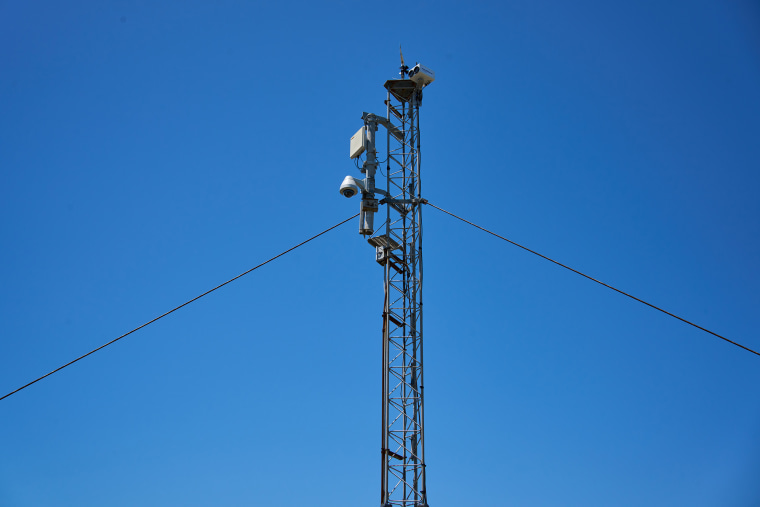
In San Francisco Bay, ferries, cargo ships, and tankers navigate the waters, often oblivious to the presence of whales. A new AI-powered detection system called WhaleSpotter is set to change this, offering continuous tracking of whales to alert mariners about these magnificent creatures. This system scans for whale blows and heat signatures up to 2 nautical miles, enabling ships to adjust their routes promptly to avoid whale collisions.
Thomas Hall from the San Francisco Bay Ferry emphasized the system’s importance, noting that it allows adjustment before ships get near, while also providing valuable data on whale locations to adjust routes for whale season. The urgency of this initiative is highlighted by the stark increase in gray whale deaths in the bay. According to The Marine Mammal Center, 21 dead gray whales were found in the area last year, with ship strikes responsible for at least 40% of these deaths. This year, the toll continues with 10 more fatalities.
Gray whales historically migrate along the California coast on their 12,000-mile journey between breeding lagoons in Mexico and feeding grounds in the Arctic. However, climate change is causing more to enter and linger in the San Francisco Bay. A 2023 Science study links disrupted food webs in the Arctic to these migration changes, leaving many whales malnourished when they reach the bay. The increased incursions into busy corridors between Angel Island, Alcatraz, and Treasure Island pose significant risks as these paths overlap with ferry routes.
Rachel Rhodes from the Benioff Ocean Science Laboratory noted the critical situation given the busy ship traffic, stressing the importance of the WhaleSpotter initiative. Once hailed for recovering from commercial whaling, gray whales have since faced population declines. NOAA reports a decrease by half in the past decade, leaving only 13,000.
The WhaleSpotter system employs AI to flag potential sightings, which are verified by experts before alerts are transmitted via radio and online. Unlike human observers, the thermal camera operates day and night, providing real-time data that helps mariners avoid collisions. It’s the first integration of land-based and vessel-mounted detections with direct alerts for mariners in the bay, offering constant monitoring capabilities.
The thermal camera system ensures continuous surveillance and near-real-time alerts, providing an edge over human observation.
Additionally, warming oceans threaten humpback whales similarly. A marine heat wave is diminishing cold-water habitats essential for krill and other prey, prompting humpbacks to follow their food closer to shore. This trend increases risks, particularly from California’s Dungeness crab fishery, which poses entanglement hazards with its vertical fishing lines.
In response, regulators have closed parts of the fishery to conventional gear as waters warm. Though gray whales are also at risk, humpbacks face the greatest threat due to their behavior, as explained by Kathi George from The Marine Mammal Center. These whales often tangle themselves with the gear, leading to severe consequences.
Last year, NOAA documented 36 whale entanglements, the highest since 2018, with many going unreported. California introduced ropeless pop-up crab fishing gear to mitigate risks, allowing crab harvesting without increasing risks to whales.
As ocean conditions continue to change, scientists predict ongoing overlaps between whales, ships, and fishing gear. Adaptation and science-driven management are crucial, as stated by Caitlynn Birch from Oceana. California’s leadership in whale-safe technologies serves as a model for other regions.
 Communities Continuing Recovery from Hurricane Helene Explored through Graphic Novel
 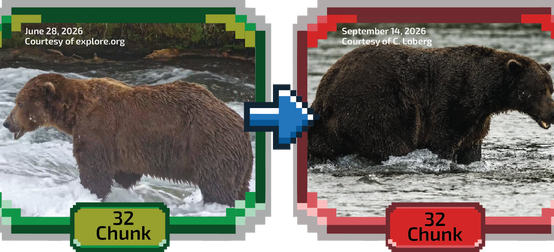 Fat Bear Week 2026 Highlights: Meet the Competitors
  Annual Fat Bear Week Begins at Katmai National Park
  Understanding Hurricane Development
  California Prepares for El Niño-Fueled Storms with Emergency Declaration
  California’s Growing EV Adoption: Challenges and Benefits