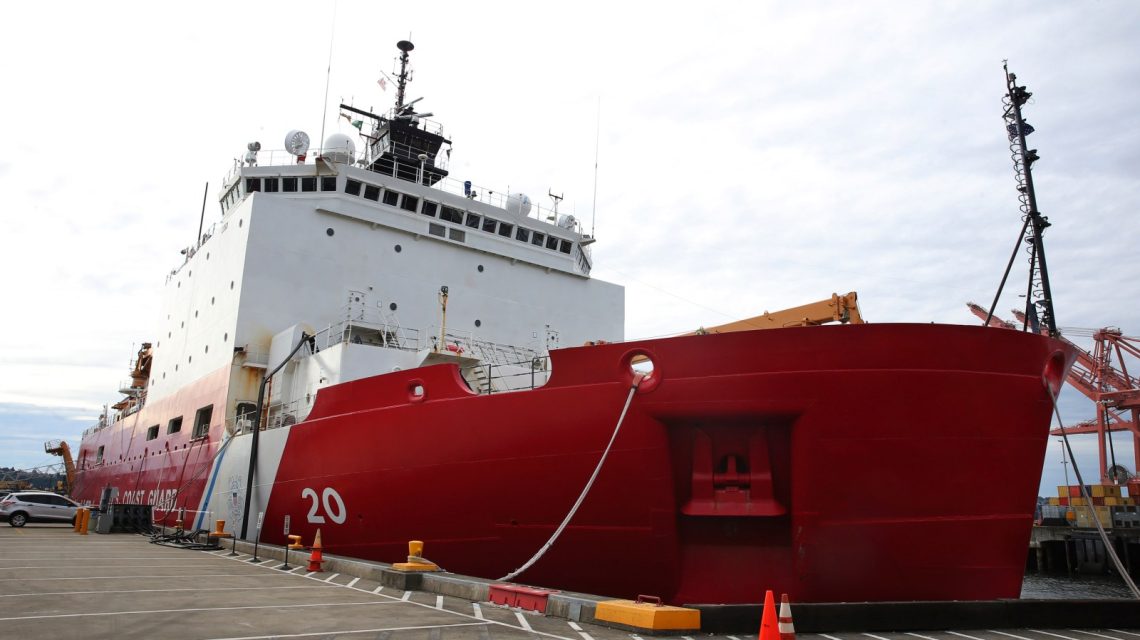
The United States struggles to build new icebreakers as planned. Seven years after commissioning the first heavy icebreakers in 50 years, none are ready. According to the Government Accountability Office (GAO), the earliest completion for the first of three is possibly 2033 due to delays and cost overruns.
Canada faces similar challenges. On Monday, the Canadian government announced an $11 billion program to construct six icebreakers. Prime Minister Mark Carney stated that the first ship should be completed by 2032 and the entire fleet by 2038.
Importance of the Arctic
The Arctic region’s significance continues to grow. Factors include climate, research, security, and economics. However, America finds itself relying on international partners to maintain and expand its Arctic presence.
Finland’s Role
While the U.S. South’s traditional shipbuilders face challenges, Finland offers a solution. The construction of new Finnish-built icebreakers for the U.S. began this year. These are expected by the end of 2028.
“Finland traditionally has been a kind of superpower when it comes to building icebreakers,” Robin Häggblom shared with Newsweek.
Approximately 60% of ice ships globally are either Finnish-built or follow Finnish designs. This expertise comes from necessity, as Finnish ports freeze annually. Now, America must learn from its European ally Finland. In 2023, Finland joined NATO following Russia’s invasion of Ukraine.
U.S.–Finland Collaboration
In 2022, the U.S. announced plans for up to 11 Arctic Security Cutters, valuing $6.8 billion. Finnish involvement includes Rauma Marine Constructions and the Helsinki Shipyard collaborating with Bollinger Shipyards and Davie Defense. After the initial Finnish-built ships, the skills and technology will be transferred to the U.S.
Urgency in Icebreaker Need
Häggblom emphasized the urgency of these vessels:
“Climate change and Arctic research are urgent topics that need study,” Häggblom stated.
The melting Arctic increases access to raw materials. Security is another consideration. The transpolar route is the shortest path between Russia and the U.S., significant for defense strategies.
Russia already has the most icebreakers, with dozens in operation. They own the longest Arctic coastline and have partnered with Finland on some builds. The U.S., despite its Arctic coastline in Alaska, has only two operational polar icebreakers at a time.
China’s Arctic Interest
Non-Arctic China is also interested in the region. Involvement ranges from climate research to shipping. They possess about half-a-dozen icebreakers with more being built. The Sea Legend company is testing a regular cargo service from Asia through the Northeastern Passage.
The U.S. needs to enhance its Arctic capabilities during this critical time. Bollinger Shipyards, the U.S. contractor, has not commented on the current status. Häggblom views the Arctic Security Cutter program as sensible, comparing it to other expensive defense programs with unclear benefits.
The development of U.S.-built vessels remains uncertain. Bollinger plans to construct four more vessels in cooperation with Finnish expertise. Davie will build three in Texas, bringing their total to five.
“The U.S. can definitely do it, but the question is can they do it on schedule and on budget?” Häggblom questioned.
 Ukraine Missile and Drone Barrage Hits Russia Amidst Elections
  U.S. Strategic Goals Remain Unmet Amid Prolonged Conflict
  New Photos Reveal Damage from Iranian Strikes in the Middle East
  EPA Dismantles Greenhouse Gas Rules, Causing Concern
  Assassin of Chilean Diplomat Orlando Letelier Faces Deportation 50 Years After Assassination
  Gorillaz and Macklemore Respond to Controversy Over Israel-Palestine Statements