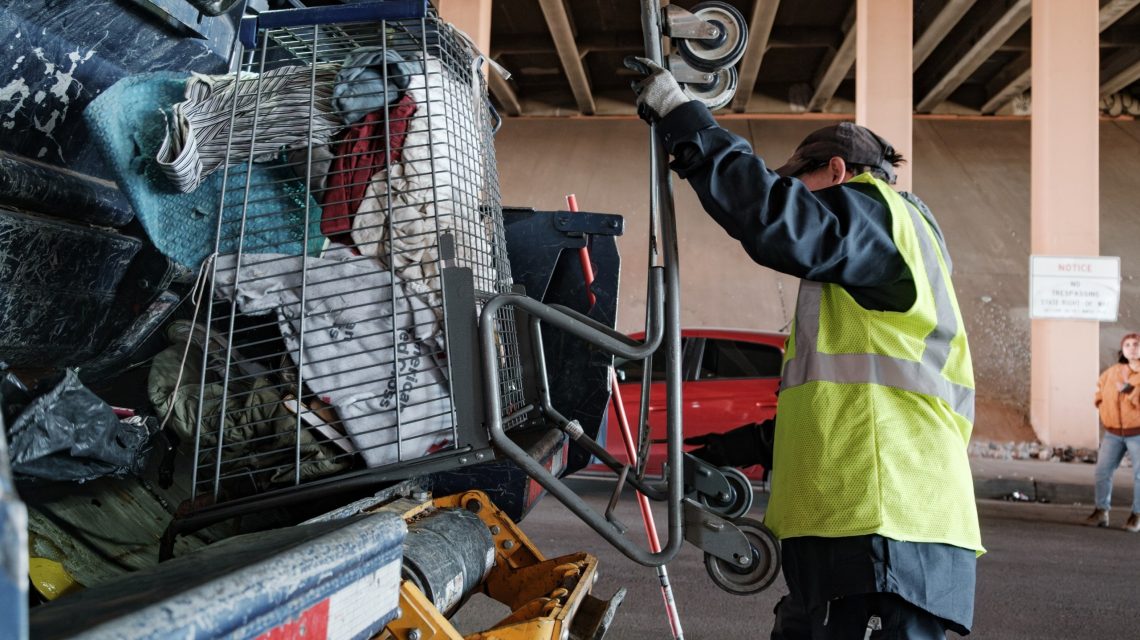
An analysis has revealed that Albuquerque, New Mexico, under Mayor Tim Keller’s leadership, has increasingly criminalized behaviors associated with homelessness. This has led to significant increases in charges related to these activities.
Increase in Charges
In 2025, charges for unlawful camping increased dramatically. There were nearly six times more cases for obstructing sidewalks compared to the previous eight years combined, with 1,256 cases reported. Trespassing charges reached their highest since 2017. These statistics highlight the growing legal actions against homeless individuals.
Impact of Citations
Citations for issues like unlawful camping often escalate to arrests. Reports show a significant portion of the jail population in Bernalillo County is now comprised of homeless individuals. Around 49% of those booked were classified as transient in 2025, a substantial increase from prior years.
The homeless population in Albuquerque has more than doubled, aligning with a tripling of those jailed for homelessness-related offenses. Interviews with affected individuals confirm that cascading citations often lead to arrests due to missed court dates, resulting in bench warrants.
Mayor Keller’s Stance
During his reelection campaign, Mayor Keller criticized policies advocating for harsher treatment of the homeless. He expressed that complex problems cannot be solved by arrests alone. Yet, ProPublica’s findings suggest an increase in criminalization during his tenure.
Keller maintained that the city is abiding by legal requirements while avoiding excessively punitive measures. However, actions like repeated citations and the cleanup of encampments have continued, leading to increased arrests and tensions.
Policy and Nationwide Context
Albuquerque’s approach is part of a broader national trend. The U.S. Supreme Court’s 2024 ruling allowed cities to enforce anti-camping laws. Following this, over 150 cities passed or increased enforcement of such laws.
President Donald Trump endorsed stricter measures, linking federal grants to enforcement of bans on urban camping. Critics argue this approach is costly and ineffective, as jailing costs significantly outweigh sheltering expenses.
University of Colorado’s Tony Robinson noted that Bernalillo County’s high rate of incarcerated homeless people is exceptional. Similar counties have lower incarceration rates for those experiencing homelessness.
The Forward Path
Critics argue that solutions need to focus on providing adequate support rather than criminalization. The city has invested in expanding shelters and services, but the homeless population still exceeds available resources.
Programs offering more supportive and less punitive measures, like designated sleeping areas, are seen as alternatives. However, Albuquerque continues to clear encampments and issue citations, perpetuating a cycle of arrests.
Local advocates and volunteers stress the need for more inclusive policies to address the root causes of homelessness rather than criminalizing the condition.
 Fatal Car Crash in Grand Rapids Involving ICE Agents
  Orland Park Plans Traffic Enforcement Measures
  Congressional Hearing Addresses Fatal Shootings Involving Federal Agents
  Texas Man Arrested in Shooting of 5-Year-Old Girl
  Star Meat Delivery Inc. Recalls Over 167,000 Pounds of Meat
  Debating Government Involvement in Family Homes