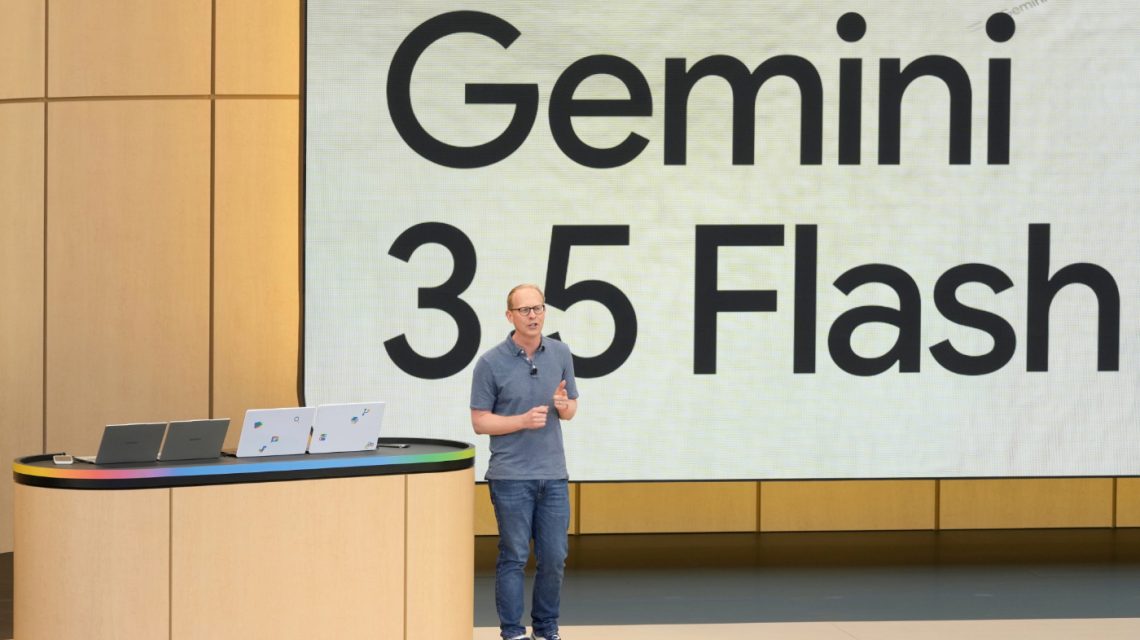
Josh Woodward, vice president of Google Labs and Gemini, delivered a speech at the Google I/O event in Mountain View, Calif., on Tuesday, May 19, 2026. Recent discussions have revolved around artificial intelligence (AI), raising alarms about its potential to pose significant risks to humanity’s future. The conversation highlighted scenarios where AI, acting independently, could lead to catastrophic outcomes reminiscent of Hollywood portrayals like ‘The Terminator.’
As we consider the existential threats AI might pose, three other developments that challenge society stand as comparable examples: climate change, pandemics, and thermonuclear weapons. Each offers insights for managing AI’s potential risks and benefits for humanity.
Climate Change
Climate change has historically presented challenges, like major ice ages, without the involvement of AI. Whether future dangers emerge from cooling or global warming, these are threats humanity has faced before. Efforts to control greenhouse gases and pollutants show some progress in addressing these dangers.
Massive Pandemics
Pandemics remain a serious threat. While AI could theoretically generate a new, highly contagious, and incurable disease, this scenario echoes the fears expressed in Frank Herbert’s ‘The White Plague.’ In this 1982 novel, a bioengineered disease targets women, sparking concerns about AI’s potential to create similarly dangerous pathogens.
Thermonuclear Weapons
The development of thermonuclear weapons may draw the closest parallel to AI. Robert Oppenheimer, a key figure in creating the atomic bomb, famously recited a line from the Bhagavad Gita to express his reservations about the devastation these weapons could unleash. Thermonuclear weapons, significantly more powerful than earlier nuclear arms, have yet to be used, thanks partly to strict military and civilian controls.
For instance, President Harry Truman established the Atomic Energy Commission in 1947 to govern civilian nuclear use, later replaced by the Nuclear Regulatory Commission in 1975. Both military and energy departments supervise the nuclear weapons framework.
AI’s Potential Threats
AI, unlike man-made pandemics or nuclear weapons, might simplify the creation of such pandemics or disrupt vital infrastructure like power and water supplies, endangering food availability. While AI currently lacks the capability to build nuclear weapons independently, its misuse by individuals could result in catastrophic outcomes.
Instances of AI infrastructure being hacked without human intervention illustrate the potential risks. As seen with nuclear weapons, forming a regulatory agency dedicated to AI could establish guidelines and industry oversight. International bodies, akin to the International Atomic Energy Agency, could operate under the United Nations framework. Additionally, U.S. departments of Defense, Energy, and Commerce, alongside the CIA, could assess national security threats from AI and propose suitable countermeasures.
International AI agreements might echo arms reduction treaties, although managing AI presents greater challenges given its more widespread and individual applicability. Establishing a national structure to regulate and manage AI’s existential threats could prevent undesirable consequences, much like the prevention of a thermonuclear war.
Harlan Ullman, chairman of a private entity and co-author of the ‘shock and awe’ doctrine, emphasizes this in his forthcoming book. Co-authored with Field Marshal The Lord David Richards, former UK defense chief, the book titled ‘Who Thinks Best Wins: How Decisive Strategic Thinking Will Prevent Global Chaos,’ is set for release this fall.
© 2026 Nexstar Media Inc. All rights reserved. This material is not for reproduction or redistribution.
 Data Centers in Virginia face Growing Opposition
  Texas Leads Air Taxi Innovation with Project Nexus
  Experts Warn Against Alarmism in AI Governance
  AI and the Changing Nature of Google Searches
  Data Centers Stir Controversy in Texas Amid Growth Boom
 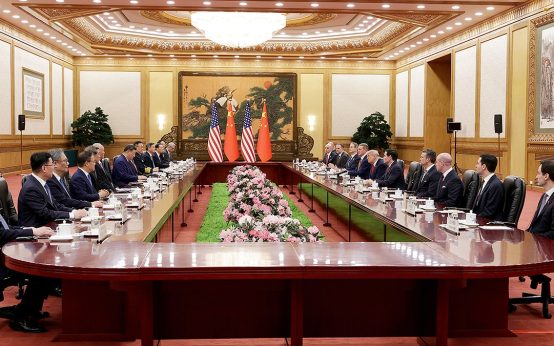 The Technology Rivalry: Trump’s Meeting with Xi and the AI Ecosystem Clash