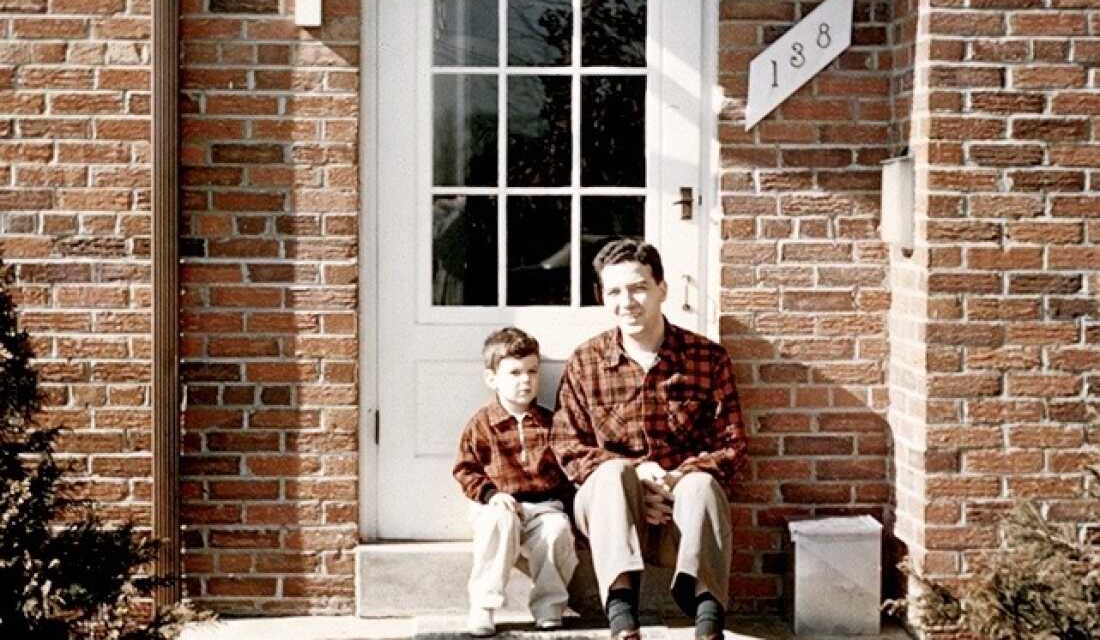
Future NPR critic Bob Mondello reflects on a poignant experience related to his father, Tony Mondello. It struck him while watching the period drama The History of Sound, set in 1919, the year of his father’s birth. The film features two music conservatory students, David and Lionel, portrayed by Josh O’Connor and Paul Mescal, who share a passion for folk songs. Their journey leads them to record sounds in the backwoods of Maine using the latest technology of the time: wax cylinders, a metal cone, and a diamond-tipped stylus.
The astonishment of the people they encounter at recording sound resonates with Mondello. As someone deeply involved in the world of sound, he seldom considered the origins of sound recording. The journey began with France’s Édouard-Léon Scott de Martinville, who, in the 1850s, captured sound waves as lines etched onto soot-covered paper.
Thomas Edison furthered the advancement in 1877 by etching voice into tin foil strips, allowing playback. His innovation meant accents and inflections could be immortalized. Edison’s first recorded words were the children’s rhyme “Mary had a little lamb.” By 1919, Edison’s company had progressed to wax cylinders, coinciding with the fictional trip in the movie and the year Mondello’s father was born.
Despite his work recording sound, Mondello regrets not having recorded his father’s voice. The lack of personal recordings left him with only a work phone message. Post his father’s death in 2007, this message served as a way to hear his father’s voice until it was lost during a phone system change. Reflecting on The History of Sound, Mondello wished for a similar discovery of his father’s voice, as fictional character Lionel finds David’s voice recorded on a wax cylinder in the movie.
A fortuitous uncovering relives Mondello’s connection with his father. A friend’s reminder about recordings of Supreme Court cases where his father presented a case led to a search. His father’s voice was captured in a 1963 Supreme Court recording when he argued a case. Hearing his father’s strong, younger voice brought a wave of memories and emotions.
Justice Hugo Black complimented Tony Mondello’s argument during the recording, although the case ultimately didn’t prevail. This experience highlighted the enduring value of sound recording advancements. Mondello concludes with gratitude for the evolution of sound recording, allowing him to continue his radio career and deeply connecting him to the past.
 Tribute to Rose Friedman: A Legacy of Journalism and Passion
  College Podcast Challenge: A Catalyst for Change
  The Importance of Family Support During Personal Transitions
  NPR College Podcast Challenge Returns for Another Year
  Grandparents and Rising Childcare Costs