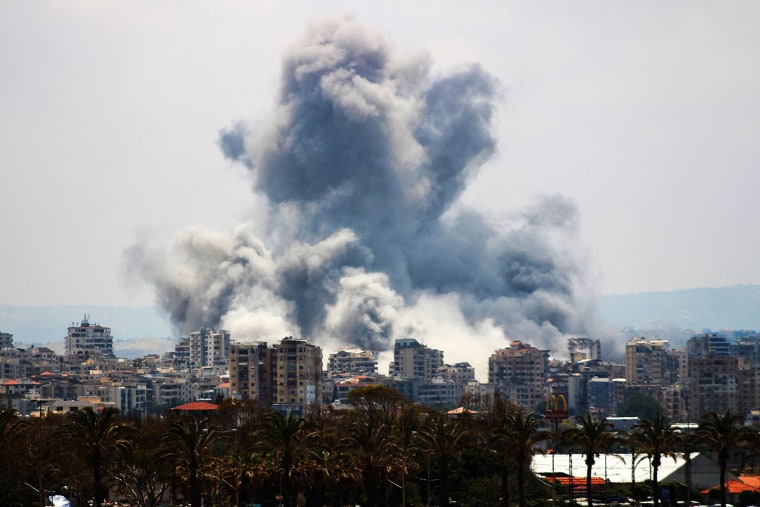
On June 1, 2026, Israeli Prime Minister Benjamin Netanyahu instructed military operations targeting Hezbollah-controlled regions in southern Beirut. This move signals an escalation in a conflict complicating U.S.-Iran mediation efforts.
Esmaeil Baghaei, spokesperson for Iran’s foreign ministry, highlighted these Israeli actions in Lebanon as obstacles to ending the U.S.-Iran war. He emphasized that a ceasefire in Lebanon is crucial for any diplomatic resolution.
Netanyahu, along with Defense Minister Israel Katz, directed strikes on Beirut’s Dahiyeh suburb, citing Hezbollah’s violations of the ceasefire and its attacks on Israeli civilians and urban centers. Israel had mostly refrained from attacking Dahiyeh since a ceasefire was announced by U.S. President Donald Trump on April 16, despite ongoing skirmishes in southern Lebanon.
A plume of smoke was seen after an Israeli airstrike near Tyre in southern Lebanon.
Recent tensions saw Israeli troops capture Beaufort Castle, a historical site over 900 years old. This step marked an intensification of military actions following Hezbollah’s initial attacks on March 2, which backed Iran amid conflicts with the U.S. and Israel. Since these events began, Lebanese authorities report over 3,370 fatalities, primarily from Israeli actions. In contrast, Israel reports 24 military and four civilian deaths.
Israel has established a self-declared security zone in southern Lebanon, clearing villages to protect against Hezbollah fighters allegedly mingling with civilians. The conflict has forced more than one million to flee, making it the deadliest overflow of U.S.-Israeli-Iran tensions.
On the previous Sunday, Netanyahu instructed the expansion of Israeli military operations to tighten control over areas formerly held by Hezbollah. Hezbollah, asserting their right to resist occupation, performed 21 attacks on the same day, one involving rocket fire at Israeli military setups in Nahariya.
An Israeli flag now flies over the Beaufort Castle.
Amid escalating hostilities, France urged an emergency session of the U.N. Security Council. Meanwhile, the U.S. has facilitated discussions between Israel and Lebanon, defying Hezbollah resistance. A U.S. official disclosed that Secretary of State Marco Rubio discussed a diplomatic solution with both Lebanese President Joseph Aoun and Netanyahu, proposing phased de-escalation.
The American plan involves Hezbollah halting attacks on Israel, with Israel ceasing countermeasures in Beirut. This approach aims to gradually minimize hostilities, the U.S. official explained. President Aoun supported the proposal and aimed to reach a settlement, whereas Lebanese Parliament Speaker Nabih Berri, an ally of Hezbollah, reassigned the responsibility to Israel, demanding an end to its aggression to secure a ceasefire.
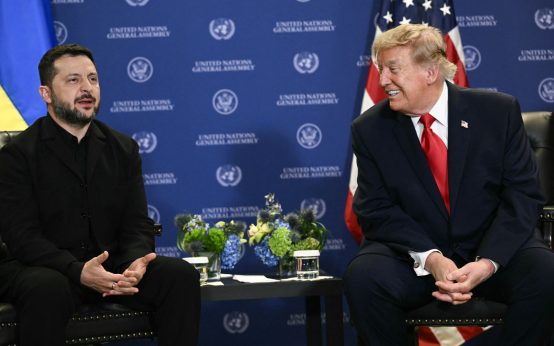 Trump’s Engagements at the UN: Focus on Ukraine and White House Developments
  Trump Administration to Admit 17,500 Afrikaner Refugees from South Africa
 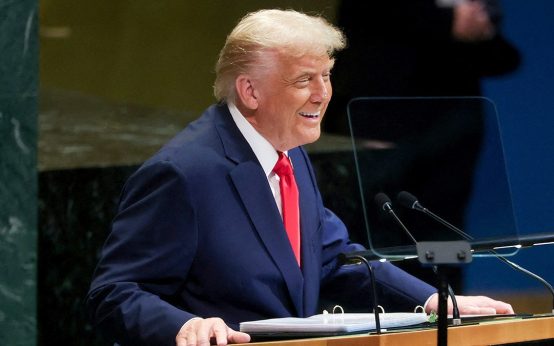 Trump’s Vision for Global Security: Iran, AI, and the Role of the U.S.
  Concerns Raised Over Canadian Assisted-Dying Program
 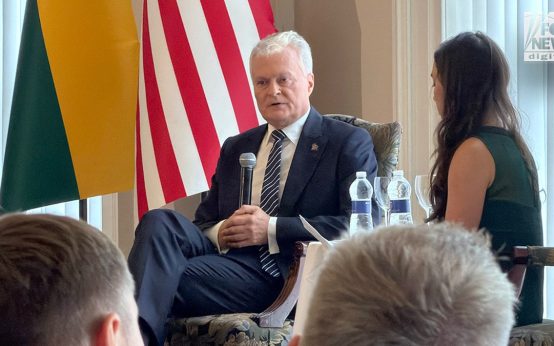 Lithuanian President Urges U.S. to Maintain Military Presence Amid NATO Challenges
  Italian PM Giorgia Meloni Skips UN General Assembly Amid U.S. Tensions