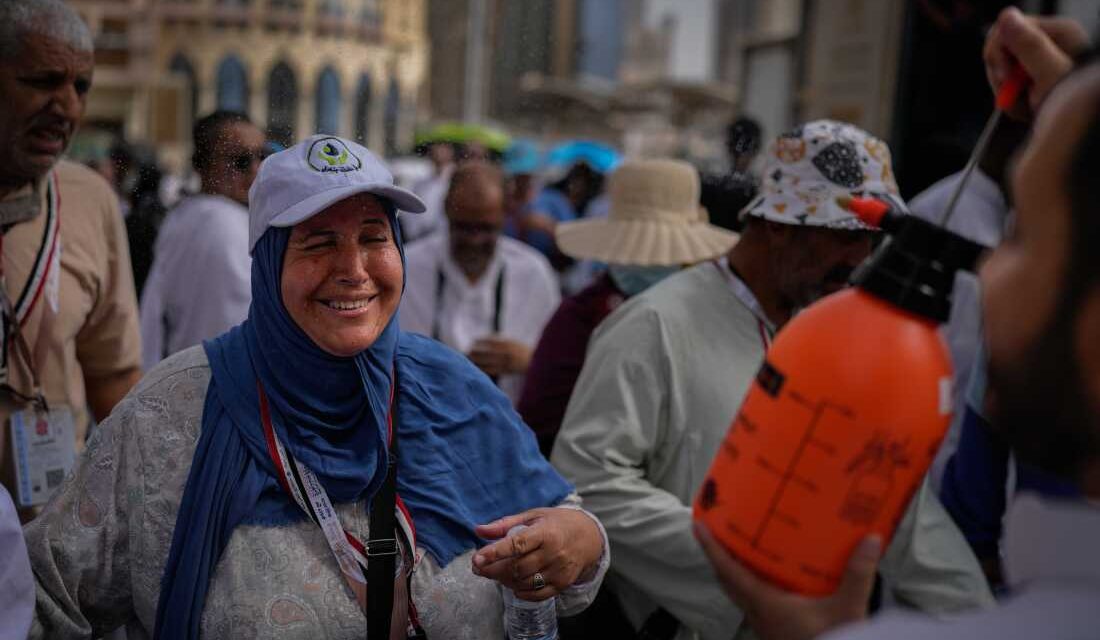
At the Grand Mosque in Mecca, a Muslim pilgrim reacts as a volunteer sprays water, offering some relief from the heat during the annual Hajj pilgrimage on Sunday, May 24, 2026.
The Hajj, one of Islam’s Five Pillars, officially started on Monday. Over 1.5 million pilgrims from abroad have already arrived in Saudi Arabia, according to Saleh bin Saad Al-Murabba, the commander of the Hajj passport forces. This massive gathering occurs amidst ongoing strains from the Iran conflict and fragile regional peace.
Samya Abdul Moneim, a pilgrim from Egypt, expressed her gratitude for being able to participate in the Hajj, which every Muslim who is able financially and physically should undertake at least once. “I am in a state of blessing and happiness,” she remarked. “Thank God, I am in a blessing.”
On the first day, many pilgrims gather at an extensive tent camp in the desert near Mecca. Before proceeding there, they participate in rituals like circling the Kaaba at the Grand Mosque, enduring the scorching weather. The Hajj offers a deeply moving spiritual journey and a chance to seek God’s forgiveness.
Pilgrims endure extreme heat
For many, the journey to the Hajj means years of saving money and waiting for a permit. They brave intense heat while performing religious rituals. Many carry umbrellas for shade and handheld fans for cooling. Volunteers distribute water, and fans spray fine mists to help pilgrims stay hydrated.
Recently, U.S. President Donald Trump announced a tentative deal with Iran regarding the conflict, involving the reopening of the Strait of Hormuz. Describing it as a “Memorandum of Understanding pertaining to PEACE,” he indicated it needs finalization by the involved nations. This development came after the U.S. contemplated new attacks on Iran.
Pilgrims embarking on their journey amid tension rely on their faith and feel grateful for the opportunity to partake in the Hajj. The pilgrimage unites Muslims of diverse backgrounds, offering a profound sense of togetherness.
Global tensions affect Hajj travel plans
With global uncertainty, Indonesia, hosting the largest Muslim population, has been ensuring pilgrims aren’t burdened with additional travel costs. Meanwhile, in India, high fuel prices have increased travel expenses, although pilgrimage planning continues as normal.
The partial reopening of the Strait of Hormuz is expected to ease an energy crisis generated by previous U.S. and Israeli actions in Iran. This crisis has elevated prices for oil, gas, and related products, impacting the global economy. President Trump emphasized that a blockade on Iranian ports will persist until an agreement is achieved.
In response to U.S. actions, Iran launched retaliatory strikes, leading to a broader conflict. A ceasefire, though delicate, was achieved in April. Pilgrims continue their rituals in Saudi Arabia, including walking around the Kaaba.
On Tuesday, considered the pinnacle of the pilgrimage, they will stand on the plain of Arafat. Here, they praise God, ask for forgiveness, and make supplications. Many carry prayers from loved ones, raising their hands with tears as they worship.
 Google Fined for Breaching EU Privacy Rules
  South China Sea Tensions Rise after Collision between Chinese and Philippine Ships
  North Korea’s Hypersonic Weapon Test Amid Global Tensions
  Austin Tice: A Search for Answers
 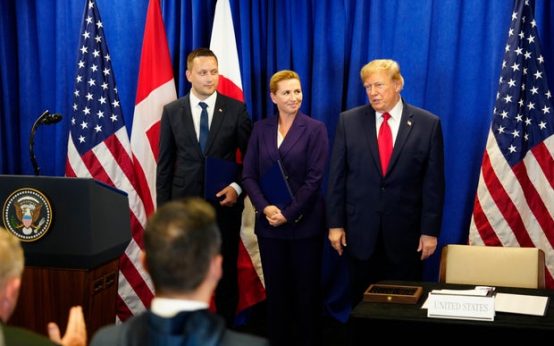 U.S., Denmark, and Greenland Forge New Security Agreement
 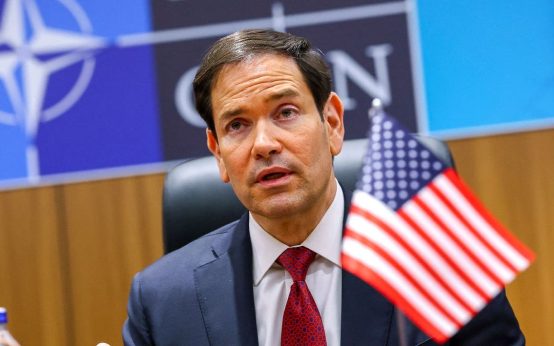 Secretary Rubio Discusses Middle East Conflict and NATO Relations