Arachova, Greece – Giannis Stathas, mayor of Arachova, recalls how childhood snowstorms trapped families indoors for days in this village known for skiing and winter recreation. Reflecting on that time, Stathas notes, “We couldn’t go to school because of the snow. We might have been stuck at home for two days without being able to go out because of the snow.” Today, snow at 2,400 meters above sea level on Mount Parnassos barely matches the once-common snowfall at 300 meters.
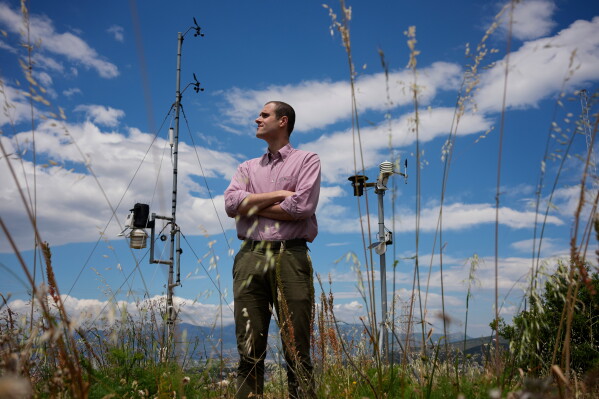
New research from the University of Cambridge’s Scott Polar Research Institute supports this observation. “What we found across 10 mountains of Greece, across the mainland, is that snow cover is rapidly declining,” explains snow hydrologist Konstantis Alexopoulos. Since the mid-1980s, more than half of the snow cover has vanished. Using NASA and European Space Agency satellite data spanning 40 years, researchers addressed cloud coverage gaps with machine learning to estimate missing snow cover data.
Snow as a Natural Water Resource
Alexopoulos emphasizes snow’s role as a water reservoir, likening it to a savings account where longer storage increases value. Unlike rain, which quickly flows to rivers and seas, snow remains, releasing water when needed most—important for Mediterranean climates with dry summers. An aerial view of melting snow on Mount Parnassos further illustrates the issue. Recent research reveals that snowpack decline is tightly linked to rising global temperatures from greenhouse gas emissions, impacting both snowfall quantity and snow cover duration. “The snow cover decline that we’re observing on the Greek mountains is not connected to the natural climate variability that does exist,” Alexopoulos states, highlighting the unprecedented rate of climate change.
Although the shrinkage was anticipated, the extent of loss surprised researchers. Other regions like the Andes and Himalayas experienced declines, yet not as severely as Greece. The study stands as one of few in-depth analyses of Greek mountains. Alexopoulos notes research challenges, citing remote access and difficulty in installing and maintaining weather stations. This oversight has led to challenges explaining increasing droughts that align with observed declines in snow-affected areas, like Mount Parnassos.
Visible Effects of Snow Shortage
For Arachova, located under Mount Parnassos, the impacts are evident. “One hundred percent of Arachova’s water is supplied by snowmelt,” says Aktida Koritou, a local restaurant owner. Water scarcity awareness is high as summer shortages become pronounced. Mayor Stathas points to reservoir depletion and spring dryness, especially in late summer and early fall. Occasionally, unexpected late snowfalls provide brief relief, yet fall short of restoring reservoir levels.
Efforts to adapt include constructing small dams to conserve water and implementing snow retention at the ski center. Decreased snowfall raises fire risks in drier, vegetation-rich regions. Traditionally, northern Greece didn’t face significant fire threats, but ongoing droughts now heighten the danger. Arachova’s economy, once driven by ski tourism, faces change. Koritou recalls the ski season started in December during the 1980s. Now, it delays until January as tourists seek snow elsewhere, impacting local businesses.
To adapt, the municipality promotes summer tourism alongside winter offerings. “Someone can swim and in 20 minutes come to stay here where it’s cool,” Stathas says. Yet, sustaining tourism requires reliable water resources.
The Nostalgia of Past Winters
Residents remember the once-heavy winters. Late October meant grape harvesting before snow arrived. People kept shovels ready and helped neighbors clear snow. Back then, mountain snow often lasted year-round. “There are some years when despair grips you,” reflects Koritou. “For those of us who know winter well, it’s disappointing not to see snow. You want it in the winter. The change is enormous.”
 Potential Impact of Tropical Storm Polo on Southern California
  Communities Continuing Recovery from Hurricane Helene Explored through Graphic Novel
  Fat Bear Week 2026 Highlights: Meet the Competitors
  Annual Fat Bear Week Begins at Katmai National Park
  Understanding Hurricane Development
  California Prepares for El Niño-Fueled Storms with Emergency Declaration