
A chemical storage tank in Southern California poses risks of explosion or rupture as it continues to heat up, despite efforts to cool it, according to statements made by a fire chief on Saturday. The tank initially overheated on Thursday, leading to vapor venting at a Garden Grove company site, noted the Orange County Fire Authority.
Evacuation orders affected 40,000 people, with several shelters staying operational, including three high schools. No timeline currently exists for when displaced residents may return. On Friday evening, Fire Authority Division Chief Craig Covey indicated progress in cooling the tank but revised his statement Saturday after drone data showed external rather than internal temperature readings.
The National Institute for Occupational Safety and Health highlights the critical temperature as 50 degrees Fahrenheit (10 degrees Celsius). If the chemical reaches or exceeds this flashpoint, it releases vapor that endangers public health, causing respiratory issues, eye irritation, nausea, and headaches, explained Dr. Regina Chinsio-Kwong, Orange County health officer.
Emergency response teams documented late Friday that the tank’s internal gauge measured 90 degrees, surpassing the prior measurement of 77 degrees. The rise in temperature averages about a degree per hour. Chief Covey voiced concerns about potential tank rupture or explosion, which would lead to chemical release, but containment setups aim to block any dispersion into storm drains or nearby waterways.
Expert insight from Purdue University’s engineering professor Andrew Whelton, familiar with disaster scenarios affecting public safety, expressed that a preferable outcome involves managed leaks with public warnings to safeguard residents.
The affected tank belongs to GKN Aerospace, a manufacturer of aircraft parts for commercial and military purposes, housing between 6,000 and 7,000 gallons (22,700 and 26,500 liters) of methyl methacrylate, an essential chemical for plastic component fabrication.
Garden Grove’s initial evacuation zone expanded Friday, covering areas in five additional cities: Cypress, Stanton, Anaheim, Buena Park, and Westminster. With shelters limited, some evacuees chose to stay in their vehicles overnight.
Marco Solano, a local resident, shared his frustration, noting the placement of hazardous materials within community zones that required evacuation procedures. Symptoms from Solano’s anemia and ulcerative colitis intensified under stress related to the chemical leak, affecting his well-being.
Reflecting broader community impact, California Governor Gavin Newsom declared a state of emergency in Orange County on Saturday, facilitating state resource allocations for local interventions and establishing shelters on state properties as necessary.
Situated approximately 38 miles (61 kilometers) south of Los Angeles, Garden Grove neighbors Anaheim, where Disneyland theme parks operate unaffected by evacuations, as Memorial Day celebrations proceed. Park officials acknowledged the incident, committing support for displaced employees.
 Man Arrested After Fatal Stabbing on Chicago’s South Side
  Debate Over ICE Action in Austin Escalates
  Hayden Panettiere’s Cause of Death Ruled Accidental Due to Drug Toxicity
  Fatal Car Crash in Grand Rapids Involving ICE Agents
 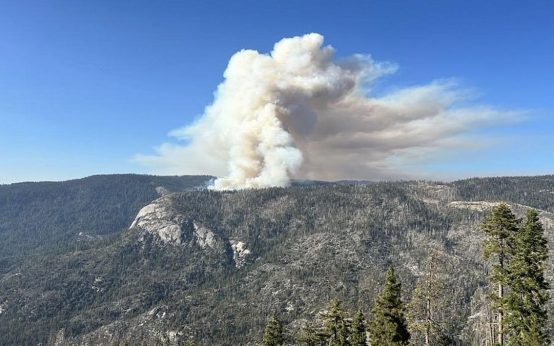 Two Pilots Killed in Helicopter Crash Fighting Yosemite Park Wildfire
  Alarming TSA Discovery: Hidden Object Found in Flashlight