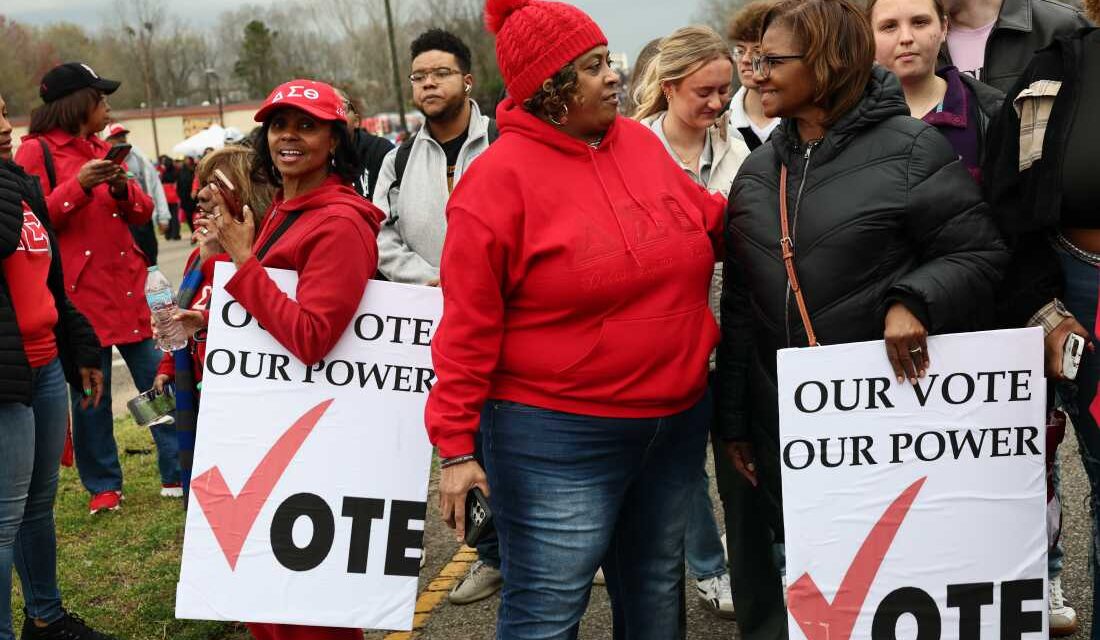
In 2025, members of Delta Sigma Theta sorority and others gathered in Selma, Alabama, to commemorate the 60th anniversary of the Bloody Sunday march, a pivotal event leading to the Voting Rights Act. Recent actions by Republican-led Southern states to adjust congressional maps follow the U.S. Supreme Court’s decision weakening protections against racial discrimination in that Act. The most significant effects may manifest at the local level.
An NPR analysis reveals active legal battles over at least 17 voting maps or election systems at state and local levels, responding to the court’s ruling. Since the decision in Louisiana v. Callais, attorneys have prepared briefs on applying the court’s reinterpretation of Section 2 provisions. The Supreme Court’s conservative supermajority now emphasizes intentional racial discrimination, a standard challenging to prove.
Many legal experts view this shift as undermining racial minority representation and encouraging partisan gerrymandering across government levels, from state legislatures to school districts. The ruling already ended a fight over state legislative districts in North Carolina. Last week, State Rep. Rodney Pierce dropped a lawsuit, stating the court had rendered the Voting Rights Act ‘a meaningless law’ for protecting Black citizens’ voting rights.
Southern states, marked by polarized voting between a white majority and a Black minority, feature heavily in the remaining legal challenges. However, similar cases exist nationwide. Latino voters in Washington and a Pennsylvania school district, as well as Native American voters in North Dakota, are navigating this new legal landscape.
These cases now confront the Supreme Court’s stringent requirements for contesting voting districts or systems accused of diluting racial-minority voters’ power. Historical trends show Section 2 cases often involved municipal governments. According to Michael Li, a redistricting expert, creating compact districts for racial minority voters was once more straightforward.
“Section 2 helped dismantle political fiefdoms in the South, in both partisan and nonpartisan elections,” Li asserts.
The court’s limits arise seven years after it declared that federal courts should not review partisan gerrymandering. Li suggests this encourages opponents of local majority-minority districts to pursue political priorities in district drawing.
The ruling complicates matters by requiring challengers to separate racial from partisan preferences, especially difficult without local partisan election data. Gilda Daniels, a law professor and former Justice Department official, criticizes the confusion and notes the Justice Department’s shift away from racial minority voting rights enforcement.
Under the Trump administration, the DOJ applauded the Supreme Court’s stance, arguing Section 2’s protections are unconstitutional. Daniels warns this shift, alongside the latest ruling, may prompt local governments to renegotiate voting districts previously aligned with Section 2.
Local governments might adopt at-large voting systems, potentially diminishing minority representation. Maureen Edobor, a law professor, contends such systems favor majority populations, rendering minority votes ineffective.
In Fayette County, Tennessee, the NAACP’s Elton Holmes anticipates more challenges, citing the Justice Department’s withdrawal from a lawsuit over a white-majority board of commissioners. Although a new district map with three majority Black districts exists, Holmes worries about potential gerrymandering if future elections don’t favor white commissioners.
Voting rights advocates continue monitoring changes to state and local maps. Estimates from Fair Fight Action and Black Voters Matter Fund suggest the Supreme Court’s decision risks eliminating nearly 200 Democratic-held state legislative seats, predominantly in majority-Black Southern districts. Future Supreme Court cases could further reshape redistricting and enforcement of the Voting Rights Act.
 North Carolina Senate Race Influenced by Abortion Policy Messaging
  Trump Pressures Republicans on Filibuster Threat
  Rep. Golden Endorses Rep. Lawler for Re-election
  Public Perception and Political Impact of Data Centers
  Jewish Democrats in Michigan Shift Support to GOP Candidate in Senate Race
  Mayor Mamdani and President Trump Discuss Major Housing Project in NYC