An outbreak of Ebola, specifically the rare Bundibugyo strain, has emerged in eastern Congo, creating significant challenges for healthcare workers who report feeling underprotected and inadequately trained. The situation is further complicated by the region’s instability due to armed group conflicts.
Local reports indicate a violent incident linked to Islamic State militants resulted in 17 fatalities in the village of Alima, located in Ituri, a province heavily impacted by the outbreak. The World Health Organization (WHO) acknowledges limited global risk but notes that the outbreak’s origins have yet to be identified.
“It’s truly sad and painful because we’ve already been through a security crisis, and now Ebola is here too,” said Justin Ndasi, a Bunia resident.
Basic medical supplies have been distributed, yet shortages persist in essentials like masks, with prices for disinfectants inflating significantly. The first Ebola death occurred last week in Bunia, intensifying local distress.
Health Facilities Under Strain
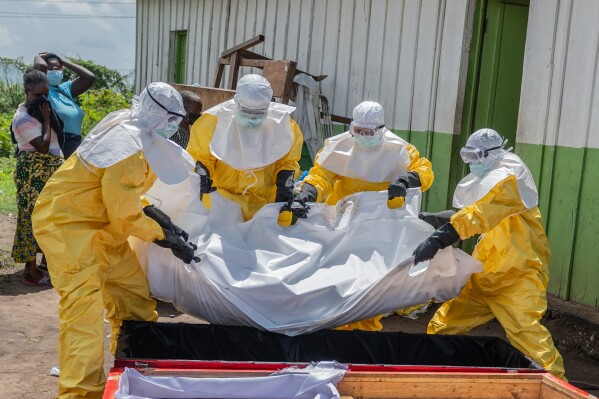
In Rwampara, grieving families witnessed healthcare workers in protective gear sanitizing and preparing the remains of suspected Ebola victims, highlighting the rapid deterioration of patients once symptoms arose.
Symptoms such as fever and vomiting can often be confused with other illnesses like malaria, explained Botwine Swanze: “He told me his heart was hurting. Then he started bleeding and vomiting a lot.” Ebola spreads via contact with bodily fluids, making it highly contagious.
WHO’s concern over the outbreak’s magnitude and pace led to a declaration of a public health emergency. Their chief in Congo anticipates it could span at least two months. Authorities were initially misled by negative results when testing for the more common Ebola strain.
Anaïs Legand from WHO’s emergencies program commented on ongoing investigations to pinpoint the outbreak’s start, estimating it began several months prior. So far, 51 cases have been confirmed in Congo’s Ituri and North Kivu provinces, with two cases in Uganda.
Public Health Response
WHO Director-General Tedros Adhanom Ghebreyesus shared concerning statistics: 139 deaths and nearly 600 suspected cases. Analysts from London’s MRC Centre for Global Infectious Disease Analysis warn of underreported figures, potentially exceeding 1,000 actual cases.
Congo, experiencing its 17th Ebola outbreak, has adept personnel per WHO. Previous outbreaks involved more common strains. The demand for medical treatments is high, with Dr. Vasee Moorthy from WHO projecting a Bundibugyo vaccine may not be available for six to nine months.
Impact of Global Aid Cuts
Persistent issues in eastern Congo related to conflict and healthcare collapse are compounded by reduced international funding. Dr. Lievin Bangali of the International Rescue Committee noted significant strain on the region’s health system.
The U.S., affected by foreign aid cuts, committed $23 million to set up emergency clinics. However, anxiety over limited healthcare protection remains prevalent.
Bunia community infrastructure such as schools and churches stay operational, but the healthcare scenario worsens with overcrowded facilities and inadequate isolation wards. Trish Newport from Doctors Without Borders highlighted the intense situation following the identification of numerous suspected cases.
Chérubin Kuku Ndilawa, a local leader, described normalcy despite insufficient public health measures like handwashing stations. He highlighted ongoing activities like gold mining and noted openness at the Uganda border.
Dr. Richard Lokudu from Mongbwalu General Hospital expressed concern over inadequate staffing and training. Dr. Didier Pay reported 30 Ebola patients, with dire need for proper triage and isolation facilities.
Continued Outbreak and Global Measures
In regions like Goma controlled by M23 rebels, WHO representative Dr. Anne Ancia acknowledges complications in managing the outbreak.
A U.S. citizen tested positive for Ebola and is isolated in Germany, according to German Health Ministry spokesperson Martin Elsässer. The patient, along with their family, will be given to Germany at the request of U.S. authorities.
In unrelated news, the Czech Republic is receiving an American doctor who treated Ebola patients in Uganda. Coordination efforts by Dr. Satish Pillai of the CDC ensure rapid mobility and treatment for affected individuals.
Reporting contributions from various Associated Press journalists highlight the complex interplay between regional challenges and international emergency responses.
 Google Fined for Breaching EU Privacy Rules
  South China Sea Tensions Rise after Collision between Chinese and Philippine Ships
 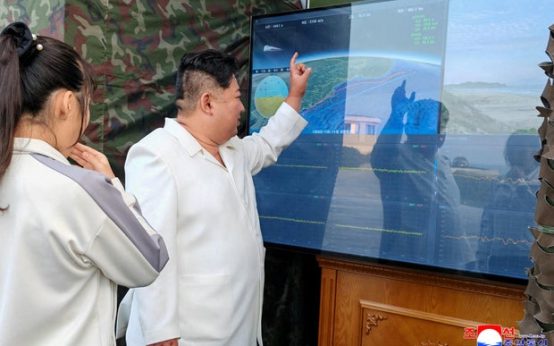 North Korea’s Hypersonic Weapon Test Amid Global Tensions
  Austin Tice: A Search for Answers
 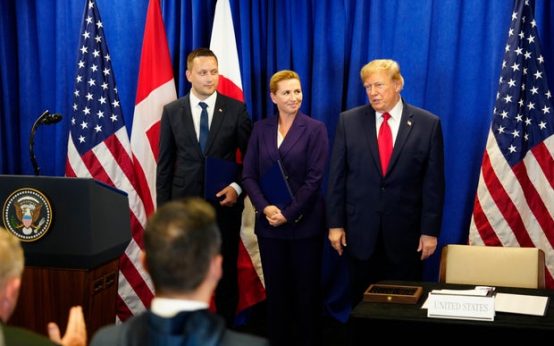 U.S., Denmark, and Greenland Forge New Security Agreement
 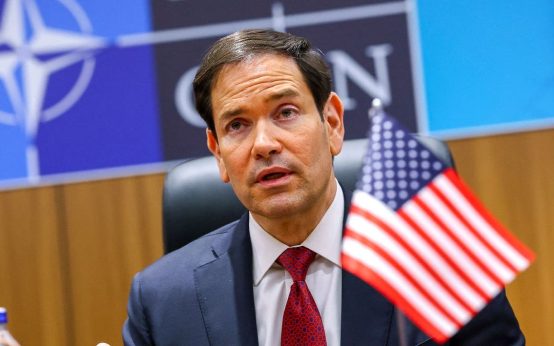 Secretary Rubio Discusses Middle East Conflict and NATO Relations