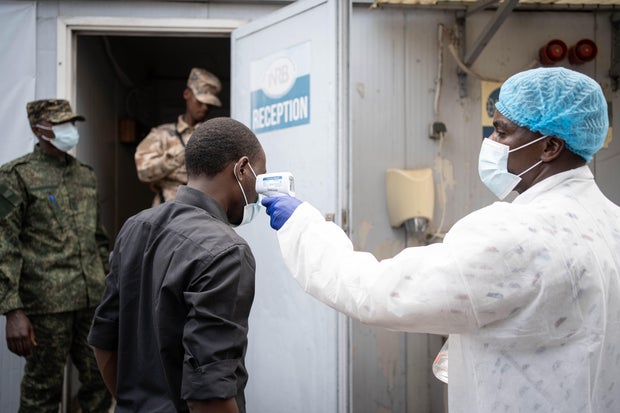
The World Health Organization (WHO) announced on Wednesday that the risk of the Ebola outbreak in the Democratic Republic of Congo (DRC) is high nationally and regionally, though low on a global scale. While investigations into its origins continue, given the situation’s magnitude, the outbreak in eastern DRC likely started months ago. However, the WHO’s emergency committee stated it does not meet the pandemic emergency threshold.
WHO Director-General Tedros Adhanom Ghebreyesus emphasized the risk at national and regional levels, noting global risk remains low. Currently, there are 51 confirmed cases in DRC, primarily located in Ituri and North Kivu provinces. He acknowledged the epidemic’s scale in the DRC is much larger. For example, Uganda reported two confirmed cases in the capital Kampala, including one death. Additionally, a U.S. national working in the DRC tested positive and was transferred to Germany for treatment. American doctor Peter Stafford, evacuated to Germany, is receiving care according to the missionary group Serge.
“There are several factors that warrant serious concern about the potential for further spread and further deaths,” Tedros warned.
Tedros highlighted the significant number of suspected cases, which exceeds 600 alongside 139 suspected deaths. He anticipates these numbers to increase due to the virus’s circulation before detection.
On Sunday, Tedros declared the situation a public health emergency of international concern, the second-highest alert level under International Health Regulations, prompting global emergency responses. The WHO emergency committee convened to evaluate the situation and confirmed it does not meet the criteria for a pandemic emergency.
Lucille Blumberg, chair of the emergency committee, stated that the criteria for a public health emergency are met, yet the situation does not qualify as a pandemic emergency.
WHO technical officer Anais Legand reported ongoing investigations to determine the outbreak’s duration in eastern DRC. The priority is cutting the transmission chain through contact tracing, isolation, and care for suspected and confirmed cases.
In response to U.S. criticism, U.S. Secretary of State Marco Rubio claimed the WHO’s identification of the outbreak was “a little late.” Last year, President Trump initiated the U.S. withdrawal from WHO, criticizing its handling of the COVID-19 pandemic. Experts warned that America’s pullback could affect lifesaving healthcare efforts in lower-income regions.
Tedros countered Rubio’s criticism, suggesting it stemmed from a lack of understanding of International Health Regulations and WHO’s role. He clarified that WHO supports countries’ outbreak responses rather than replaces them.
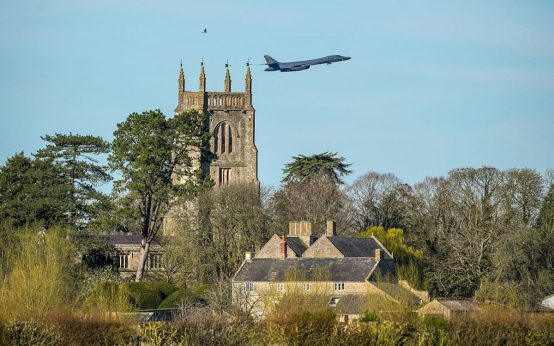 Major Incident Declared Near U.K. Airbase Used for U.S. Military Strikes
 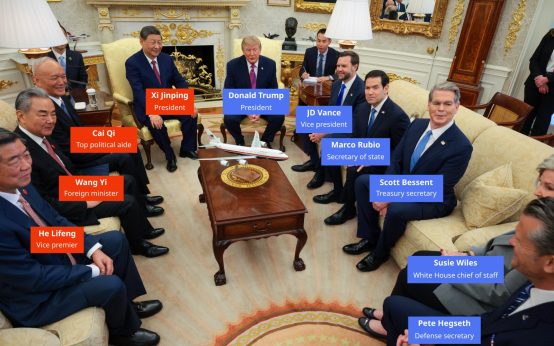 Xi Jinping’s Quest for Global Leadership and Succession Challenges
 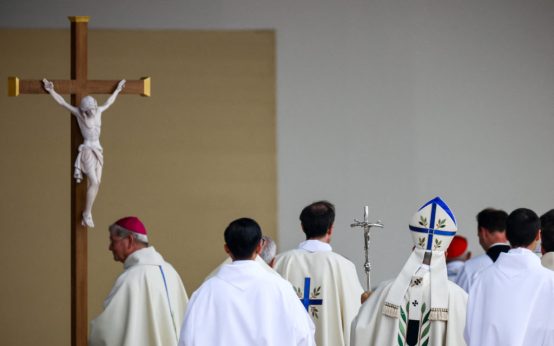 Pope Leo XIV Draws Massive Crowd in Paris, Highlighting Enduring Catholic Influence
  Pacific Hurricanes Pose Flood Risk to Southern California
  Israel’s U.N. Ambassador’s Viral Video Reaches Iranian Audience
  Trump’s Remarks on Ukraine-Russia War Casualties and Peace Efforts