In the winter of 2015, Dr. Tom Chiller received an urgent call from public-health officials in Britain. A new fungus was causing severe infections at a large hospital in London. The infection spread rapidly, and officials were considering closing parts of the facility to stop its transmission. Chiller, then the chief of the fungal-diseases branch at the U.S. Centers for Disease Control and Prevention (CDC), was surprised to hear of a yeast-like Candida auris spreading from person to person.
Candida auris is quite different from other fungi. First discovered in 2009 in the ear of a patient in Japan, it survives in environments with higher temperatures and salinity. This adaptability allows it to thrive in areas like the human ear, armpit, and groin. It clings to surfaces and is highly resistant to antifungal drugs, presenting challenges for standard disinfectants.
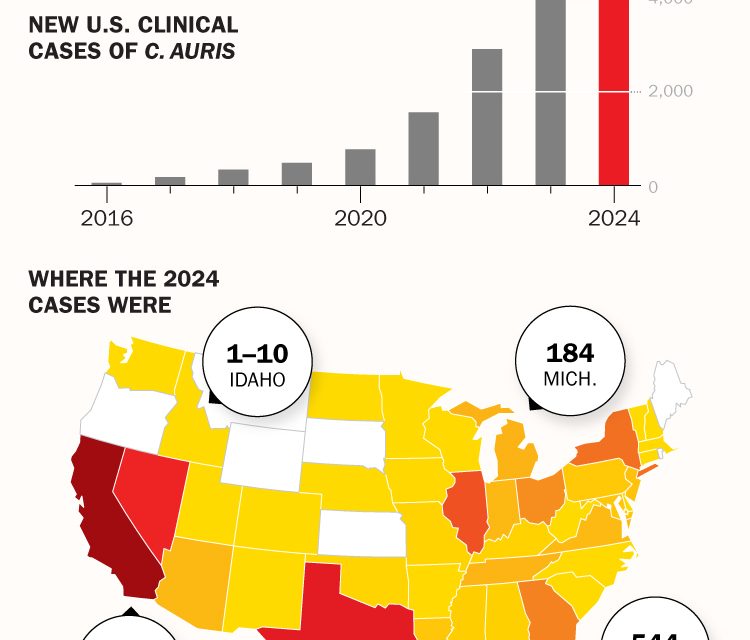
When Chiller received the call in 2015, reports of Candida auris were few, and knowledge about its transmission and impact was limited. A decade later, the understanding of this fungus has drastically changed. At a conference about fungal diseases near Denver, Candida auris was the focal point. It has sickened tens of thousands across more than 80 countries, prompting organizations like the World Health Organization (WHO) and CDC to highlight its threat.
Dangerous fungi, once rare, are now finding more opportunities to infect due to human activities. Rising global temperatures might have contributed to the emergence of Candida auris, with the warming climate driving the evolution of new fungal pathogens. Overuse of antifungals in medicine and agriculture has contributed to drug resistance in fungi, making some diseases harder to treat.
The human body, with its high temperature, typically wards off most fungal infections. However, Candida auris, likely originating from marine environments, evolved to tolerate higher heat and salinity. Fungi are ubiquitous, with an estimated six million species worldwide, but only about 300 cause diseases in humans. Researchers now focus on raising awareness, increasing surveillance, and developing new drugs.
Fungi are also showing new adaptability, infecting not only sick individuals but also healthier ones. Medical advances, such as immunosuppressive drugs and invasive medical devices, increase vulnerability to fungal infections. These treatments, while saving lives, expose patients to fungal threats.
Fungal diseases like Candida auris are becoming more prevalent. Once a rare occurrence in hospitals, cases are now frequent. The emergence of treatment-resistant fungi is concerning. This includes a new ringworm species spreading globally, disrupting traditional treatment methods.
CDC’s efforts, initiated by Chiller after the initial call from Britain, have included widespread alerts and international collaborations. They uncovered multiple strains of Candida auris emerging in different continents simultaneously. Many experts attribute climate change as a factor in the fungus’s evolution into a pathogenic threat.
Chiller and other professionals emphasize the need for increased awareness and preparation. Notably, fungi are becoming more tolerant to higher temperatures, increasing the potential for widespread infections. Some fungi previously limited to specific plants or environments are adapting to infect humans.
Fungal diseases pose increasing challenges, especially as infections resist common drugs. New detection methods and improved treatments are pivotal for managing these emerging threats. Advocacy and advancements in testing and awareness are crucial from minimizing the impact of these infections.
 Severe Smog Engulfs New Delhi After Diwali Celebrations
 Strategies for Muscle Preservation on GLP-1 Medications
 Insights from a Hospital Executive’s Journey Working ER Shifts
 Biden Reflects on Memoir and Health Challenges
 Former Aide Criticizes Trump’s Advisers on Health Initiatives
 From Flight Attendant to Content Receptionist: Embracing Simplicity