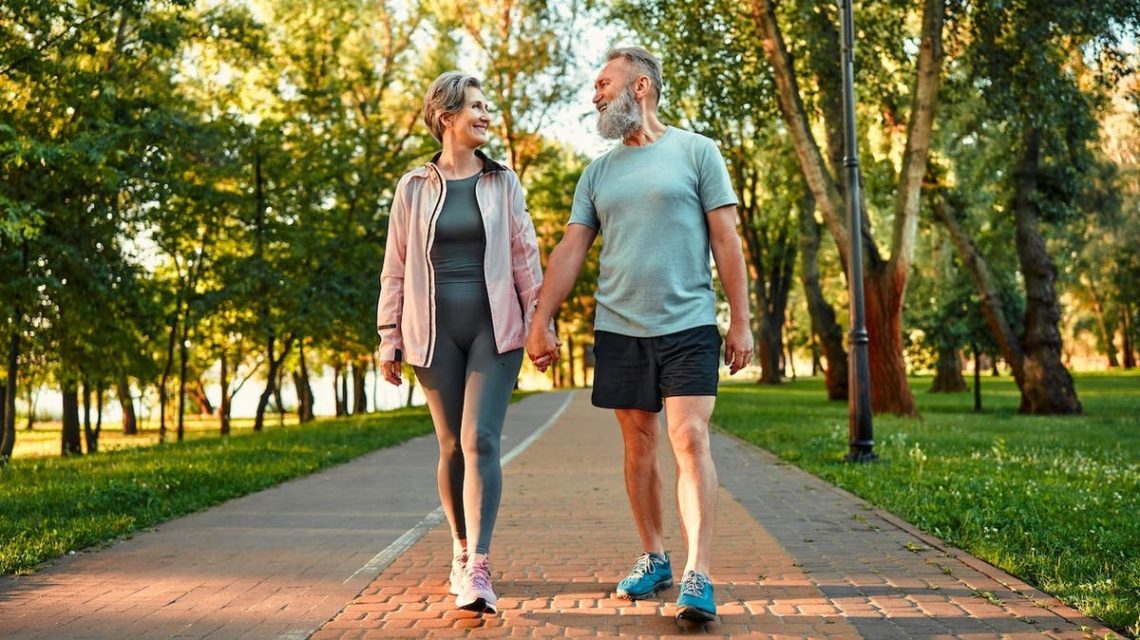
Dr. Courtney Conley and Dr. Milica McDowell, authors of ‘Walk,’ discuss the benefits of walking for both physical and mental health. They highlight ‘Vitamin W’ as a simple, yet effective, activity that can enhance longevity. They encourage increasing daily steps from an average of 5,000 to a faster pace of 130 steps per minute. They also introduce the idea of ‘movement snacks’ for overall wellness.
A recent study in JAMA Network Open underscores the importance of walking speed in assessing health and longevity. This study monitored 4,067 adults in the U.K., with an average age of 69, to evaluate the link between their average walking pace and mortality risk over time.
The participants performed a short walking test at their usual pace and wore wrist activity trackers for nine days. The tracking captured their regular walking speed. Findings indicated that faster walking, in both test and everyday scenarios, correlated with a decreased mortality risk. This conclusion held even after adjusting for other health and lifestyle factors. Over nearly 12 years of follow-up, 739 participants passed away.
“In physical therapy, we refer to walking speed as the ‘sixth vital sign,’ as it provides insight into how well different body systems are functioning,” noted Beth Templin, a geriatric clinical specialist and CEO of HouseFit Physical Therapy & Fitness. She was not involved in the study.
Templin pointed out that changes in walking speed can indicate health status. Brisk walking requires strong legs, a healthy heart and lungs, good balance, and a well-coordinated brain and nervous system.
Over 4,000 older adults in the U.K. participated in the study. It revealed that quicker walking speeds are linked with reduced death risk. Slow walking speed may indicate a decline in one of these systems before lab tests reveal any issues.
For older adults aiming to boost their walking speed and fitness, more steps alone may not suffice. Templin advised building strength and balance. She suggested simple exercises like standing up from a chair without using hands and doing heel raises while holding onto a counter to strengthen legs.
She also recommended incorporating short bursts of faster walking. After warming up, walk briskly for one minute, slow down for two minutes, and gradually increase the faster durations.
The findings do not prove that walking faster will extend life. The study shows an association rather than causation. The participants were generally healthier than the larger population. Moreover, no standard method exists for using wrist activity trackers to measure walking pace during everyday activities.
More research is necessary to see if these results apply to other populations.
 Severe Smog Engulfs New Delhi After Diwali Celebrations
 Strategies for Muscle Preservation on GLP-1 Medications
 Insights from a Hospital Executive’s Journey Working ER Shifts
 Biden Reflects on Memoir and Health Challenges
 Former Aide Criticizes Trump’s Advisers on Health Initiatives
 From Flight Attendant to Content Receptionist: Embracing Simplicity