
Over 40 million people in the United States and Canada rely on the Great Lakes for drinking water. Unfortunately, each glass of treated lake water contains microplastics. These tiny bits of plastic are made with toxic chemicals linked to cancer and other diseases. Fish in these lakes, vital to the diet of Indigenous tribes, immigrant populations, and communities of color, are also contaminated. Despite this, no regulations exist to control the pollution.
Simultaneously, manufacturers are significantly increasing plastic production in the U.S. The Chicago Tribune is investigating this plastics issue, concentrating on the Great Lakes, the world’s largest source of freshwater. The investigation reveals that industry executives often blame pollution on consumers, a tactic resembling those historically used by Big Tobacco. Thousands of government, scientific, and internal industry documents support these findings. This coverage, backed by the Pulitzer Center’s StoryReach U.S. initiative, explores the growing problem of plastic waste in the Great Lakes, health concerns, and potential solutions.
Sherri Mason, a Gannon University researcher, rescues plastic pellets from the ground. These pellets, no bigger than a grain of rice, are scattered at transfer points in Erie, Pennsylvania. Her efforts highlight the ongoing issue as plastics increasingly clog the Great Lakes.
Research shows plastic particles persist inside humans and animals, yet regulation remains distant. Microplastics, tiny particles with the potential to cause heart and brain diseases, draw particular concern. Scientists are also probing if microplastics link to ailments like Parkinson’s disease, fertility issues, premature births, certain cancers, and developmental problems in children. At the University of Illinois, researchers monitor the impact of plastics-related chemicals in more than 400 children from conception to age 11.
Scientists are pushing governments to tackle the microplastic threat appearing in all corners of the Great Lakes. This includes areas from Canada’s Chemical Valley near Lake Huron to the Apostle Islands in Lake Superior. The Tribune’s ongoing “Great Waste in the Great Lakes” series exposes these often-hidden health and environmental risks for Americans and Canadians dependent on these waters.
In one instance, Melissa Duhaime, associate professor at the University of Michigan, hand-processes flax straw in preparation for engineering experiments in Dexter, Michigan. This is just one approach among determined researchers and activists fighting against increasing plastic production.
Illinois has become the first Great Lakes region state to classify industrial plastic pellets, known as nurdles, as pollution. This new law requires companies to report spills and establish plans to reduce nurdle contamination in storm runoffs, combatting a growing source of pollution in the Great Lakes and Mississippi River.
A cleanup event at Montrose Beach in Chicago saw children collecting 27 pounds of plastic waste, exemplifying community efforts to combat this issue.
A new study, published in the journal Nature, reveals that water may transform plastics into harmful microplastics. Reactions between water and six types of fossil fuel-based plastic were found to damage blood cells and proteins in lab tests. This discovery suggests major implications for human health.
Join a Chicago Tribune event discussing plastic pollution in our waters with investigative reporter Michael Hawthorne and researchers Melissa Duhaime and Chelsea Rochman. The virtual event will be held on October 16, from 4 p.m. to 5 p.m. CDT. RSVP is available.
Engage with Michael Hawthorne in an online AMA (Ask Me Anything) on Reddit on October 20, from 12 p.m. to 4 p.m. CDT.
 Community Urges Closure of NIPSCO’s Coal Plant in Michigan City
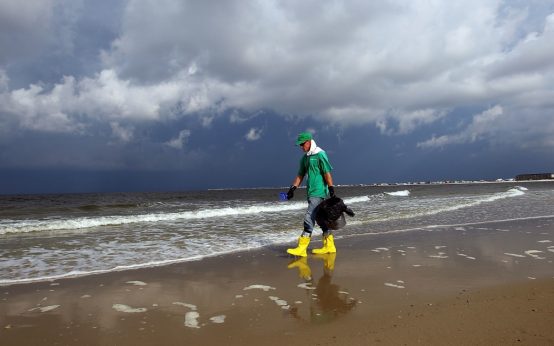 Marine Life Decline in Gulf of Mexico Post-Deepwater Horizon Spill
 Arizona Candidates Prioritize Water Policy Amid Drought Concerns
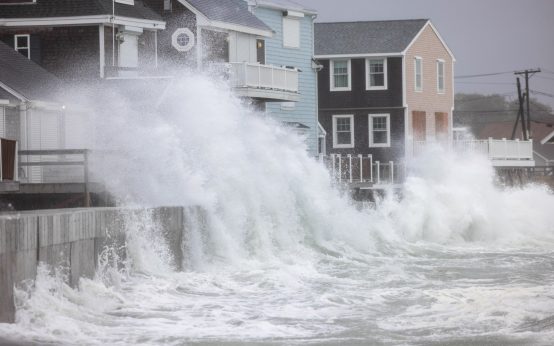 Nor’easter Threatens U.S. With Greater Impact Than Recent Hurricanes
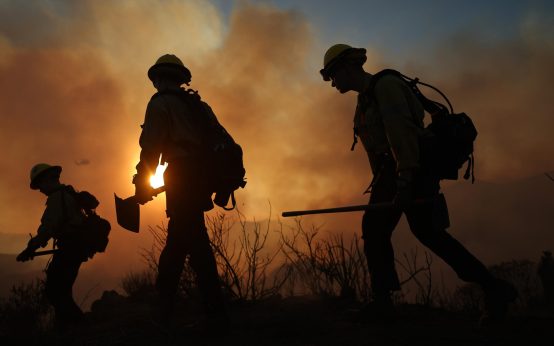 Malibu Residents Confront Fire Challenges with Community Spirit and Resilience
 Rapidly Spreading Fire Burns in Malibu