
The U.S. Central Command reported an important defensive action on Tuesday when American forces shot down an Iranian drone that was deemed a threat as it approached the USS Abraham Lincoln aircraft carrier in the Arabian Sea. This incident occurred approximately 500 miles from Iran’s southern coast and involved an Iranian Shahed-139 drone showing ambiguous behavior, increasing concerns.
Captain Tim Hawkins, a spokesperson for the command, clarified that the Iranian drone’s approach persisted despite several de-escalatory measures being undertaken by U.S. forces operating within international waters. Consequently, an F-35C fighter jet from the carrier took action and successfully downed the drone. Fortunately, no American personnel were harmed, nor was any U.S. military equipment damaged during the event.
The backdrop of this encounter includes rising tensions between the United States and Iran, with President Donald Trump contemplating military action against the nation. Notably, diplomatic talks are anticipated later in the week in Turkey. According to reports, both countries are expected to have high-profile representatives present. Steve Witkoff, the White House’s special envoy, and Iranian Foreign Minister Abbas Araghchi, are among the expected participants.
During a media session at the Oval Office, Trump acknowledged ongoing discussions, highlighting a willingness from Iran to negotiate and recounted a previous military operation, Midnight Hammer, aimed at Iran’s nuclear facilities earlier in the year.
Meanwhile, Iran’s perspective on the matter was shared via the Tasnim news agency. An informed source noted that the drone was engaged in ‘routine and lawful’ surveillance when contact was inexplicably lost. Iran maintains that this operation aligned with normal international activities.
The scenario paints a broader picture, with Iranian officials emphasizing the potential scale of conflict should tensions lead to warfare with the U.S. Unlike the short-lived conflict from last summer, a new war would likely draw in regional powers, as articulated by an unnamed Iranian official.
Hours following the drone incident, another episode in the Strait of Hormuz unfolded where the IRGC approached a U.S.-flagged merchant vessel, the M/V Stena Imperative. The situation, involving two Iranian boats and a Mohajer drone, escalated until the USS McFaul was able to intervene and provide a protective escort, ensuring the safety of the tanker.
President Trump’s stance on potential military engagement remains cautiously optimistic, expressing hope for a peaceful resolution while underscoring the U.S.’s formidable naval presence. Noting the strategic movements of the USS Abraham Lincoln, Captain Hawkins reiterated a clear message from the Central Command that persistent Iranian aggression would be met with firm resistance, ensuring the safety and freedom of navigation in vital sea lanes.
This development is part of broader narratives reported by national security and international correspondents at NBC News, underscoring the nuanced and multifaceted nature of U.S.-Iran relations.
 Hungary’s New Government: Policy Shifts and International Relations
 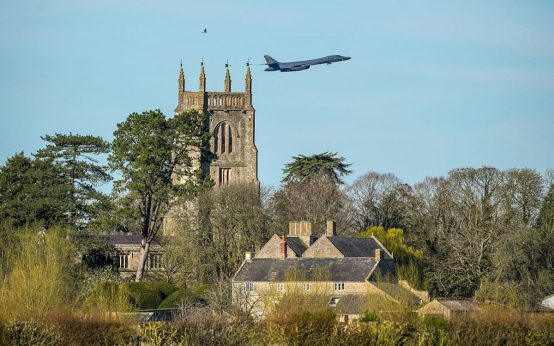 Major Incident Declared Near U.K. Airbase Used for U.S. Military Strikes
 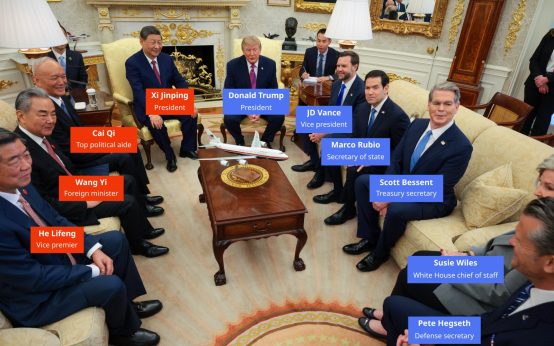 Xi Jinping’s Quest for Global Leadership and Succession Challenges
  Pope Leo XIV Draws Massive Crowd in Paris, Highlighting Enduring Catholic Influence
  Pacific Hurricanes Pose Flood Risk to Southern California
  Israel’s U.N. Ambassador’s Viral Video Reaches Iranian Audience