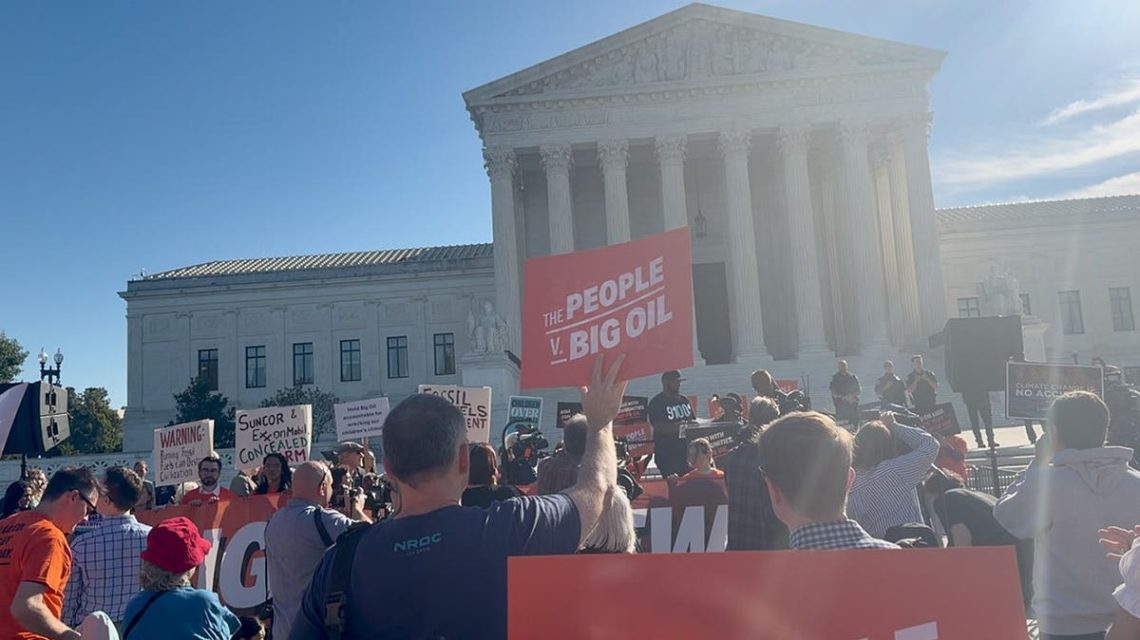
The Supreme Court is facing a critical decision on climate change lawsuits that could impact the oil industry financially and affect fuel prices for Americans. Energy policy experts caution that these legal actions against oil companies might lead to financial hardship for gas stations and result in increased fuel costs.
Jason Isaac, CEO of the American Energy Institute, told Fox News Digital that the ruling could result in a mass exodus in the industry, leading to fuel scarcity and higher prices. He emphasized that the underlying goal is to control these companies and curb the usage of hydrocarbons.
Background on the Legal Dispute
The case, Suncor v. Boulder, questioned whether federal law prevents cities and states from suing oil companies for alleged climate damage related to emissions crossing state borders. During Monday’s arguments, Justice Clarence Thomas queried Boulder’s attorney, Kevin Russell, about whether the legal approach could lead to lawsuits against businesses beyond oil producers, touching on large retailers too.
Russell acknowledged this possibility, admitting that the state tort law could impose limitations. Justice Brett Kavanaugh also pointed out potential financial risks, suggesting that widespread litigation could bankrupt defendants and extend to various manufacturers and businesses.
Lawsuit Details
In 2018, the city and county of Boulder sued ExxonMobil and Suncor Energy, accusing them of contributing to climate change while misleading the public about fossil fuel risks. They seek damages to address the costs of climate-related harm. Similar lawsuits are pending across the U.S., including in Portland and Baltimore.
Boulder claims that ExxonMobil and Suncor were aware of climate risks for decades, supported by a 1977 internal memo from ExxonMobil indicating strong scientific belief in fossil fuels’ role in CO2 emissions rise.
The lawsuit, described as an “indirect carbon tax,” aims to hold companies accountable under state law, arguing Colorado’s right to seek remedies for in-state injuries, even from out-of-state actions.
Potential Impact
The outcome could allow numerous jurisdictions to initiate similar lawsuits against energy companies, potentially increasing consumer costs. Over 90,000 government entities in the U.S. could follow suit, according to Isaac.
The scope of who might be sued could extend beyond oil producers to entities across the energy chain, including gas stations, automakers, and utilities relying on fossil fuels. The broad view of climate change complicates defining who contributes to it.
Isaac noted that unlike tobacco or opioid cases, the global nature of emissions complicates isolating responsibility for climate damage. Greenhouse gas emissions cross state and national boundaries, posing challenges for attributing liability.
ExxonMobil and Suncor argue that emissions’ global nature negates state-level liability for out-of-state emissions, advocating for federal law governance instead.
Several states, like Utah, have prohibited this type of state tort lawsuit, emphasizing the need for Congress to decide on such matters. Utah Attorney General Derek Brown warned of nationwide gas price increases if Colorado wins the case.
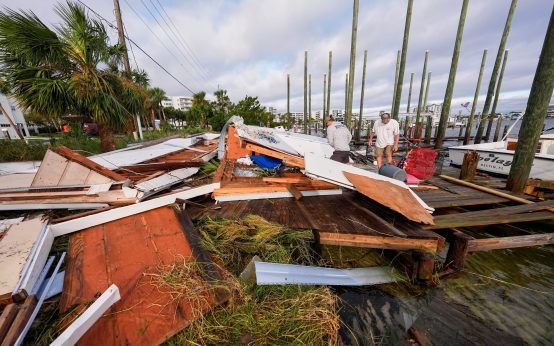 Hurricane Isaias: Impact and Aftermath
  Storm Updates and Impact Reports in the Southeast
  Judicial Watch Criticizes FBI Document Release Delays in Trump Assassination Attempt Case
  Hurricane Isaias Impact in Southern States
  Hurricane Isaias and Its Impact
  Christa Pike Moves to Rehabilitation Center After Failed Execution Attempt