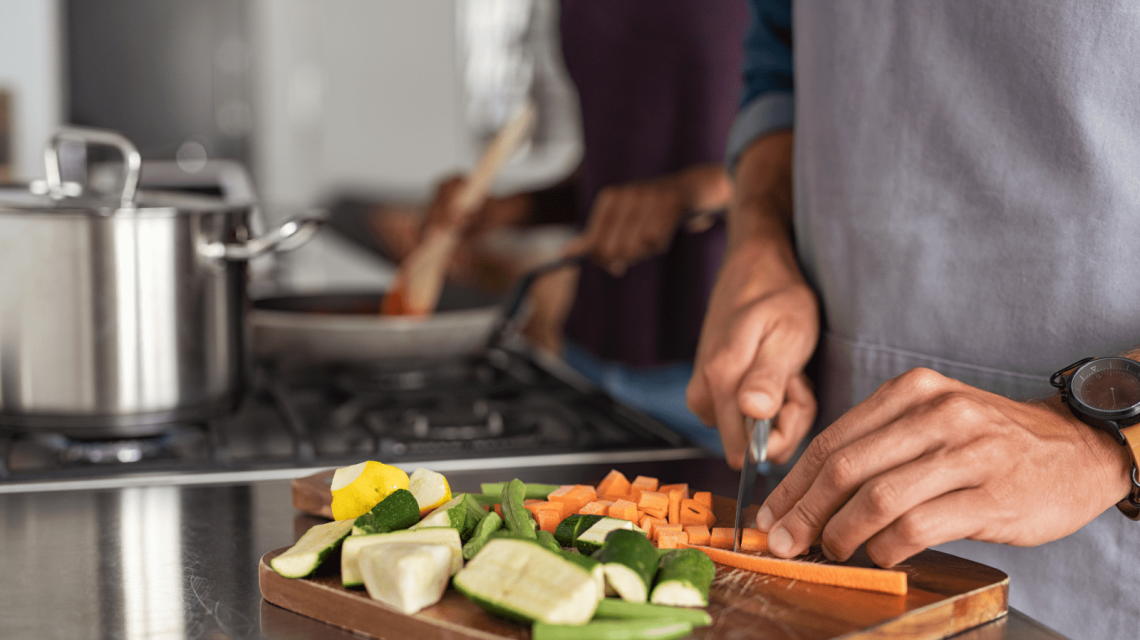
For many years, the prevailing weight-loss advice has emphasized eating less. However, recent research provides an alternative perspective, suggesting weight loss is possible without reducing food intake, provided the diet composition changes.
A study published in JAMA Network Open revealed that individuals with overweight who adhered to a low-fat vegan diet achieved weight loss while maintaining the same quantity of food by weight. Dr. Hana Kahleova, lead author and director of clinical research at the Physicians Committee for Responsible Medicine, explained the concept of energy density in an interview with Newsweek.
“There’s a well-documented tendency for people to eat a fairly consistent weight or volume of food at a meal, almost regardless of how many calories that food contains,” stated Dr. Kahleova.
She highlighted that foods high in water and fiber, such as vegetables, fruits, legumes, and whole grains, allow individuals to consume a “full, satisfying volume of food” while ingesting fewer calories than meals based on meat, cheese, and processed foods.
The key lies in energy density, which refers to the calories contained per gram of food. The study conducted a secondary analysis of a 16-week randomized clinical trial involving 244 adults with overweight. Participants either adopted a low-fat vegan diet centered on fruits, vegetables, grains, and legumes or maintained their usual eating patterns. Importantly, neither group received instructions to limit calorie intake or restrict food quantity.
Dr. Kahleova noted, “In our study, participants who shifted toward a diet built from vegetables, fruits, whole grains, and legumes ate the same total weight of food each day as before. The amount of food didn’t change, but the energy density of that food fell by nearly 30 percent.”
The research found a significant decrease in energy intake among vegan participants, averaging around 357 fewer calories per day. Crucially, the weight of food consumed remained relatively unchanged. Thus, participants were not eating less food but choosing foods lower in caloric density.
For those interested in applying these findings without adopting a fully vegan diet, Dr. Kahleova recommended emphasizing foods naturally rich in water and fiber while decreasing calorie-dense options.
- Fill half your plate with vegetables before adding anything else.
- Swap meat for beans, lentils, or tofu in some meals each week.
- Opt for whole fruit instead of juice or dried fruit.
- Limit added oils, butter, and cheese as they are calorie-dense.
Dr. Kahleova further explained that participants were not required to count calories or adhere to specific calorie targets. Changing food types led to a natural reduction in caloric intake.
This study emphasizes that altering diet composition to include more water-rich and fibrous foods can promote weight loss and decreased energy density.
Reference: Kahleova H, Znayenko-Miller T, Maracine C, Holubkov R, Barnard ND. Vegan Diets and Dietary Energy Density: A Secondary Analysis of a Randomized Clinical Trial. JAMA Netw Open. 2026;9(8):e2627483. doi:10.1001/jamanetworkopen.2026.27483.
 Managing Distress: Insights and Techniques
  Best Practices for Safe Consumption of Fresh Produce
  The Complexity and Prevention of Suicide
  A Journey Through Cancer: Reflections on Diagnosis and Metaphor
  Impact of Sleep Types on Disease Risk
  Understanding School Shooting Preparedness Drills