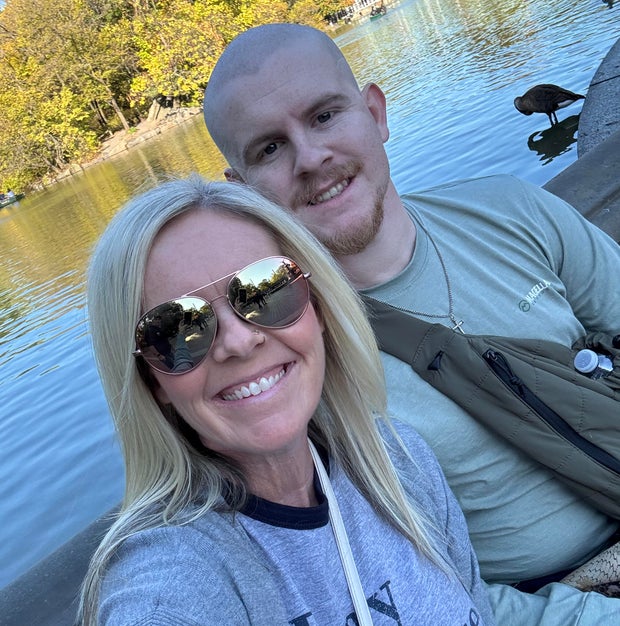
In southeastern Texas, Mason Henderson, a 21-year-old battling a rare brain tumor, faced arduous challenges. After 18 months of chemotherapy, his tumor, which had spread to his spinal fluid, showed no signs of improvement. Mason traveled to New York City for three weeks to participate in a clinical trial, but this effort also proved unsuccessful. As Mason’s condition became more complex, medical professionals turned to genetic insights for guidance.
Genetic Assessments and Treatment Challenges
Evaluating Mason’s tumor’s genetic profile led to considering a medication named Lynparza, produced by Merck and AstraZeneca. Although not typical for Mason’s condition, lack of established treatments for such rare cancers necessitated innovative approaches. Despite rigorous justification from specialists, Mason’s insurance denied coverage for Lynparza.
“Without specific guidelines for his cancer, the system seems to overlook him because of its rarity,” said Mason’s mother, Tabitha Lowe, to KFF Health News. Rare cancer diagnoses account for about a quarter of all U.S. cancer cases. Insurers often look to FDA labels and expert recommendations to decide on treatment reimbursement.
Insurance and Treatment Accessibility
The discrepancies between insurance coverage and genomic test findings became apparent. Expert Jacob Mandel along with Jessica Schulte from NYU Langone Health, aimed to use Lynparza with chemotherapy. Prior cases had shown similar cancer responses to Lynparza. Providers often prefer treatments backed by extensive studies, but these trials are unlikely for rare forms like Mason’s.
In January, the prescribed Lynparza was promptly denied by Liviniti, Mason’s pharmacy benefit manager, due to its unapproved status for his diagnosis. The drug, without coverage, would cost $8,700 monthly. Describing the past ‘seizure state’ encountering Mason, Lowe recounted the severity of March 2024, when MRI results confirmed a tumor, subsequently identified as diffuse hemispheric glioma (H3 G34-mutant).
Overcoming Treatment Refusals
After surgery removed most, but not all, of the tumor, cancer spread to Mason’s spinal cord, resulting in leptomeningeal disease, often fatal shortly after diagnosis. Shulte supervised a clinical trial involving grueling irradiation, but the cancer persisted.
“The family maintained trust while asking insightful questions,” Schulte recalled. Liviniti’s denial forced the family to seek alternatives. Jefferson County, responsible for benefit decisions, mirrored the denial. An independent reviewer, summoned by the county review board, failed to alter the outcome, favoring another drug Mason’s doctors disputed.
Disheartened, the family sought charitable assistance from AstraZeneca, which initially declined. Time was of the essence; Mason’s cancer required urgent attention. His journey was further complicated by the absence of applicable clinical trials for Watson’s specific condition.
Emerging Focus on Genetic Treatments
The FDA’s 2022 encouragement for approving drugs targeting specific mutations shows growing potential for tailored treatments. This “tissue agnostic” approach remains rare, but advancements in genome sequencing are leading to more personalized care.
Clinical initiatives such as “basket trials” show some success in treating patients based on genetic profiles. Noteworthy, the TAPUR study, initiated by the American Society of Clinical Oncology, offers off-label drug access, but excludes primary brain tumor cases.
Conflicting Views on Genetic Diagnosis
Opinions vary on genetics’ role in reshaping cancer diagnostics. Some experts, like Razelle Kurzrock from the Medical College of Wisconsin, argue that reliance on cellular observation obscures underlying drivers. Meanwhile, Kathy Miller from Indiana University cautions against overpromising genetic sequencing advantages.
Mason’s diagnosis, although expeditiously reached, was compounded by the tumor’s rarity and insurance roadblocks. Tabitha Lowell’s push for attention on social media finally led AstraZeneca’s patient assistance program to reverse its prior denial, delivering Lynparza.
Reflection and Advocacy
Despite the family’s determined advocacy, Mason, by mid-April, began losing mobility and communication abilities. May brought heartache as Mason Henderson passed away. His memorial service, attended by hundreds, became a commemoration of his life and advocacy for patients like him.
In his memory, a scholarship fund gathered significant support, recognizing his enduring impact. “The faster access could have helped, though it’s hard to be certain about its effect on Mason’s lifespan,” Schulte reflected.
Expressing regrets over healthcare struggles overshadowing precious family moments, Lowe remarked, “The fight against bureaucracy consumed crucial energy I wish had gone to Mason instead.”
KFF Health News offers dedicated reporting on health matters and is a part of KFF—an authoritative source for health policy insights and information.
 Keys to Effective Post-Exercise Recovery for Adults Over 35
  Personal Journey in Understanding Neurodegenerative Diseases
  Artist Speaks Out on Rare Condition Impacting Her Career
  Mindfulness: Manage Stress by Embracing the Present
  Missouri’s Abortion Policy: Conflicting Amendments and Voter Decisions
  The Impact of Extended Job Searches on Mental Health