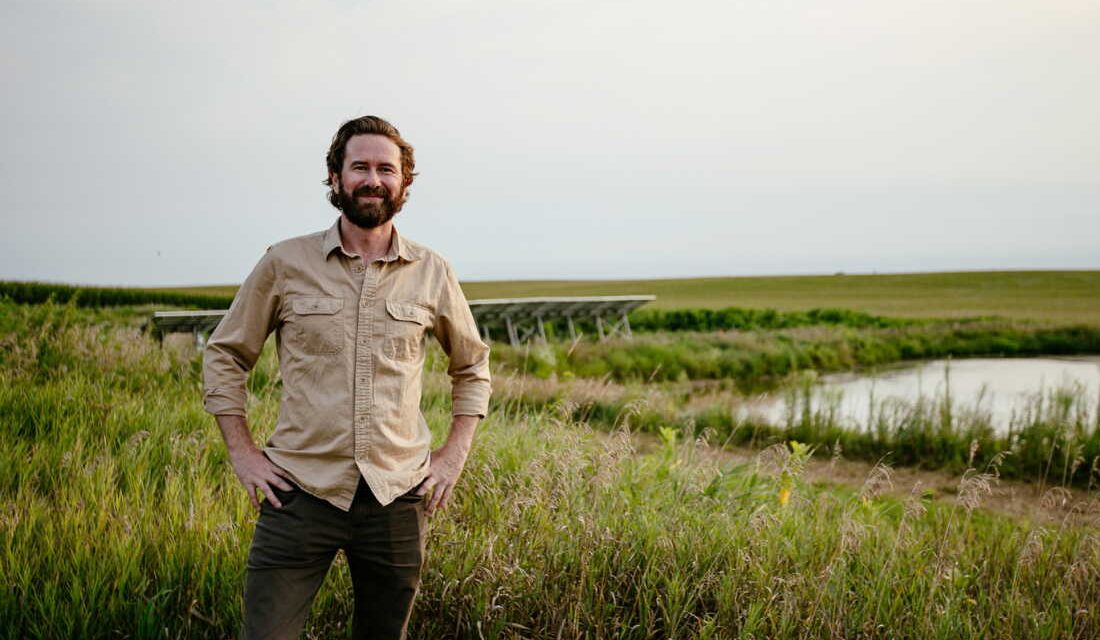
Tanner Faaborg stands proudly at his family’s farm in central Iowa. Once dedicated to raising hogs, the Faaborgs have transitioned to cultivating specialty mushrooms at their operation known as 1100 Farm. This name pays homage to the number of hogs housed in each barn for decades. The change was supported by technical and financial backing from The Transfarmation Project,
an initiative by the charitable organization, Mercy for Animals.
Entering the Fruiting Room
Inside a dimly lit building, Tyler Faaborg navigates into a fruiting room
concealed behind plastic curtains. Fog rolls over rows of sprouting mushrooms. He points out a bulbous fungus known as lion’s mane, explaining it has another week before harvest. “They are sort of a little bit pinkish now; once mature, they will turn almost entirely white,” noted Tyler Faaborg.
Transition from Hogs to Mushrooms
The transition from pigs to mushrooms marks a significant shift for the Faaborg family. With their parents, Tyler and Tanner sell their mushrooms in various forms, including tinctures, coffee blends, and flavored salts. Transfarmation offers farmers resources, including access to experts, online guidance, and open-source blueprints for converting farm structures.
Director Katherine Jernigan noted, We primarily engage with farmers in industrial animal farming to transition into sustainable practices, which might involve growing mushrooms, diversified vegetables, or trees integration.
She emphasized that converting existing infrastructure gives Transfarmation its unique edge.
Retrofitting Hog Barns for Mushroom Growth
The Faaborgs fitted a considerable part of a former hog barn, spanning 200 feet, to house their mushrooms. This retrofit encourages them to scale their operation following a successful pilot project. Now, it serves as a second demonstration hub in the U.S. as part of the Transfarmation initiative, the first being a former chicken farm in North Carolina.
"The demonstration hub opens doors for farmers to see, learn, and query directly," explained Jernigan. The collected data consists of cost details, labor hours, product margins, and lessons learned, providing valuable insights for prospective farmers.
Financial Planning and Challenges
A spokesperson mentioned the Faaborgs receive $216,000 over four years for sharing their findings. Transparency from other farms shows profitable potential when switching from industrial-scale CAFOs to specialty crops.
Having more test cases with honest feedback on obstacles and potential benefits is key,
Jernigan believes. Farm budgets on the Transfarmation site cover strawberries, tomatoes, and microgreens, providing further transparency.
The Inspirational Journey of Vision Realization
Tanner Faaborg’s idea sparked 1100 Farm’s conversion. He shared, Just doing things differently helps people see possibilities.
He recalled his parents’ initial dream of homesteading when they purchased their 25-acre farm in the 1980s. That time involved harvesting and preserving homegrown produce, using wood-burning stoves, and raising chickens for eggs.
Initially, market hogs were raised for pocket money
alongside Rand’s welding job. Contract feeding later attracted the family, with the company providing the animals and feed, while the farmer contributed labor and infrastructure costs.
CAFOs, Financial Strains, and Transition
Analysis by the Environmental Working Group noted the growth of large CAFOs in Iowa from 789 in 1990 to 4,444 by 2025. Combined with smaller operations, 66% of Iowa’s CAFOs house over 33.4 million hogs.
Though CAFO operations were initially profitable, Rand Faaborg admitted, I was working 16-hour days, sometimes 24-hour stretches without sleep.
Despite financial gain, raising hogs required physically demanding work and saw a loss in profitability over time, attributed to increased CAFO prevalence.
Transitioning to Sustainable Farming
Several years ago, Rand and Tammy Faaborg chose to leave hog farming. Skeptical about bulldozing the infrastructure, they invited input from their family for alternate utilization of farm buildings. That’s when Tanner Faaborg suggested the switch.
Echoing Tanner, his brother Tyler expressed needing persuasion to change from raising 200,000 hogs annually. After 25 years, it was grueling,
Tyler acknowledged. But Tanner’s persistent advocacy for sustainability resonated.
Embarking on a New Path
In 2021, the Faaborgs joined Transfarmation, disposed of their final hog herd, and received a $15,000 grant. This funded mushroom cultivation as a year-long pilot project, incurring $35,000 in preparation costs for the handling and branding essentials. As they expand their demonstration hub, Tyler aims to supply fresh mushrooms directly to companies and possibly convert the second barn for microgreens.
Rewilding Efforts
The transformation includes converting a manure pit into a freshwater pond funded partially by a USDA conservation grant. Tanner Faaborg stressed, If the environment is correct, rewilding can happen quickly.
The anxiety surrounding the manure pit disappeared, leaving behind a thriving ecosystem, cherished by his grandchildren for frog catching.
The Faaborgs also initiated pollinator-friendly plants, expanded their orchard, and planted vegetation near the farm’s creek. Tanner Faaborg aspires to convert an empty grain silo for visitor stays, bringing wildlife ambiance at 1100 Farm to life. He visualizes a future where small steps turn into lasting impacts.
 Great Lakes Face Beach Hazards Due to Dangerous Currents
  Surprising Encounter with Gulf Sturgeon in the Suwannee River
  Potential Impact of Tropical Storm Polo on Southern California
  Communities Continuing Recovery from Hurricane Helene Explored through Graphic Novel
  Fat Bear Week 2026 Highlights: Meet the Competitors
  Annual Fat Bear Week Begins at Katmai National Park