After three years of legal proceedings, the Illinois Supreme Court is set to hear arguments between the city of Chicago and the Fraternal Order of Police (FOP). This case will impact how serious misconduct cases involving Chicago Police Department (CPD) officers are handled and the public’s right to access these cases.
The Core Issue
The central question is whether officers accused of significant misconduct can have their disciplinary cases heard by a third-party arbitrator, similar to other municipal employees with labor union representation. Traditionally, these cases have been handled by the Chicago Police Board since 1961. Arguments are scheduled for Thursday in Springfield, and a decision might come by year-end. However, there is uncertainty about how and when any new system may be implemented.
Implications for the CPD
The selection process for CPD’s next superintendent continues, and the new leader will face numerous pending disciplinary cases. Police accountability advocates have raised concerns, citing incidents like the 2014 shooting of Laquan McDonald. They warn of potential regression to unmonitored police abuses if hearings happen in secrecy.
“Secrecy breeds impunity for police officers,” attorneys for police reform groups stated in a June amicus brief to the court.
They argue that settling these cases in private arbitration could reverse nearly a decade of work aimed at preventing police misconduct and hide such abuses from public accountability.
Payment During Pending Cases
Another issue is whether officers should receive pay while facing potential termination and awaiting case resolution. This delay has left many officers and alleged victims in limbo.
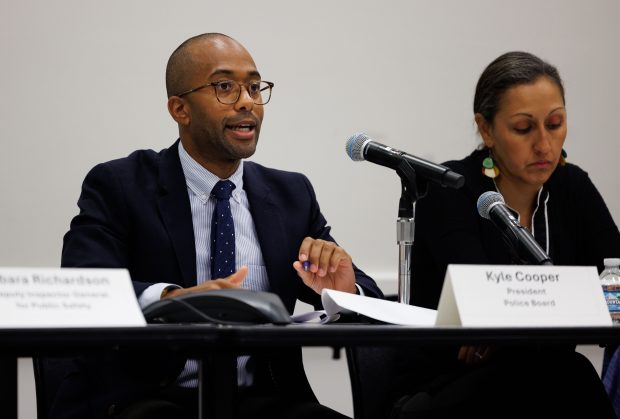
“Officers should not have to spend years with serious charges hanging over them. Alleged victims should not have to wait years for resolution,” said Chicago Police Board President Kyle Cooper.
Legal Arguments
Since fall 2023, the adjudication process for these cases has been largely paused due to the legal battle. FOP attorneys argue that the city aims to create a public policy requiring public access to grievance arbitration, which has never been done before. Meanwhile, city attorneys assert this move undermines reform efforts and public trust.
“Transparency, when the most serious police misconduct is on the line, has been crucial in Chicago,” city attorneys wrote.
Previous Court Decisions
Craig Futterman, professor of law and attorney for community groups, noted that a similar argument was rejected in 2020. The FOP lost an attempt to destroy misconduct records after five years, with the court citing the state’s fundamental public policy. The conflict originated in summer 2023, during collective bargaining agreement negotiations.
“Please don’t throw away potentially large sums of taxpayer money…on a legal fight you cannot win,” arbitrator Edwin Benn warned the City Council.
Current Status
In March 2024, a Cook County Circuit Court judge allowed cases to be decided by a third party with public proceedings. The FOP appealed, but Illinois Appellate Court judges upheld this decision in 2025, allowing officers facing termination to be paid during proceedings.
Despite the ongoing legal process and delays, officers can still choose to have cases heard by the Police Board, though few have opted for this. Investigations by the Civilian Office of Police Accountability (COPA) and CPD’s internal affairs continue, even in the absence of a definitive adjudication method.
A review found COPA sustained misconduct findings in over 650 investigations since September 2023, including 22 related to police shootings. Internal affairs reported 463 misconduct findings. Since September 2023, 26 officers faced termination recommendations, but most cases remain paused pending legal outcomes.
Future Prospects
The Police Board has resolved dozens of disputes between COPA and legal affairs over investigation findings, as work continues amid disagreements. Former Superintendent Larry Snelling, who retired in July, supported open and accessible proceedings.
“Ensuring the community knows how complaints and misconduct are handled…can help strengthen public confidence,” Snelling stated in late 2025.