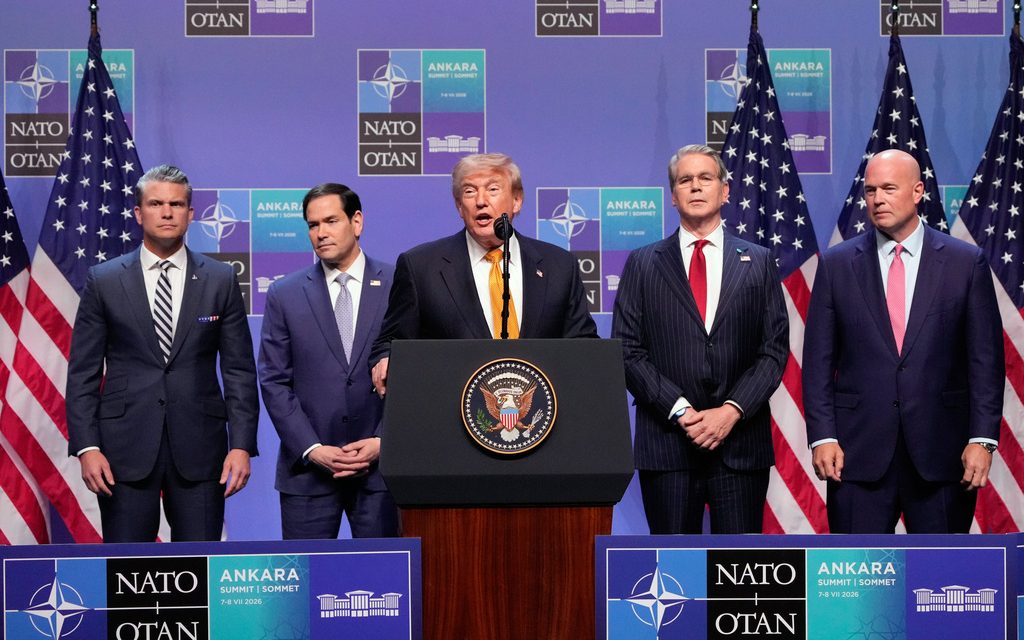
President Donald Trump, along with U.S. leaders including Defense Secretary Pete Hegseth, Secretary of State Marco Rubio, Treasury Secretary Scott Bessent, and Ambassador to NATO Matthew Whitaker, addressed the media at the NATO summit in Ankara, Turkey, on July 8, 2026. They discussed the liberation of military resources post-conflicts in Europe and the Middle East and emphasized the importance of strategic focus on Russia’s aggressive tendencies and foreign policy, which aim for political gains through military strength.
Russia’s history of aggression, including actions in Georgia in 2008, Crimea in 2014, and its invasion of Ukraine, signifies an imperial agenda rather than a defensive one. Its commitment to sustaining casualties and enduring sanctions highlights its dangerous ambitions, especially for Eastern European democracies. The Baltic states, Poland, and NATO face tests. European partners must address force reductions on the Eastern Frontier left by U.S. defense strategies.
In Asia, China, governed by the authoritarian Chinese Communist Party, has expanded influence through economic coercion, cyber tactics, and political sway, using strategic hybrid warfare instead of immediate military conflict. Despite its aggressive rhetoric about Taiwan, China has not engaged in major external military operations since 1979, opting for deterrence and economic leverage over open warfare. Any aggressive move on Taiwan risks unifying the West and harming China’s own stability.
The U.S. needs to reinforce ties with Indo-Pacific allies and uphold navigation freedoms. Strategic focus should address active and escalating violence. Europe’s role as a Western democracy pillar must be safeguarded, learning from American involvement in world wars to prevent tyranny. Current challenges in Europe demand strong U.S. commitments, with emphasis on NATO unity against Russian attempts to divide the alliance. Investments in European command infrastructure are vital deterrence measures.
Preparation for potential conflict with China should not overshadow urgent needs. American and allied munitions in Europe are depleted, exposing weaknesses in military supply lines. To maintain global leadership, the U.S. must rebuild its defense capabilities based on actual threats. A strong NATO strengthens global deterrence, as does investing in Army and Air Force readiness in Europe while maintaining a steady Indo-Pacific naval presence. Strengthening Europe indirectly supports peace efforts in the Pacific.
Diverting U.S. military focus could have severe consequences. Russia’s current border expansions through warfare challenge global resolve more than China’s ambitions. Addressing Russian aggression by supporting European allies can mitigate future dilemmas and save lives.
Keith Self, representing Texas’s 3rd District, serves on the House Foreign Affairs and Veterans’ Affairs Committees and chairs the Europe Subcommittee. His 25-year Army service offers a seasoned perspective on these issues.
 American Public Opinion on Press Freedom
  Media Lawsuit Against Trump Administration for White House Ban
  The Cost of Challenging Beijing
  Analyzing Midterm Elections and Party Dynamics
 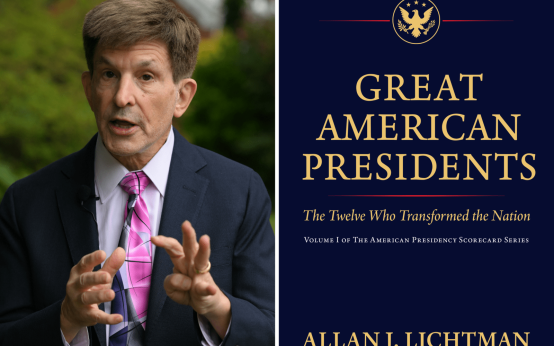 Allan Lichtman’s Framework for Assessing Presidential Greatness
 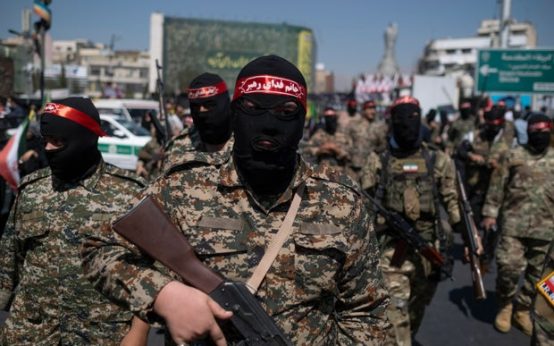 Tensions Escalate in Iran Conflict as Global Leaders Weigh Options